



The informal sector plays a critical role in plastic waste management across ASEAN countries, particularly in Indonesia, the Philippines, and Vietnam, where informal waste workers recover significant amounts of recyclable materials and help reduce plastic leakage into the environment. However, despite their contributions, these workers often remain underrecognized within formal waste management systems and continue to face precarious working conditions, including social stigma, limited legal protection, inadequate access to health services, and exclusion from policy discussions.
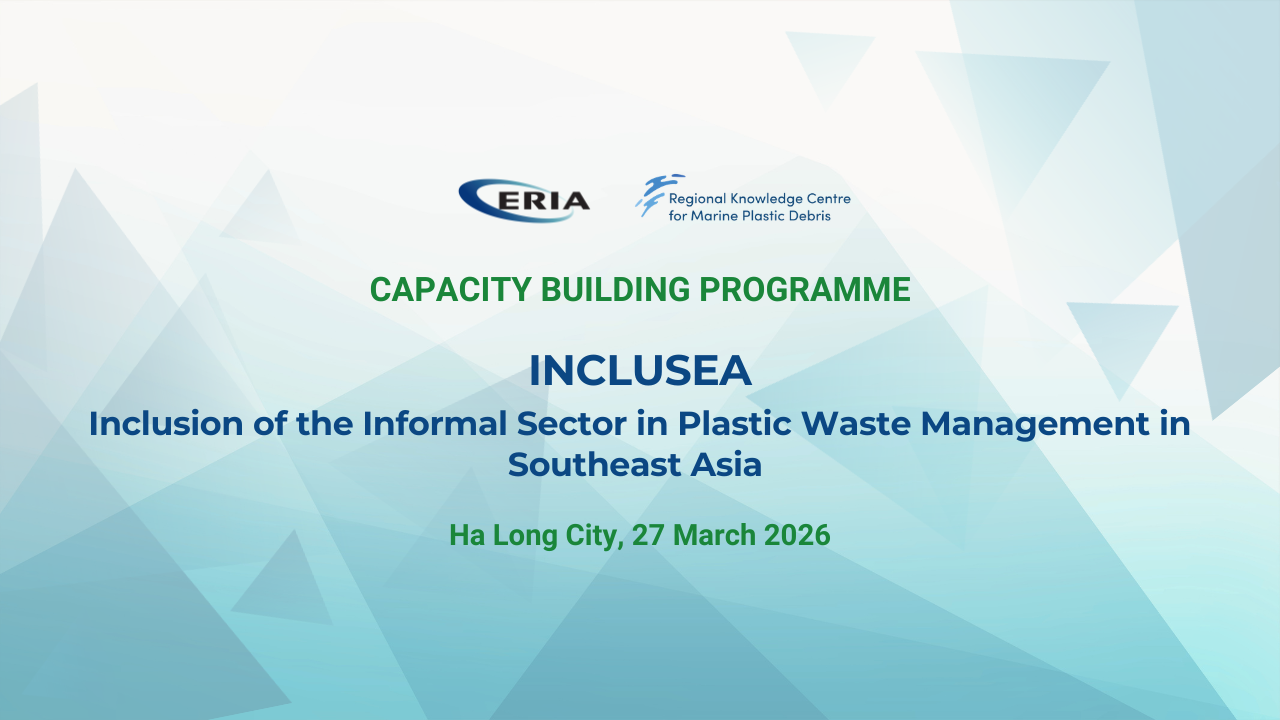
In response to these challenges, ERIA's Regional Knowledge Centre for Marine Plastic Debris, with the support of the Viet Nam-Japan Institute for Advanced Technology (VJIAT), the Institute for Global Environmental Strategies (IGES), and the Asian Institute of Technology's Regional Resource Centre for Asia and the Pacific (AIT RRC.AP), organised the INCLUSEA programme, aims to strengthen the capacity and recognition of informal waste workers by improving their understanding of plastic pollution, circular economy principles, occupational safety, and emerging frameworks such as Extended Producer Responsibility (EPR).
Through a Training-of-Trainers (ToT) approach, INCLUSEA will engage women-led community organizations, informal sector unions, grassroots NGOs, and local experts, equipping them with knowledge and practical tools that can be replicated across their communities to support broader and longer-term impact.


The informal sector plays a critical role in plastic waste management across ASEAN countries, particularly in Indonesia, the Philippines, and Vietnam, where informal waste workers recover significant amounts of recyclable materials and help reduce plastic leakage into the environment. However, despite their contributions, these workers often remain underrecognized within formal waste management systems and continue to face precarious working conditions, including social stigma, limited legal protection, inadequate access to health services, and exclusion from policy discussions.
In response to these challenges, ERIA's Regional Knowledge Centre for Marine Plastic Debris, with the support of the Viet Nam-Japan Institute for Advanced Technology (VJIAT), the Institute for Global Environmental Strategies (IGES), and the Asian Institute of Technology's Regional Resource Centre for Asia and the Pacific (AIT RRC.AP), organised the INCLUSEA programme, aims to strengthen the capacity and recognition of informal waste workers by improving their understanding of plastic pollution, circular economy principles, occupational safety, and emerging frameworks such as Extended Producer Responsibility (EPR).
Through a Training-of-Trainers (ToT) approach, INCLUSEA will engage women-led community organizations, informal sector unions, grassroots NGOs, and local experts, equipping them with knowledge and practical tools that can be replicated across their communities to support broader and longer-term impact.