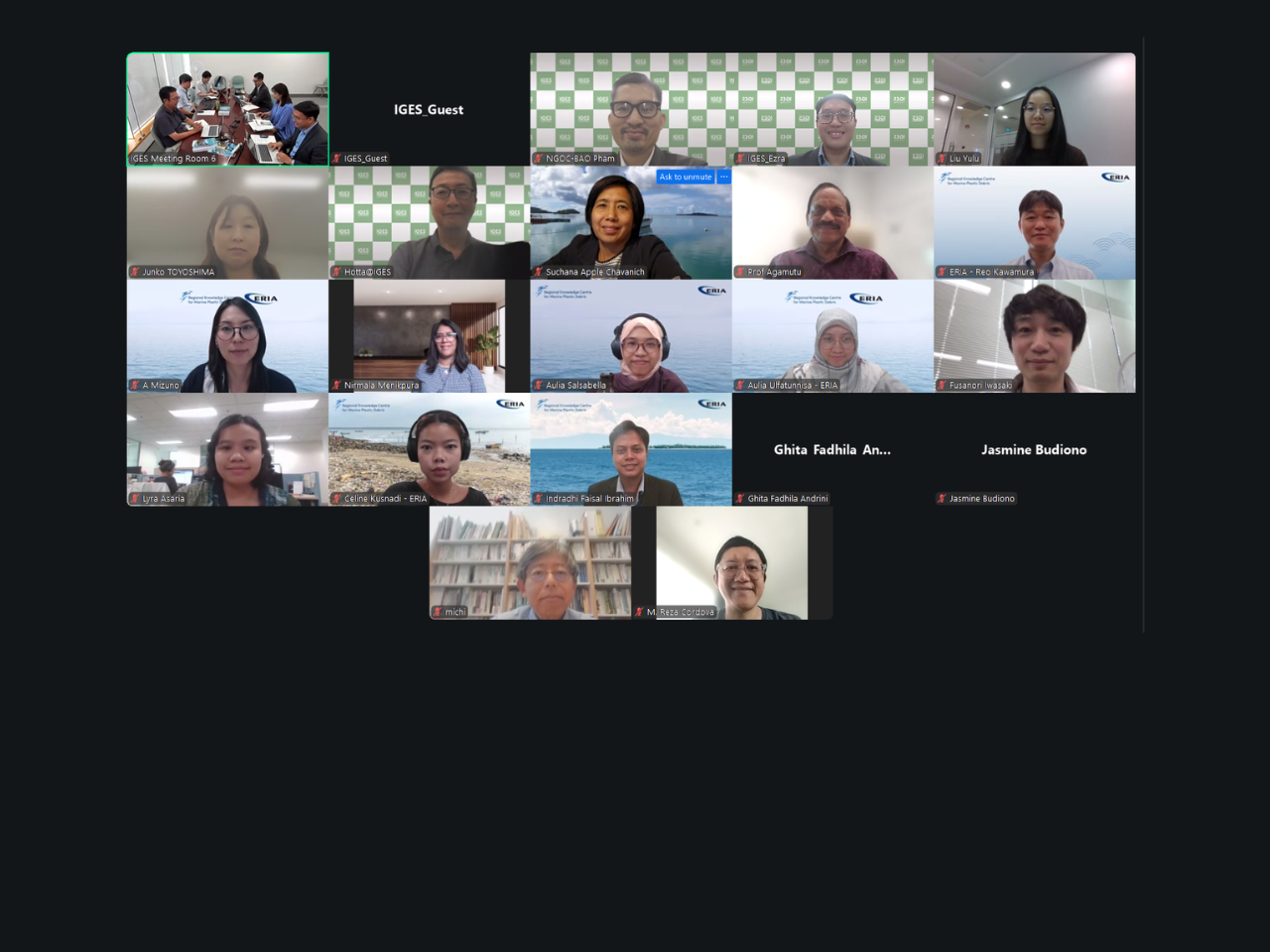




Jakarta, 31 March 2026: ERIA’s Regional Knowledge Centre for Marine Plastic Debris participated in an online event showcasing the final results of the regional project Breaking the Plastic Habit in ASEAN, funded by ERIA and implemented by the Institute for Global Environmental Strategies (IGES) with the support of Rare's Center for Behavior & the Environment (Rare’s BE.Center).
ASEAN countries have employed awareness campaigns as part of their communication tools to address growing concerns about plastic pollution. However, these efforts appear insufficient in significantly changing long-standing consumption habits and overcoming the ‘convenience’ barrier. To address this gap, Breaking the Plastic Habit in ASEAN was initiated by the Regional Knowledge Centre in 2022 in collaboration with IGES. The project’s second phase, launched in 2024, has just concluded.
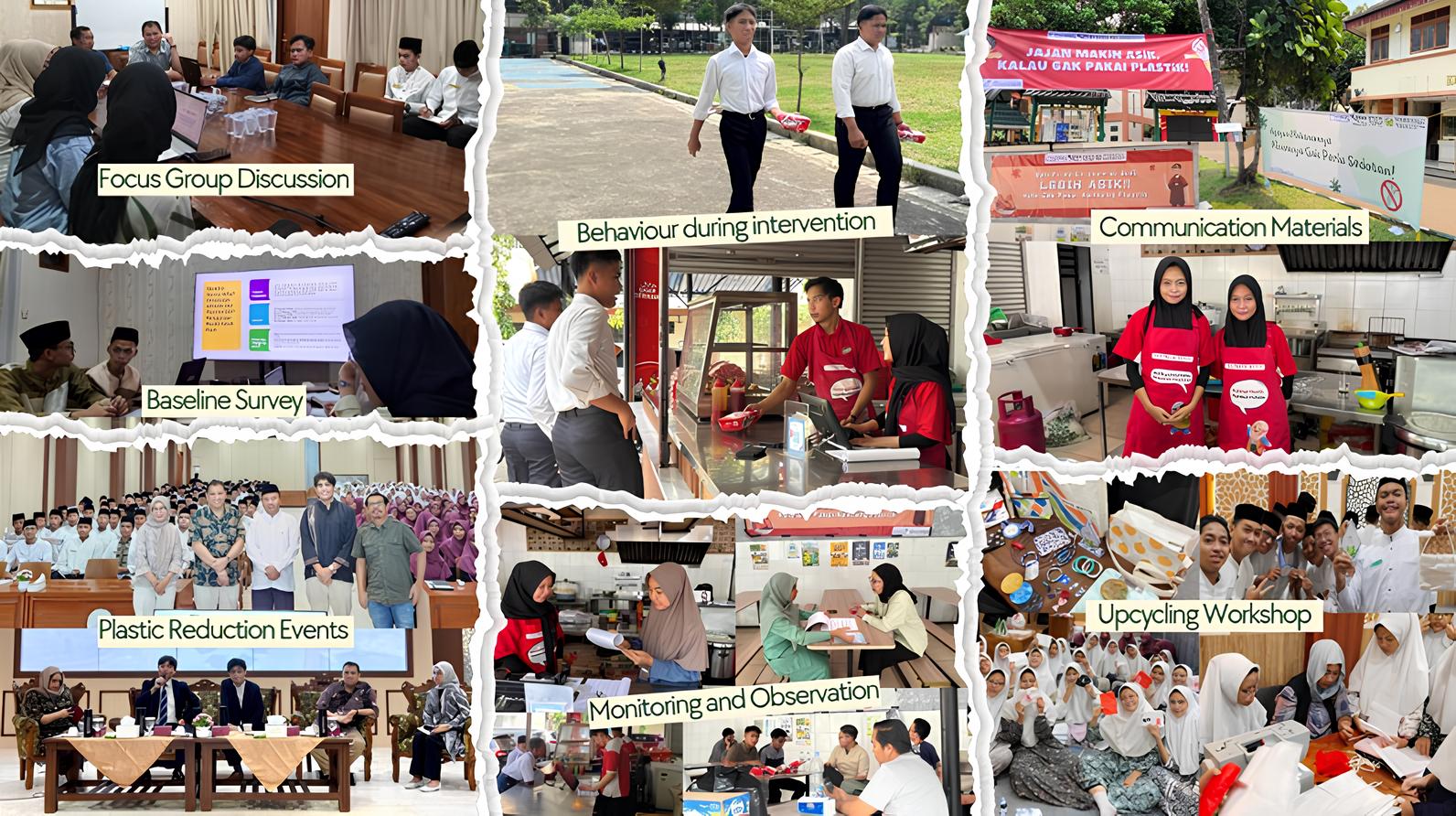
Through this project, behaviourally informed interventions were piloted to drive lasting reductions in plastic use across six countries: Cambodia, Indonesia, Lao PDR, the Philippines, Thailand, and Viet Nam. These country-specific pilot initiatives were implemented in real-life settings such as university campuses, food centres, and coffee shops. The project utilised six intervention levers put forth by Rare’s BE.Center: (1) information, (2) material incentives, (3) rules/regulations, (4) emotional appeals, (5) social influences, and (6) choice architecture.
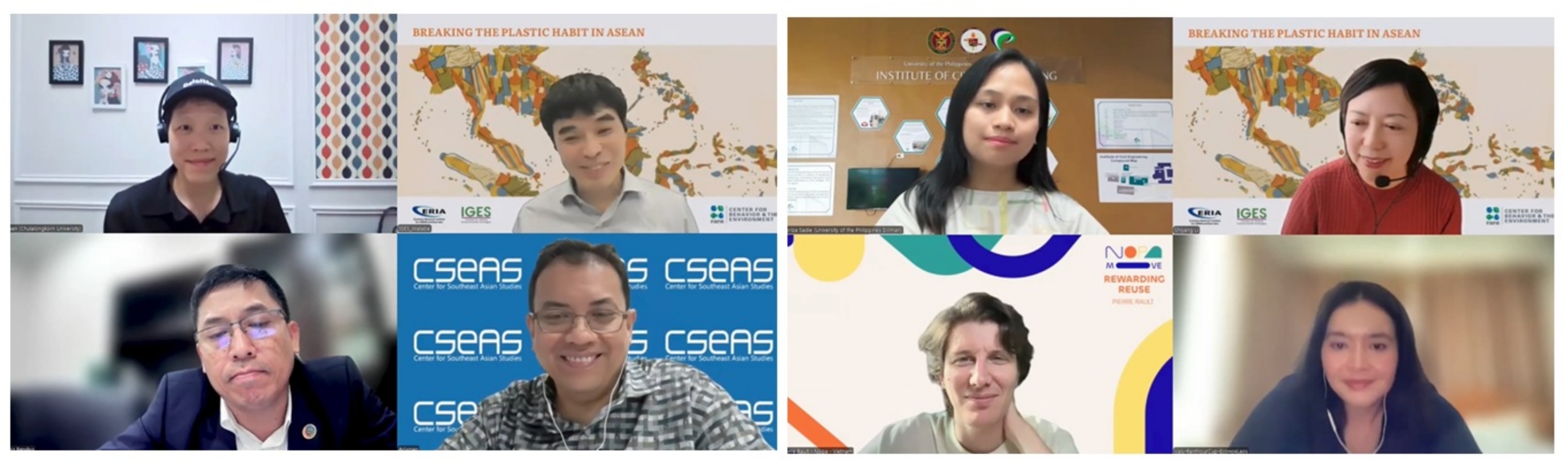
The final online dissemination event, attended by over 178 people across ASEAN and beyond, provided a platform to share practical lessons and insights from real-world cases, discuss implementation challenges, and examine how behaviour-centred approaches can inform and strengthen plastic reduction initiatives in the ASEAN context.
Ms Ayako Mizuno, Programme Manager of the Regional Knowledge Centre, delivered opening remarks, stating that Phase 2 of the project placed greater emphasis on (1) engaging a wider range of stakeholders, (2) strengthening monitoring and evaluation, and (3) embedding a more iterative approach into the project, which made implementation more complex. She commended the IGES team and local partners for ‘overcoming these challenges and generating insights that deepen our understanding and appreciation of this field of research.’
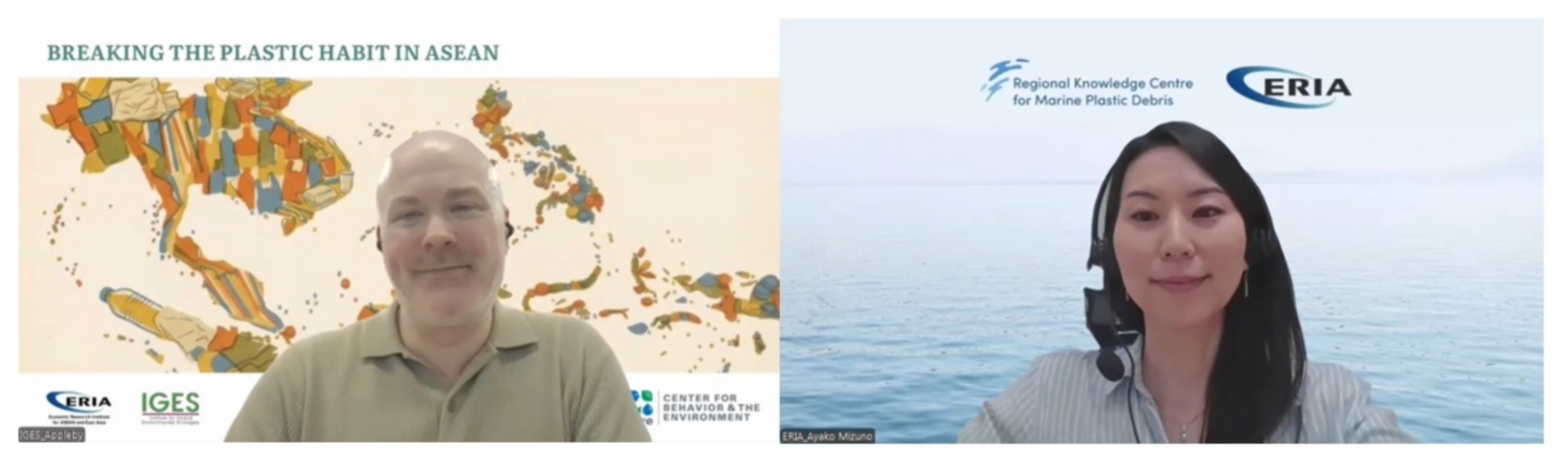
Mr Dwayne Appleby, Deputy Director of the Sustainable Consumption and Production Unit at IGES, shared five key lessons from the project implementation. He argued that for behaviourally informed projects to be effective in ASEAN, they must:
Embed behaviour change within locally meaningful cultural values, instead of framing it as a purely environmental issue
Make sustainable choices the default by reducing barriers and increasing ease of use/adoption
Establish clear regulatory standards, such as those related to hygiene, operational requirements, and certifications
Ensure enforcement of regulations for stronger compliance
Develop enabling infrastructure
The event also marked the launch of the project’s final report.

Programme Manager


Jakarta, 31 March 2026: ERIA’s Regional Knowledge Centre for Marine Plastic Debris participated in an online event showcasing the final results of the regional project Breaking the Plastic Habit in ASEAN, funded by ERIA and implemented by the Institute for Global Environmental Strategies (IGES) with the support of Rare's Center for Behavior & the Environment (Rare’s BE.Center).
ASEAN countries have employed awareness campaigns as part of their communication tools to address growing concerns about plastic pollution. However, these efforts appear insufficient in significantly changing long-standing consumption habits and overcoming the ‘convenience’ barrier. To address this gap, Breaking the Plastic Habit in ASEAN was initiated by the Regional Knowledge Centre in 2022 in collaboration with IGES. The project’s second phase, launched in 2024, has just concluded.
Through this project, behaviourally informed interventions were piloted to drive lasting reductions in plastic use across six countries: Cambodia, Indonesia, Lao PDR, the Philippines, Thailand, and Viet Nam. These country-specific pilot initiatives were implemented in real-life settings such as university campuses, food centres, and coffee shops. The project utilised six intervention levers put forth by Rare’s BE.Center: (1) information, (2) material incentives, (3) rules/regulations, (4) emotional appeals, (5) social influences, and (6) choice architecture.
The final online dissemination event, attended by over 178 people across ASEAN and beyond, provided a platform to share practical lessons and insights from real-world cases, discuss implementation challenges, and examine how behaviour-centred approaches can inform and strengthen plastic reduction initiatives in the ASEAN context.
Ms Ayako Mizuno, Programme Manager of the Regional Knowledge Centre, delivered opening remarks, stating that Phase 2 of the project placed greater emphasis on (1) engaging a wider range of stakeholders, (2) strengthening monitoring and evaluation, and (3) embedding a more iterative approach into the project, which made implementation more complex. She commended the IGES team and local partners for ‘overcoming these challenges and generating insights that deepen our understanding and appreciation of this field of research.’
Mr Dwayne Appleby, Deputy Director of the Sustainable Consumption and Production Unit at IGES, shared five key lessons from the project implementation. He argued that for behaviourally informed projects to be effective in ASEAN, they must:
Embed behaviour change within locally meaningful cultural values, instead of framing it as a purely environmental issue
Make sustainable choices the default by reducing barriers and increasing ease of use/adoption
Establish clear regulatory standards, such as those related to hygiene, operational requirements, and certifications
Ensure enforcement of regulations for stronger compliance
Develop enabling infrastructure
The event also marked the launch of the project’s final report.
Programme Manager