



Singapore, 31 January–1 February 2026: Southeast Asia is a global hotspot for plastic waste leakage into the ocean, placing the region’s rich marine biodiversity at significant risk. Against this backdrop, The Ocean Cleanup, in collaboration with the National University of Singapore (NUS), convened a two-day regional forum at NUS University Town (UTown) from 31 January to 1 February 2026. The forum brought together leading researchers, policymakers, investors, and private-sector actors to strengthen regional collaboration in addressing ocean plastic pollution.
The discussions were framed around three core themes: technical responses to plastic leakage, cross-sectoral partnerships, and innovative financial frameworks. In parallel, the forum highlighted the rapid expansion of The Ocean Cleanup’s 30 Cities Program, which is entering its most significant growth phase with plans to scale up operations in 18 new locations across Southeast Asia.
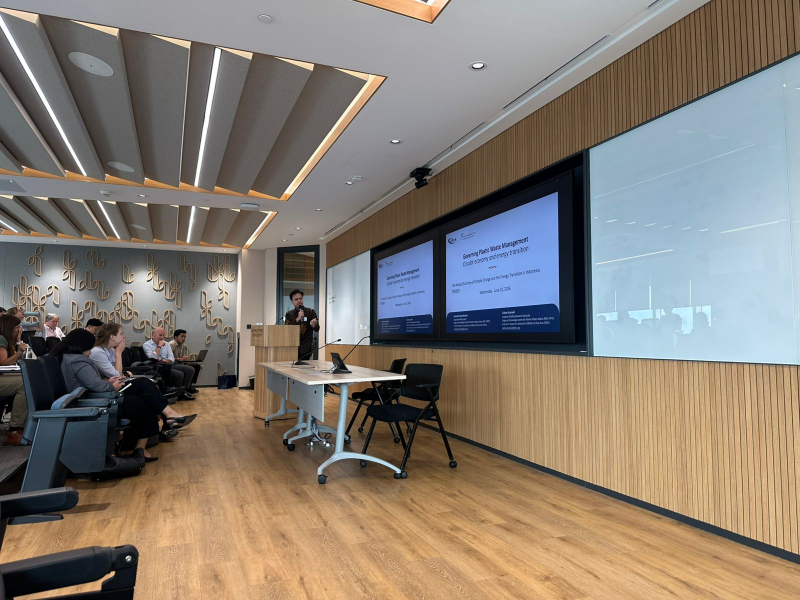
ERIA’s Regional Knowledge Centre for Marine Plastic Debris was invited to contribute insights on the state of marine plastic research in the region and to showcase its ongoing activities. Mr Reo Kawamura, Director for Environmental Policy and Head of the Regional Knowledge Centre, emphasised the Centre’s role as a regional knowledge clearinghouse, supporting evidence-based policymaking by disseminating the latest research findings and facilitating dialogue among stakeholders.
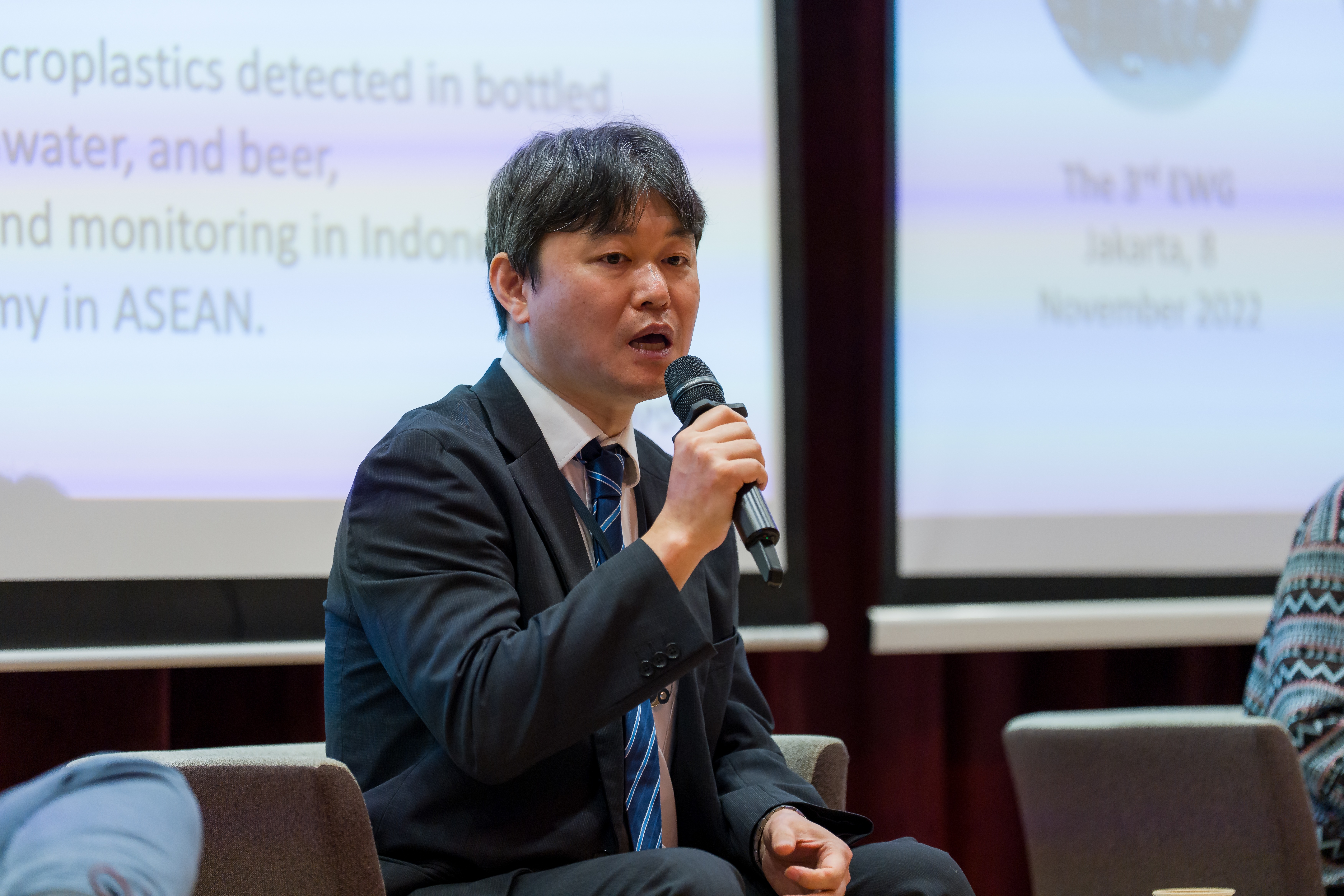
One key mechanism for advancing this work is ERIA’s Experts Working Group on Marine Plastic Debris (ERIA EWG), established in collaboration with the Institute for Global Environmental Strategies (IGES). The EWG brings together multidisciplinary experts to assess marine plastic challenges and solutions across Southeast Asia.
A flagship knowledge product of the EWG is the forthcoming book Plastic Pollution Countermeasures: Effective Global Actions and Case Studies from East Asia, widely referred to as the ‘ASEAN Plastic Book.’ Covering 21 chapters, the book combines cross-country thematic reviews – such as ecological impacts, behavioural change, and Intergovernmental Negotiating Committee (INC) negotiations – with country-specific case studies. It is expected to be launched in the first quarter of 2026 and aims to support both academic research and policy development.
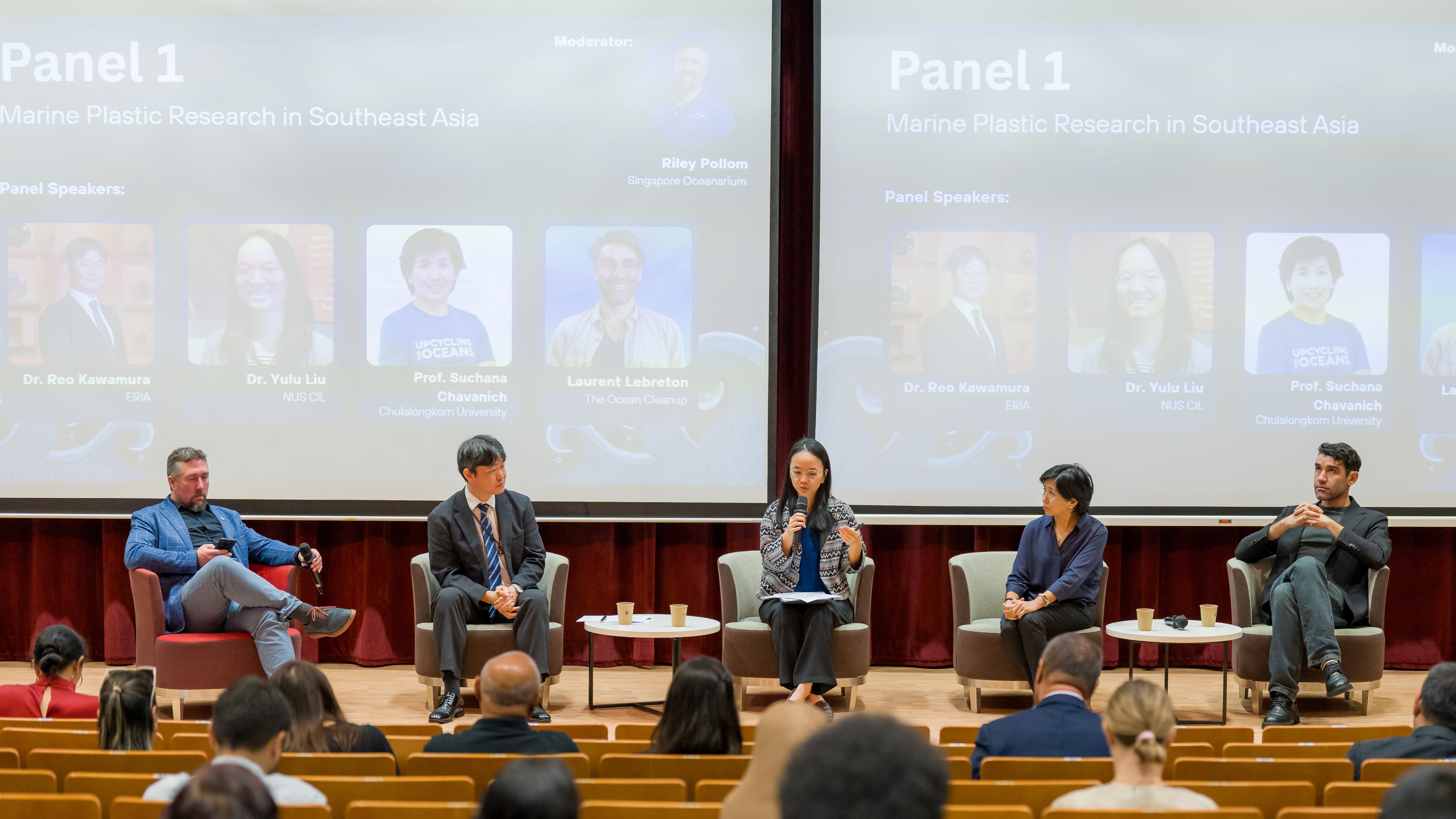
The panel on marine plastic research in Southeast Asia also featured Dr Liu Yulu, Research Fellow at the NUS Centre for International Law, who presented the Centre’s work on mapping the regional marine plastic research landscape. Prof. Suchana Chavanich of Chulalongkorn University highlighted emerging evidence on microplastics in coral reef ecosystems, noting that coral reefs can become ‘traps’ for microplastics. Mr Laurent Lebreton, Head of Research at The Ocean Cleanup, underscored the lack of standardised monitoring protocols as a critical research gap in the region.
Beyond research, the forum featured keynote addresses and panel discussions on topics ranging from the use of artificial intelligence (AI) in plastic monitoring and private-sector engagement to innovative financing through blue finance and philanthropy. Concluding the first day, Ms Nisha Bakker, Partnership Director of The Ocean Cleanup, highlighted three key messages: a healthy ocean is a shared interest, achieving it requires systemic change, and practical solutions already exist – calling for collective efforts to redirect resources and redefine priorities in tackling ocean plastic pollution.
Research Associate


Singapore, 31 January–1 February 2026: Southeast Asia is a global hotspot for plastic waste leakage into the ocean, placing the region’s rich marine biodiversity at significant risk. Against this backdrop, The Ocean Cleanup, in collaboration with the National University of Singapore (NUS), convened a two-day regional forum at NUS University Town (UTown) from 31 January to 1 February 2026. The forum brought together leading researchers, policymakers, investors, and private-sector actors to strengthen regional collaboration in addressing ocean plastic pollution.
The discussions were framed around three core themes: technical responses to plastic leakage, cross-sectoral partnerships, and innovative financial frameworks. In parallel, the forum highlighted the rapid expansion of The Ocean Cleanup’s 30 Cities Program, which is entering its most significant growth phase with plans to scale up operations in 18 new locations across Southeast Asia.
ERIA’s Regional Knowledge Centre for Marine Plastic Debris was invited to contribute insights on the state of marine plastic research in the region and to showcase its ongoing activities. Mr Reo Kawamura, Director for Environmental Policy and Head of the Regional Knowledge Centre, emphasised the Centre’s role as a regional knowledge clearinghouse, supporting evidence-based policymaking by disseminating the latest research findings and facilitating dialogue among stakeholders.
One key mechanism for advancing this work is ERIA’s Experts Working Group on Marine Plastic Debris (ERIA EWG), established in collaboration with the Institute for Global Environmental Strategies (IGES). The EWG brings together multidisciplinary experts to assess marine plastic challenges and solutions across Southeast Asia.
A flagship knowledge product of the EWG is the forthcoming book Plastic Pollution Countermeasures: Effective Global Actions and Case Studies from East Asia, widely referred to as the ‘ASEAN Plastic Book.’ Covering 21 chapters, the book combines cross-country thematic reviews – such as ecological impacts, behavioural change, and Intergovernmental Negotiating Committee (INC) negotiations – with country-specific case studies. It is expected to be launched in the first quarter of 2026 and aims to support both academic research and policy development.
The panel on marine plastic research in Southeast Asia also featured Dr Liu Yulu, Research Fellow at the NUS Centre for International Law, who presented the Centre’s work on mapping the regional marine plastic research landscape. Prof. Suchana Chavanich of Chulalongkorn University highlighted emerging evidence on microplastics in coral reef ecosystems, noting that coral reefs can become ‘traps’ for microplastics. Mr Laurent Lebreton, Head of Research at The Ocean Cleanup, underscored the lack of standardised monitoring protocols as a critical research gap in the region.
Beyond research, the forum featured keynote addresses and panel discussions on topics ranging from the use of artificial intelligence (AI) in plastic monitoring and private-sector engagement to innovative financing through blue finance and philanthropy. Concluding the first day, Ms Nisha Bakker, Partnership Director of The Ocean Cleanup, highlighted three key messages: a healthy ocean is a shared interest, achieving it requires systemic change, and practical solutions already exist – calling for collective efforts to redirect resources and redefine priorities in tackling ocean plastic pollution.
Research Associate