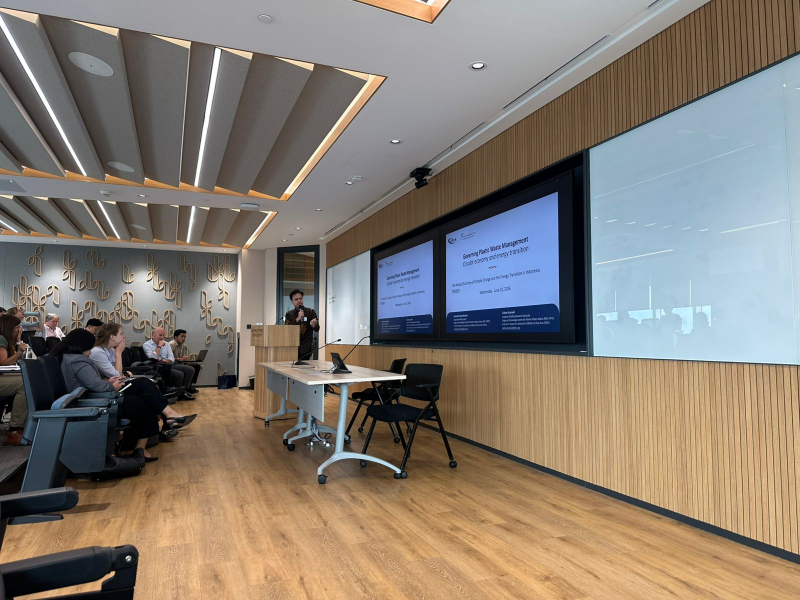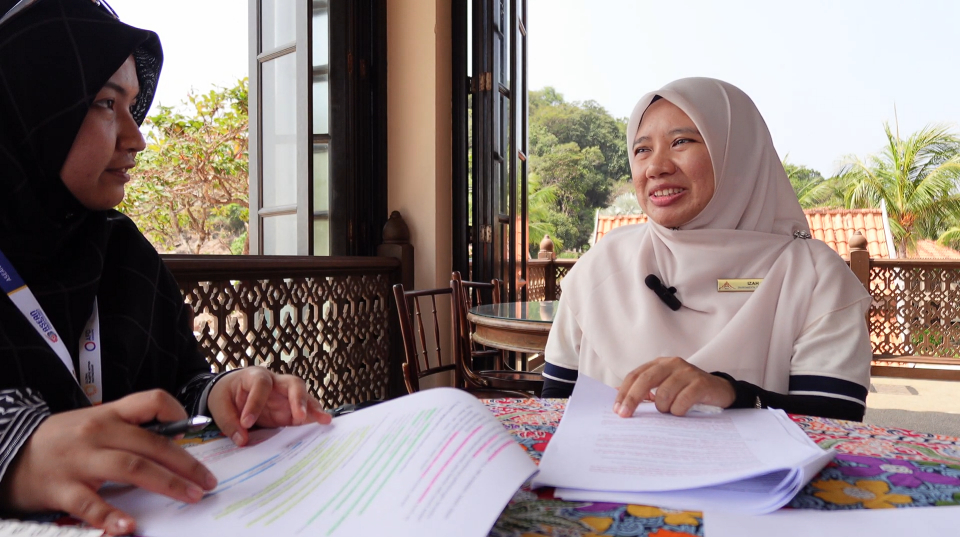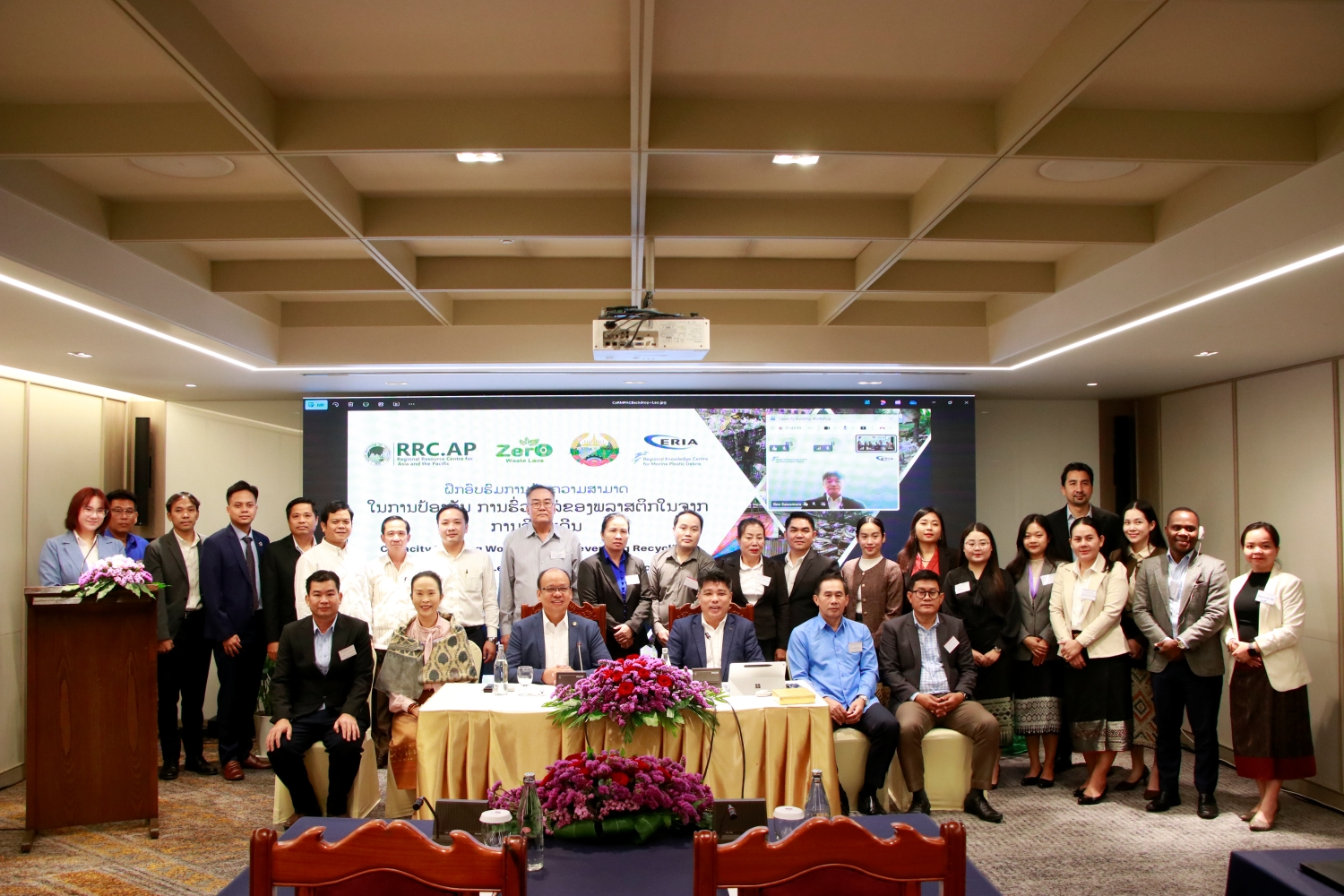




Bali, 2–3 December 2025: Against the backdrop of Bali’s coastline – where the impacts of plastic pollution are felt daily – the Regional Knowledge Centre for Marine Plastic Debris (the Centre) brought together a diverse community of government officers, city-level municipalities, university researchers, and young professionals from across ASEAN for the DECIDE Regional Training Workshop: Data and Evidence to Catalyse Informed Decision making and Engagement. Over 2 immersive days, participants worked to strengthen the region’s capacity to understand, monitor, and ultimately reduce marine plastic pollution.
The workshop gathered 40 participants from Cambodia, Indonesia, Lao PDR, the Philippines, and Thailand – each bringing unique perspectives from coastal management, environmental science, monitoring technology, policymaking, and research. They also brought the real-world challenges: data gaps, limited harmonisation of monitoring methods, and difficulties translating science into policy. Addressing these challenges together was the heart of DECIDE.
Several themes emerged throughout the workshop:
Evidence-based monitoring is achievable, even for resource-constrained agencies.
Youth engagement is critical for the long-term sustainability of monitoring efforts.
Harmonised methodologies and regional coordination remain ongoing needs.
Hands-on learning works – participants left more confident in their technical and analytical abilities.
Day 1 opened with remarks from Mr Reo Kawamuwa, the Centre’s Director, and Prof. Emenda Sembiring, Coordinator of the Indonesia Plastic Pollution Monitoring Hub (IPPH). Their messages converged on a common point: Although ASEAN is home to four of the world’s top marine plastic-emitting countries, the region’s capacity to track plastic leakage across land, rivers, and the ocean remains limited. Improving this evidence base is essential for meaningful policymaking.

Participants then dove into an overview of plastic pollution trends in ASEAN, presented by the Centre’s Capacity Building Expert, Mr Indradhi Faisal Ibrahim. His session highlighted both the environmental urgency and the opportunity for ASEAN to lead in monitoring innovation with the right tools, training, and coordination.
Technical sessions that followed sparked lively exchanges. Experts from the Geoinformatics Centre at the Asian Institute of Technology (GIC AIT) demonstrated how unmanned aerial vehicles (UAVs), stationary cameras, and remote-sensing dashboards are reshaping how we detect and quantify plastic leakage. Kyushu University introducing the Atlas of Ocean Microplastics (AOMI) platform, providing a clear entry point into microplastic monitoring. These sessions demystified what can often feel like complex scientific work – and showed that even government units with limited resources can start taking practical steps.
Case studies presented by IPPH grounded the conversation in reality: showing what is working in Indonesia today, where the bottlenecks are, and how local experience can guide regional collaboration. Participants also practised translating monitoring results into policy recommendations – a skill many identified as both a gap and a priority. Facilitators from Institute for Global Environmental Strategies (IGES) guided groups through examples of how data influences policymaking and regulatory evaluation.
The three stages of policymaking were introduced: mobilisation (establishing high-level committees and technical working groups), development of an action plan, and implementation and monitoring.
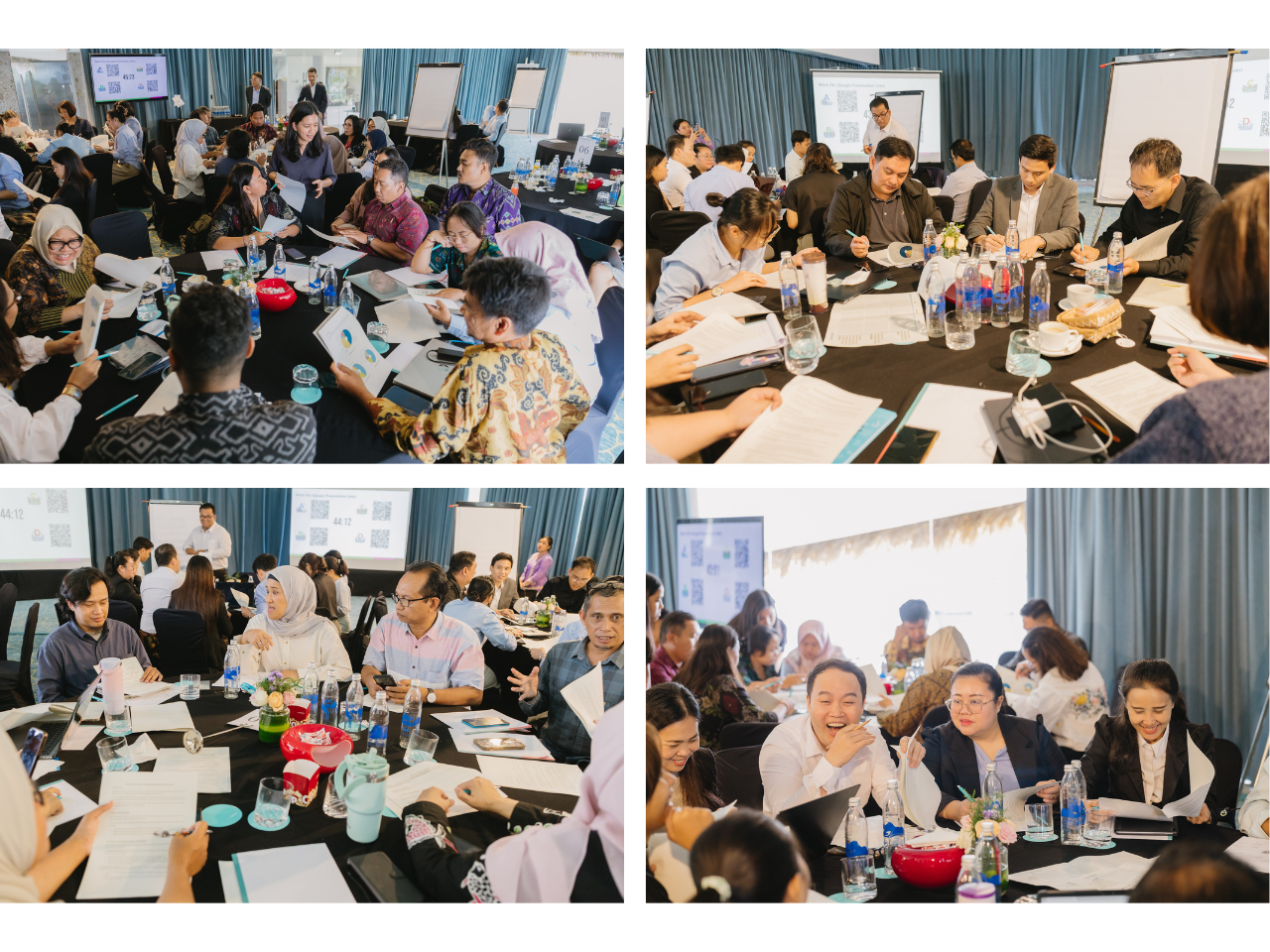

Day 2 at Udayana University shifted the spotlight toward researchers and early-career professionals – the next generation of monitoring leaders.
Following welcoming remarks from Prof. Dr Ir Wayan Nuarsa, M.Si., Dean of the Faculty of Fisheries and Marine Sciences at Udayana University, participants split into two simultaneous streams:
Macroplastics identification, including drone piloting, image capture, and digital quantification; and
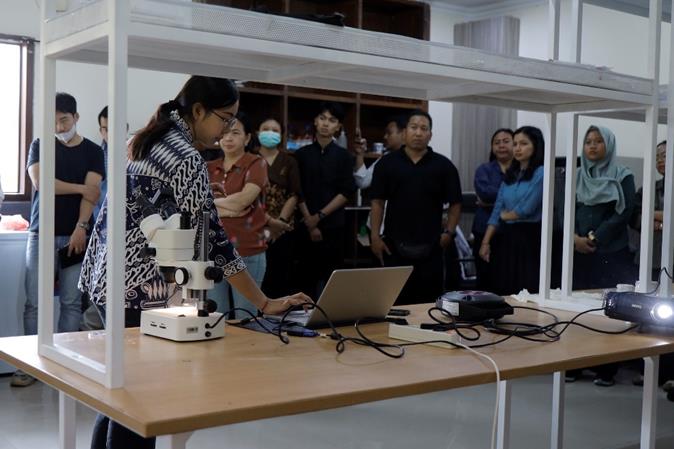
Microplastics identification, guided by laboratory technicians and researchers from Udayana University.
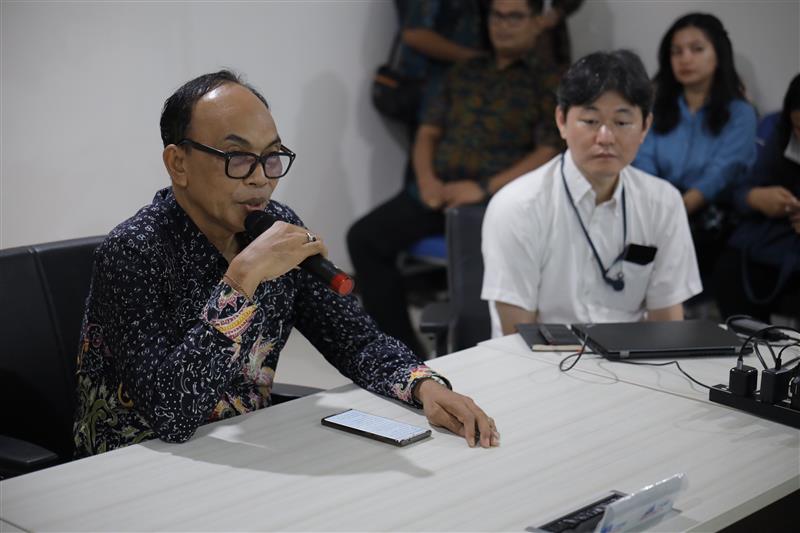

Between the sessions, participants also reflected on emerging opportunities in global negotiations (INC). Mr Fusanori Iwasaki, Research Fellow at ERIA, highlighted emerging opportunities in global negotiations (INC), situation regional monitoring efforts within the global context. Participants then discussed practical barriers to scaling monitoring efforts at home: limited funding, technical constraints, and coordination gaps, amongst others. Solutions proposed included further training, greater standardisation, stronger partnerships, and improved access to affordable tools.
The DECIDE workshop delivered more than technical training. It brought together a regional community of practitioners, inspired collaboration between institutions, and highlighted the crucial link between data generation and policy application.
To support broader learning, workshop materials will be published on our website for wider dissemination across the region.
The Centre will build on this momentum through continued capacity building and research, and expanded collaboration with stakeholders to enhance data monitoring and evidence-based policy efforts.
With that spirit, DECIDE marks not an end, but the beginning of a stronger, better-coordinated ASEAN community capable of turning data into action for a cleaner, more resilient future.

Research Associate for Capacity Building


Bali, 2–3 December 2025: Against the backdrop of Bali’s coastline – where the impacts of plastic pollution are felt daily – the Regional Knowledge Centre for Marine Plastic Debris (the Centre) brought together a diverse community of government officers, city-level municipalities, university researchers, and young professionals from across ASEAN for the DECIDE Regional Training Workshop: Data and Evidence to Catalyse Informed Decision making and Engagement. Over 2 immersive days, participants worked to strengthen the region’s capacity to understand, monitor, and ultimately reduce marine plastic pollution.
The workshop gathered 40 participants from Cambodia, Indonesia, Lao PDR, the Philippines, and Thailand – each bringing unique perspectives from coastal management, environmental science, monitoring technology, policymaking, and research. They also brought the real-world challenges: data gaps, limited harmonisation of monitoring methods, and difficulties translating science into policy. Addressing these challenges together was the heart of DECIDE.
Several themes emerged throughout the workshop:
Evidence-based monitoring is achievable, even for resource-constrained agencies.
Youth engagement is critical for the long-term sustainability of monitoring efforts.
Harmonised methodologies and regional coordination remain ongoing needs.
Hands-on learning works – participants left more confident in their technical and analytical abilities.
Day 1 opened with remarks from Mr Reo Kawamuwa, the Centre’s Director, and Prof. Emenda Sembiring, Coordinator of the Indonesia Plastic Pollution Monitoring Hub (IPPH). Their messages converged on a common point: Although ASEAN is home to four of the world’s top marine plastic-emitting countries, the region’s capacity to track plastic leakage across land, rivers, and the ocean remains limited. Improving this evidence base is essential for meaningful policymaking.
Participants then dove into an overview of plastic pollution trends in ASEAN, presented by the Centre’s Capacity Building Expert, Mr Indradhi Faisal Ibrahim. His session highlighted both the environmental urgency and the opportunity for ASEAN to lead in monitoring innovation with the right tools, training, and coordination.
Technical sessions that followed sparked lively exchanges. Experts from the Geoinformatics Centre at the Asian Institute of Technology (GIC AIT) demonstrated how unmanned aerial vehicles (UAVs), stationary cameras, and remote-sensing dashboards are reshaping how we detect and quantify plastic leakage. Kyushu University introducing the Atlas of Ocean Microplastics (AOMI) platform, providing a clear entry point into microplastic monitoring. These sessions demystified what can often feel like complex scientific work – and showed that even government units with limited resources can start taking practical steps.
Case studies presented by IPPH grounded the conversation in reality: showing what is working in Indonesia today, where the bottlenecks are, and how local experience can guide regional collaboration. Participants also practised translating monitoring results into policy recommendations – a skill many identified as both a gap and a priority. Facilitators from Institute for Global Environmental Strategies (IGES) guided groups through examples of how data influences policymaking and regulatory evaluation.
The three stages of policymaking were introduced: mobilisation (establishing high-level committees and technical working groups), development of an action plan, and implementation and monitoring.
Day 2 at Udayana University shifted the spotlight toward researchers and early-career professionals – the next generation of monitoring leaders.
Following welcoming remarks from Prof. Dr Ir Wayan Nuarsa, M.Si., Dean of the Faculty of Fisheries and Marine Sciences at Udayana University, participants split into two simultaneous streams:
Macroplastics identification, including drone piloting, image capture, and digital quantification; and
Microplastics identification, guided by laboratory technicians and researchers from Udayana University.
Between the sessions, participants also reflected on emerging opportunities in global negotiations (INC). Mr Fusanori Iwasaki, Research Fellow at ERIA, highlighted emerging opportunities in global negotiations (INC), situation regional monitoring efforts within the global context. Participants then discussed practical barriers to scaling monitoring efforts at home: limited funding, technical constraints, and coordination gaps, amongst others. Solutions proposed included further training, greater standardisation, stronger partnerships, and improved access to affordable tools.
The DECIDE workshop delivered more than technical training. It brought together a regional community of practitioners, inspired collaboration between institutions, and highlighted the crucial link between data generation and policy application.
To support broader learning, workshop materials will be published on our website for wider dissemination across the region.
The Centre will build on this momentum through continued capacity building and research, and expanded collaboration with stakeholders to enhance data monitoring and evidence-based policy efforts.
With that spirit, DECIDE marks not an end, but the beginning of a stronger, better-coordinated ASEAN community capable of turning data into action for a cleaner, more resilient future.
Research Associate for Capacity Building