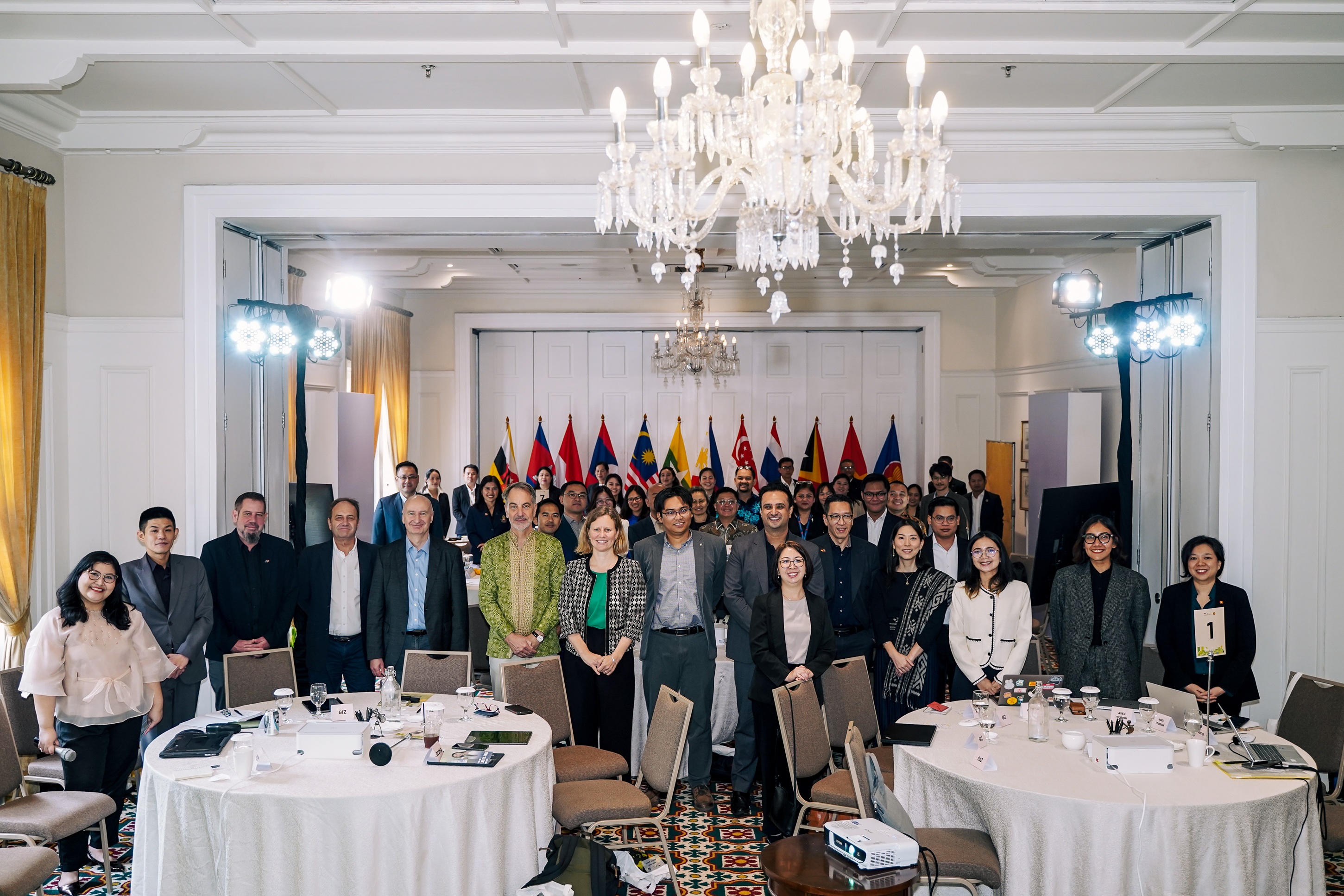




Jakarta, 4 December 2025: ERIA’s Regional Knowledge Centre for Marine Plastic Debris participated in the Closing Workshop of the ASEAN Municipal Solid Waste Management Enhancement (AMUSE) Project, funded by the German Federal Ministry for Economic Cooperation and Development (BMZ) and implemented by GIZ in co-operation with the ASEAN Secretariat (ASEC) Environment Division.
The AMUSE Project supports municipalities, the tourism sector, and local communities in Cambodia, Lao PDR, Thailand, and Viet Nam – particularly in small and medium-sized cities – in advancing sustainable waste management.
To mark the end of the 3-year project (2022–2025), the final workshop presented key achievements, lessons learned, and the project’s overall impact. The event brought together ASEAN Working Group on Environmentally Sustainable Cities (AWGESC) members, representatives from the environment and tourism sectors, and local authorities from AMUSE pilot cities, alongside the ASEC Environment and Tourism Divisions.
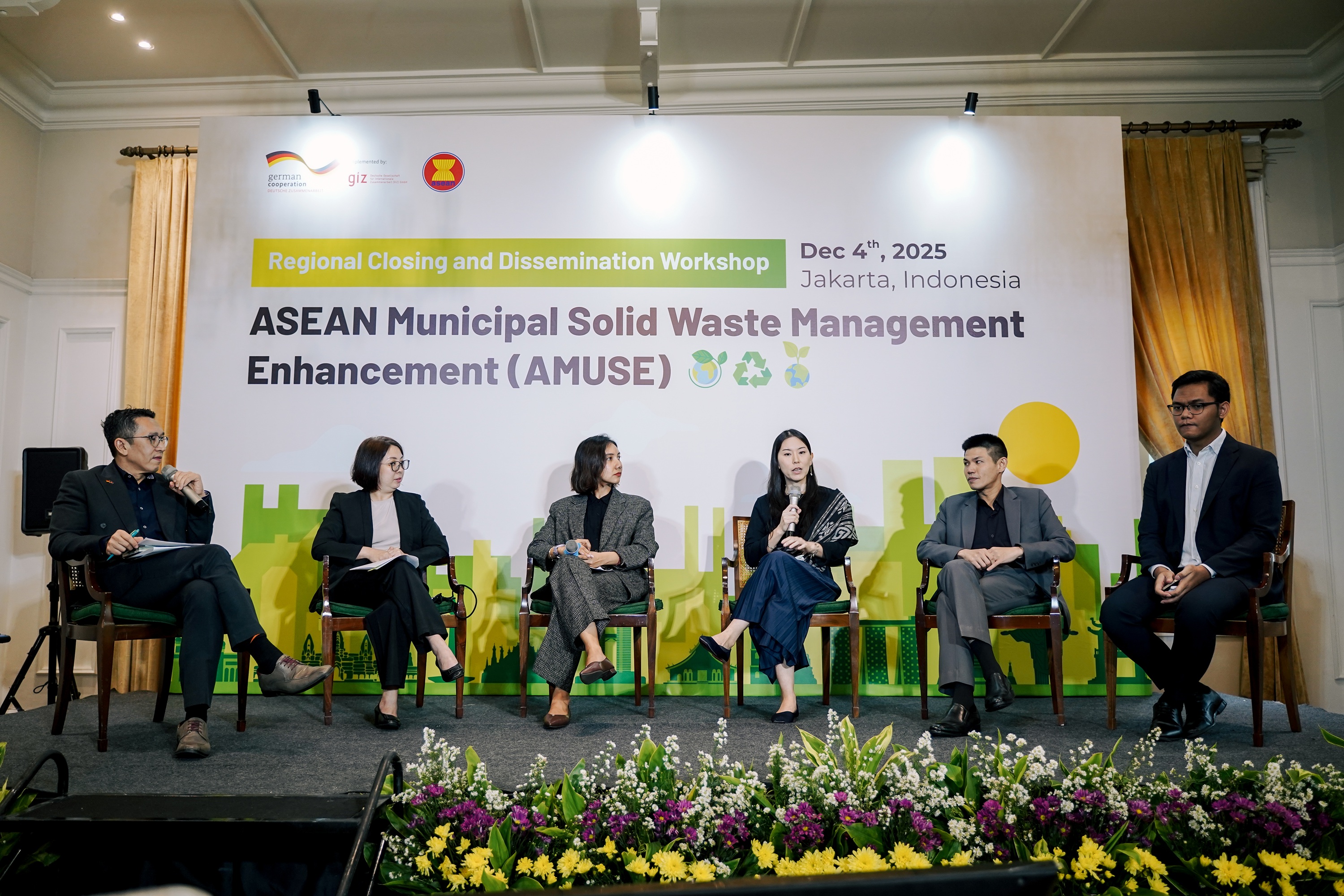
At Plenary Session 3, ‘Regional Cooperation & Knowledge Platform: Achievements and Lessons Learned,’ which reflected on AMUSE’s contribution to regional co-operation, capacity building, cross-sectoral dialogues, and knowledge-platform development, Ms Ayako Mizuno of the Regional Knowledge Centre for Marine Plastic Debris served as a panellist.
When asked which aspects of AMUSE’s regional co-operation would be most relevant for the region moving forward, Ms Mizuno began by congratulating the four ASEAN countries and GIZ for the project’s many achievements. She also welcomed the announcement, delivered in the opening remarks by Mr Hans-Ludwig Bruns, Country Director of GIZ Indonesia and ASEAN, that the second phase of the 3RproMar project will build on several AMUSE’s activities. The new phase will focus on (1) Circular Economy, (2) Sustainable Business Models, (3) Behavioural Change, and (4) Environmental Education – areas that closely align with the priorities of ERIA’s Regional Knowledge Centre. Ms Mizuno also expressed ERIA’s willingness to continue collaborating with the GIZ team.
During the workshop, the ASEAN Knowledge Platform on Waste Management and Sustainable Tourism website was also presented, with the announcement that its management will be transferred to the ASEAN Circular Economy Stakeholder Platform (ACESP). When asked about potential alignment or collaboration between ERIA’s platform and the AMUSE platform, Ms Mizuno said, ‘Where there is a risk of overlap, there is also an inherent opportunity for collaboration, and this is achievable when colleagues foster open communication with constructive intent.’ She added that the ERIA team would be pleased to support the ASEAN Centre for Sustainable Development Studies and Dialogue (ACSDSD), particularly in disseminating knowledge products – an area highlighted as important by Ms Natalia Derodofa, Senior Officer at the Environment Division of the ASEAN Secretariat, during the same session.

Programme Manager


Jakarta, 4 December 2025: ERIA’s Regional Knowledge Centre for Marine Plastic Debris participated in the Closing Workshop of the ASEAN Municipal Solid Waste Management Enhancement (AMUSE) Project, funded by the German Federal Ministry for Economic Cooperation and Development (BMZ) and implemented by GIZ in co-operation with the ASEAN Secretariat (ASEC) Environment Division.
The AMUSE Project supports municipalities, the tourism sector, and local communities in Cambodia, Lao PDR, Thailand, and Viet Nam – particularly in small and medium-sized cities – in advancing sustainable waste management.
To mark the end of the 3-year project (2022–2025), the final workshop presented key achievements, lessons learned, and the project’s overall impact. The event brought together ASEAN Working Group on Environmentally Sustainable Cities (AWGESC) members, representatives from the environment and tourism sectors, and local authorities from AMUSE pilot cities, alongside the ASEC Environment and Tourism Divisions.
At Plenary Session 3, ‘Regional Cooperation & Knowledge Platform: Achievements and Lessons Learned,’ which reflected on AMUSE’s contribution to regional co-operation, capacity building, cross-sectoral dialogues, and knowledge-platform development, Ms Ayako Mizuno of the Regional Knowledge Centre for Marine Plastic Debris served as a panellist.
When asked which aspects of AMUSE’s regional co-operation would be most relevant for the region moving forward, Ms Mizuno began by congratulating the four ASEAN countries and GIZ for the project’s many achievements. She also welcomed the announcement, delivered in the opening remarks by Mr Hans-Ludwig Bruns, Country Director of GIZ Indonesia and ASEAN, that the second phase of the 3RproMar project will build on several AMUSE’s activities. The new phase will focus on (1) Circular Economy, (2) Sustainable Business Models, (3) Behavioural Change, and (4) Environmental Education – areas that closely align with the priorities of ERIA’s Regional Knowledge Centre. Ms Mizuno also expressed ERIA’s willingness to continue collaborating with the GIZ team.
During the workshop, the ASEAN Knowledge Platform on Waste Management and Sustainable Tourism website was also presented, with the announcement that its management will be transferred to the ASEAN Circular Economy Stakeholder Platform (ACESP). When asked about potential alignment or collaboration between ERIA’s platform and the AMUSE platform, Ms Mizuno said, ‘Where there is a risk of overlap, there is also an inherent opportunity for collaboration, and this is achievable when colleagues foster open communication with constructive intent.’ She added that the ERIA team would be pleased to support the ASEAN Centre for Sustainable Development Studies and Dialogue (ACSDSD), particularly in disseminating knowledge products – an area highlighted as important by Ms Natalia Derodofa, Senior Officer at the Environment Division of the ASEAN Secretariat, during the same session.
Programme Manager