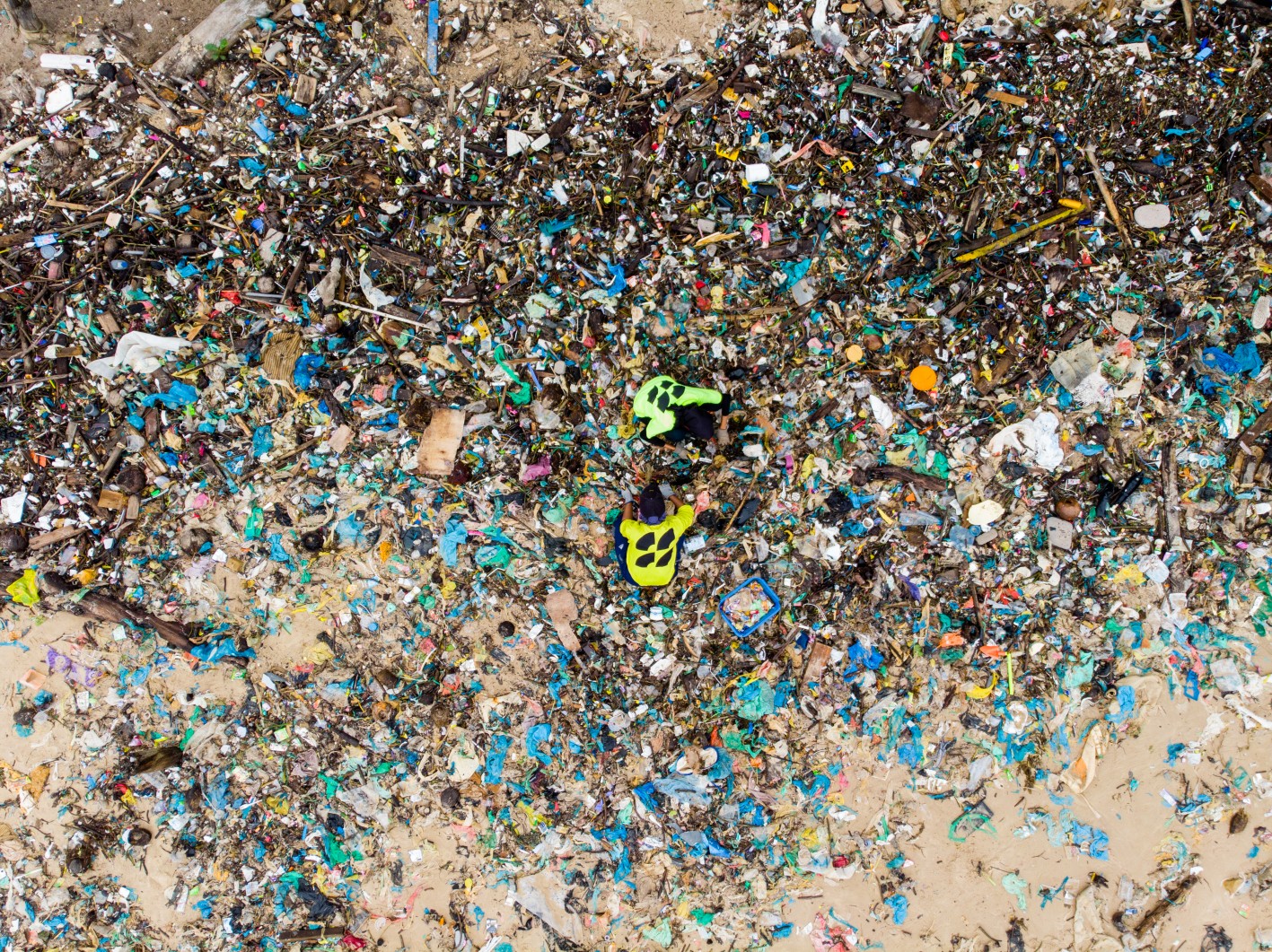




Cleaning up plastic waste is labour-intensive and costly, and demands sustained effort. Yet for decades, there has been no clear answer to this basic question: who should pay to clean the ocean, and under what conditions?
Seven Clean Seas was founded to address that gap. Headquartered in Singapore and currently operating across Indonesia and Thailand, with plans to expand globally, the organisation has built a business model around one core idea: to get paid to clean the ocean, while ensuring that the people doing the work are formally employed, fairly paid, and protected.
In this fourth edition of Beyond the Business, the Regional Knowledge Centre for Marine Plastic Debris speaks with Tom Peacock-Nazil, CEO and Co-Founder of Seven Clean Seas, about the organisation’s evolution from volunteer beach clean-ups into a multi-country operation, and how it developed a business model that links plastic recovery with formal employment and system-level change.
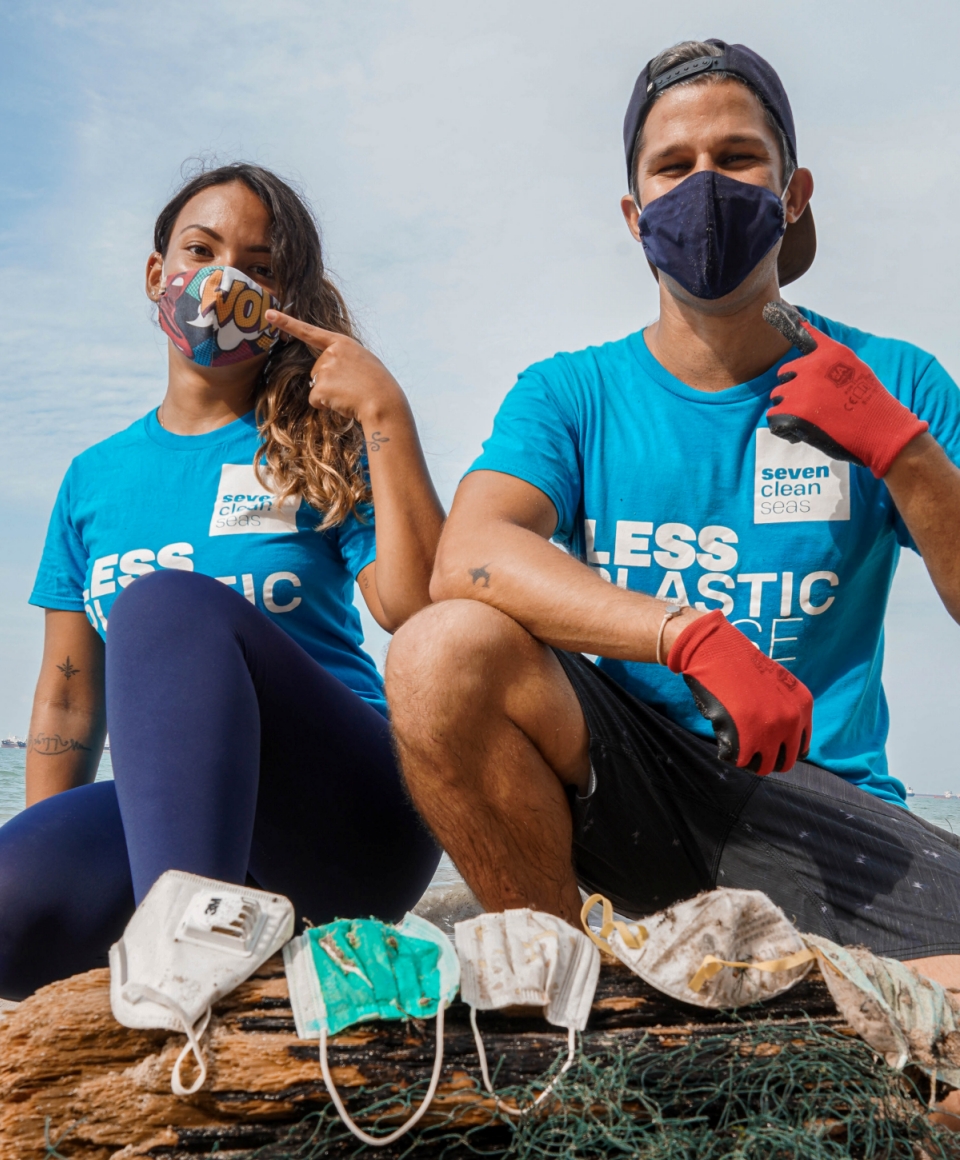
Tom Peacock-Nazil: Seven Clean Seas started based on very personal motivation. I grew up in the UK but am half-Malaysian, and I’ve been coming back to Southeast Asia my entire life. My wife and I lived in Singapore for years, and we spent a lot of time travelling around the Southeast Asian region. We love the ocean: swimming, diving, surfing.
Like many people, I’d seen plastic pollution everywhere for years and had almost become numb to it. But there was one trip to Thailand, where the scale of plastic pollution in such a beautiful place was a real shock. It was the first time I saw it as a fundamental crisis – not just litter, but a sign that something had gone very wrong in how we’ve organised society.
At the time, we were both working in finance. We weren’t environmental activists, but we felt we had to do something. So we started organising beach clean-ups in Singapore, initially just to help people see the issue for themselves. Singapore is famously clean, but when we went to mangroves and less-visited beaches – especially during the southwest monsoon season – they were full of plastic.
The response to our mobilisation was incredible. We went from 30 people to 150, then 250, and at one point, over 600 volunteers. Soon after, companies began reaching out, asking us to organise clean-up activities for their staff. That was when it clicked: people cared deeply about the issue, there was real demand, and impact could even translate into a business opportunity.
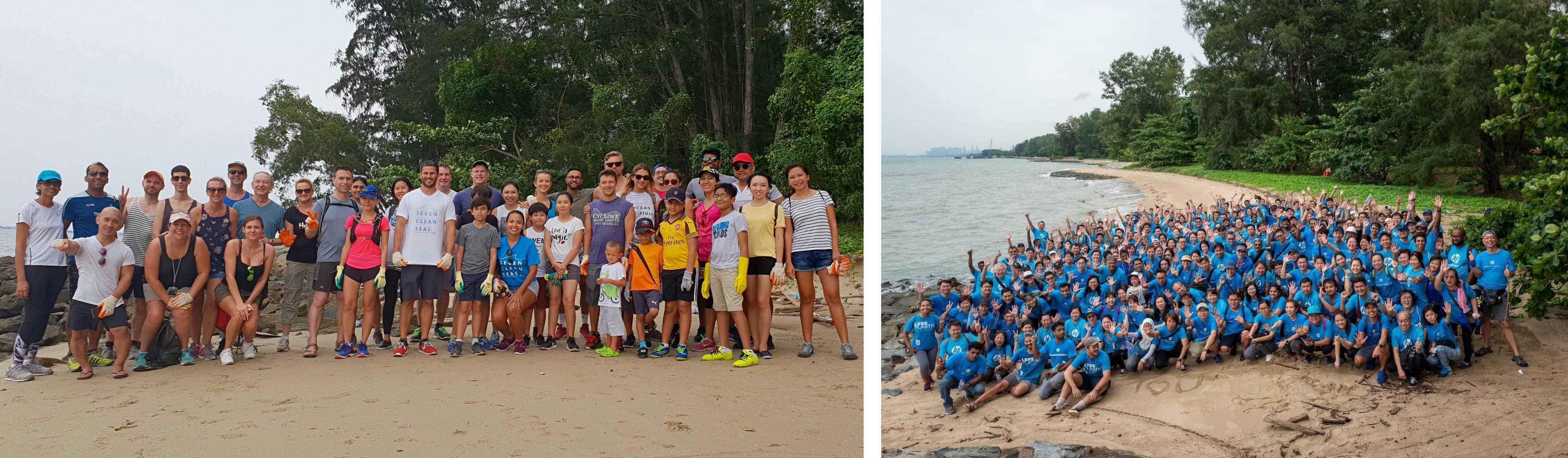
That shift happened almost accidentally. Companies started reaching out to us, asking if we could organise beach clean-ups for their staff as CSR activities. At first, I was very surprised – people wanted to pay to do something we had been doing voluntarily. But we realised that if companies were willing to pay, that money could be used to scale impact.
Over two years, we built a community of volunteers doing free clean-ups, while companies paid modest fees for organised CSR events. We saved around US$47,000, which eventually became the seed funding for Seven Clean Seas.
At its core, Seven Clean Seas is a for-profit social enterprise that gets paid to clean the ocean. What we sell is verified environmental impact, delivered in different ways depending on the partner.
Plastic credits are our most well-known tool, but they’re only part of the picture. We also work with companies through brand partnerships, corporate giving, and sustainability consultancy, where we help them understand their plastic footprint and take responsibility for what they cannot yet eliminate.
Across all models, the outcome is the same: professionally run plastic recovery projects, formal employment for local teams, and credible, traceable impact. Every dollar we receive goes toward removing plastic from the environment – more funding means more impact, and that alignment is fundamental to how we operate.
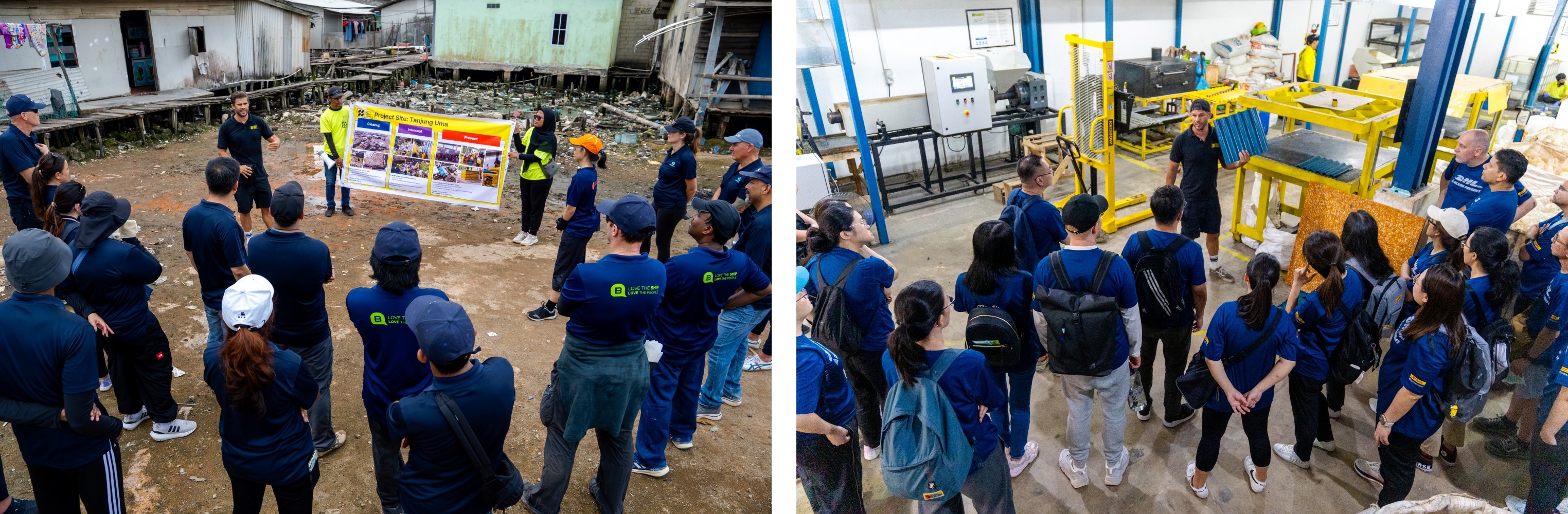
Plastic credits are essentially a third-party certified and independently audited chain-of-custody tool. They allow a company or organisation to say: ‘I want to fund the removal of X tonnes of plastic from the ocean, and I need proof that it has actually happened.’
The concept emerged organically. In 2018, a German fair-trade company called Einhorn approached us after addressing carbon emissions and labour standards but still needing six tonnes of plastic for packaging. The company asked if we could remove an equivalent amount of plastic from the ocean. At the time, the term ‘plastic credits’ didn’t exist – there were no standards or certifications – so we tracked everything manually and issued what became one of the world’s first plastic credit transactions.
Since then, the space has evolved significantly. Today, we operate projects certified under recognised standards such as Verra’s Plastic Waste Reduction Standard and the Ocean Bound Plastic certification, with independent audits and governance built in. Each credit represents a verified quantity of plastic collected from a specific location, tracked and retired to prevent double counting, and backed by detailed data on waste composition, collection, and management.
One of our strongest principles is that we do not rely on informal labour. We build systems based on 100% formally employed staff – long-term contracts, minimum or above-minimum wages, social security, paid leave, and capped working hours. This is important because I believe plastic pollution is, at its root, a poverty issue. If we build waste management systems that depend on informal, underpaid labour, we may remove plastic – but we entrench inequality.
We’ve seen what formal employment can do. In Batam – an industrial island city in Indonesia’s Riau Islands province, located just south of Singapore – one staff member went from 8 years of debt to financial stability within a year of formal employment. Their income increased by nearly 300%. That kind of change has ripple effects across families and communities.
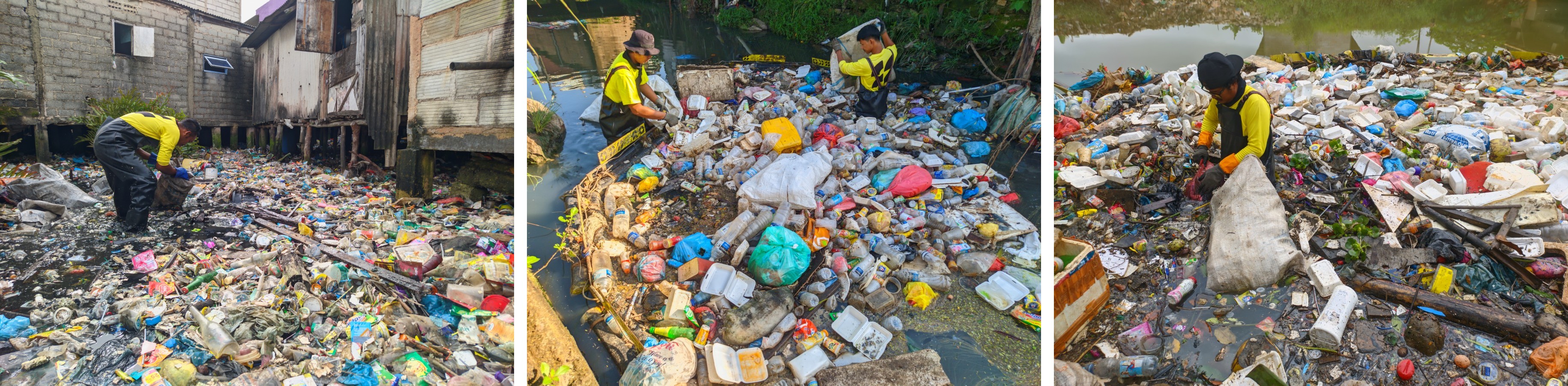
Because private companies put plastic into the world. For decades, many companies prioritised profit without thinking about what happens to waste after use.
That’s changing. ESG regulations, investor pressure, and competition for talent are pushing companies to think beyond carbon. Biodiversity, oceans, and plastic pollution are now material issues.
Purpose is no longer just ethical – it’s good business. Companies that invest in sustainability often see better customer retention, talent attraction, and differentiation.
The biggest challenge has been securing long-term and continuous funding. We designed Seven Clean Seas so that impact and revenue are directly linked – every dollar raised removes plastic from the environment. Paradoxically, creating impact is the easy part; we know how to collect plastic at scale. The challenge is financing open-ended projects. We’ve never closed a project or missed a salary, and sustaining that commitment requires constant focus on partnerships and revenue generation.
There were definitely moments when I questioned whether this could work. Running a mission-driven company means carrying environmental targets without the certainty of revenue, while committing to continuous projects, formal employment, and never missing salaries. That financial pressure – especially knowing we often collect more plastic than we’re paid to remove – can be overwhelming.
What kept me going was the impact on the ground. Seeing stable jobs transform lives and coastlines visibly improve makes the mission personal. Once you see that, walking away is no longer an option.
Our vision is to scale credible, community-based plastic recovery across Southeast Asia and beyond, while pushing the industry toward higher standards of transparency, labour protection, and governance.
Ultimately, if we can address the gaps in funding, systems, and accountability, that would be success. Until then, our job is to prove that cleaning the ocean can be done ethically, transparently, and at scale.
Build a community first, not a business. Go out and do the work – clean up, engage people, create momentum. When impact comes first, credibility and trust follow. That’s how Seven Clean Seas began, and the business grew naturally from there.

Research Associate for Capacity Building


Cleaning up plastic waste is labour-intensive and costly, and demands sustained effort. Yet for decades, there has been no clear answer to this basic question: who should pay to clean the ocean, and under what conditions?
Seven Clean Seas was founded to address that gap. Headquartered in Singapore and currently operating across Indonesia and Thailand, with plans to expand globally, the organisation has built a business model around one core idea: to get paid to clean the ocean, while ensuring that the people doing the work are formally employed, fairly paid, and protected.
In this fourth edition of Beyond the Business, the Regional Knowledge Centre for Marine Plastic Debris speaks with Tom Peacock-Nazil, CEO and Co-Founder of Seven Clean Seas, about the organisation’s evolution from volunteer beach clean-ups into a multi-country operation, and how it developed a business model that links plastic recovery with formal employment and system-level change.
Tom Peacock-Nazil: Seven Clean Seas started based on very personal motivation. I grew up in the UK but am half-Malaysian, and I’ve been coming back to Southeast Asia my entire life. My wife and I lived in Singapore for years, and we spent a lot of time travelling around the Southeast Asian region. We love the ocean: swimming, diving, surfing.
Like many people, I’d seen plastic pollution everywhere for years and had almost become numb to it. But there was one trip to Thailand, where the scale of plastic pollution in such a beautiful place was a real shock. It was the first time I saw it as a fundamental crisis – not just litter, but a sign that something had gone very wrong in how we’ve organised society.
At the time, we were both working in finance. We weren’t environmental activists, but we felt we had to do something. So we started organising beach clean-ups in Singapore, initially just to help people see the issue for themselves. Singapore is famously clean, but when we went to mangroves and less-visited beaches – especially during the southwest monsoon season – they were full of plastic.
The response to our mobilisation was incredible. We went from 30 people to 150, then 250, and at one point, over 600 volunteers. Soon after, companies began reaching out, asking us to organise clean-up activities for their staff. That was when it clicked: people cared deeply about the issue, there was real demand, and impact could even translate into a business opportunity.
That shift happened almost accidentally. Companies started reaching out to us, asking if we could organise beach clean-ups for their staff as CSR activities. At first, I was very surprised – people wanted to pay to do something we had been doing voluntarily. But we realised that if companies were willing to pay, that money could be used to scale impact.
Over two years, we built a community of volunteers doing free clean-ups, while companies paid modest fees for organised CSR events. We saved around US$47,000, which eventually became the seed funding for Seven Clean Seas.
At its core, Seven Clean Seas is a for-profit social enterprise that gets paid to clean the ocean. What we sell is verified environmental impact, delivered in different ways depending on the partner.
Plastic credits are our most well-known tool, but they’re only part of the picture. We also work with companies through brand partnerships, corporate giving, and sustainability consultancy, where we help them understand their plastic footprint and take responsibility for what they cannot yet eliminate.
Across all models, the outcome is the same: professionally run plastic recovery projects, formal employment for local teams, and credible, traceable impact. Every dollar we receive goes toward removing plastic from the environment – more funding means more impact, and that alignment is fundamental to how we operate.
Plastic credits are essentially a third-party certified and independently audited chain-of-custody tool. They allow a company or organisation to say: ‘I want to fund the removal of X tonnes of plastic from the ocean, and I need proof that it has actually happened.’
The concept emerged organically. In 2018, a German fair-trade company called Einhorn approached us after addressing carbon emissions and labour standards but still needing six tonnes of plastic for packaging. The company asked if we could remove an equivalent amount of plastic from the ocean. At the time, the term ‘plastic credits’ didn’t exist – there were no standards or certifications – so we tracked everything manually and issued what became one of the world’s first plastic credit transactions.
Since then, the space has evolved significantly. Today, we operate projects certified under recognised standards such as Verra’s Plastic Waste Reduction Standard and the Ocean Bound Plastic certification, with independent audits and governance built in. Each credit represents a verified quantity of plastic collected from a specific location, tracked and retired to prevent double counting, and backed by detailed data on waste composition, collection, and management.
One of our strongest principles is that we do not rely on informal labour. We build systems based on 100% formally employed staff – long-term contracts, minimum or above-minimum wages, social security, paid leave, and capped working hours. This is important because I believe plastic pollution is, at its root, a poverty issue. If we build waste management systems that depend on informal, underpaid labour, we may remove plastic – but we entrench inequality.
We’ve seen what formal employment can do. In Batam – an industrial island city in Indonesia’s Riau Islands province, located just south of Singapore – one staff member went from 8 years of debt to financial stability within a year of formal employment. Their income increased by nearly 300%. That kind of change has ripple effects across families and communities.
Because private companies put plastic into the world. For decades, many companies prioritised profit without thinking about what happens to waste after use.
That’s changing. ESG regulations, investor pressure, and competition for talent are pushing companies to think beyond carbon. Biodiversity, oceans, and plastic pollution are now material issues.
Purpose is no longer just ethical – it’s good business. Companies that invest in sustainability often see better customer retention, talent attraction, and differentiation.
The biggest challenge has been securing long-term and continuous funding. We designed Seven Clean Seas so that impact and revenue are directly linked – every dollar raised removes plastic from the environment. Paradoxically, creating impact is the easy part; we know how to collect plastic at scale. The challenge is financing open-ended projects. We’ve never closed a project or missed a salary, and sustaining that commitment requires constant focus on partnerships and revenue generation.
There were definitely moments when I questioned whether this could work. Running a mission-driven company means carrying environmental targets without the certainty of revenue, while committing to continuous projects, formal employment, and never missing salaries. That financial pressure – especially knowing we often collect more plastic than we’re paid to remove – can be overwhelming.
What kept me going was the impact on the ground. Seeing stable jobs transform lives and coastlines visibly improve makes the mission personal. Once you see that, walking away is no longer an option.
Our vision is to scale credible, community-based plastic recovery across Southeast Asia and beyond, while pushing the industry toward higher standards of transparency, labour protection, and governance.
Ultimately, if we can address the gaps in funding, systems, and accountability, that would be success. Until then, our job is to prove that cleaning the ocean can be done ethically, transparently, and at scale.
Build a community first, not a business. Go out and do the work – clean up, engage people, create momentum. When impact comes first, credibility and trust follow. That’s how Seven Clean Seas began, and the business grew naturally from there.
Research Associate for Capacity Building