



In the heart of the Lao PDR capital, a quiet but powerful movement is taking shape. Driven by innovation, purpose, and a belief that ‘small actions make a big impact,’ a homegrown startup called Go2Green is transforming how the country approaches waste and sustainability.
In this edition of the Beyond the Business article series, the Regional Knowledge Centre for Marine Plastic Debris spoke with Mr Yengmoua Yongpor, Founder of Go2Green, to uncover the inspiring journey behind Lao PDR’s growing movement toward digitally driven waste management and sustainability.
Yengmoua: Go2Green’s story began with a moment of realisation. Every day, I watched valuable recyclable waste in Lao PDR being discarded, burned, or overlooked, polluting the environment, endangering public health, and wasting economic potential. As a software developer trained to think in terms of solutions, I could not ignore it. I began to wonder: what if technology could connect waste producers with waste collectors? What if recycling could be made as easy as ordering food online?
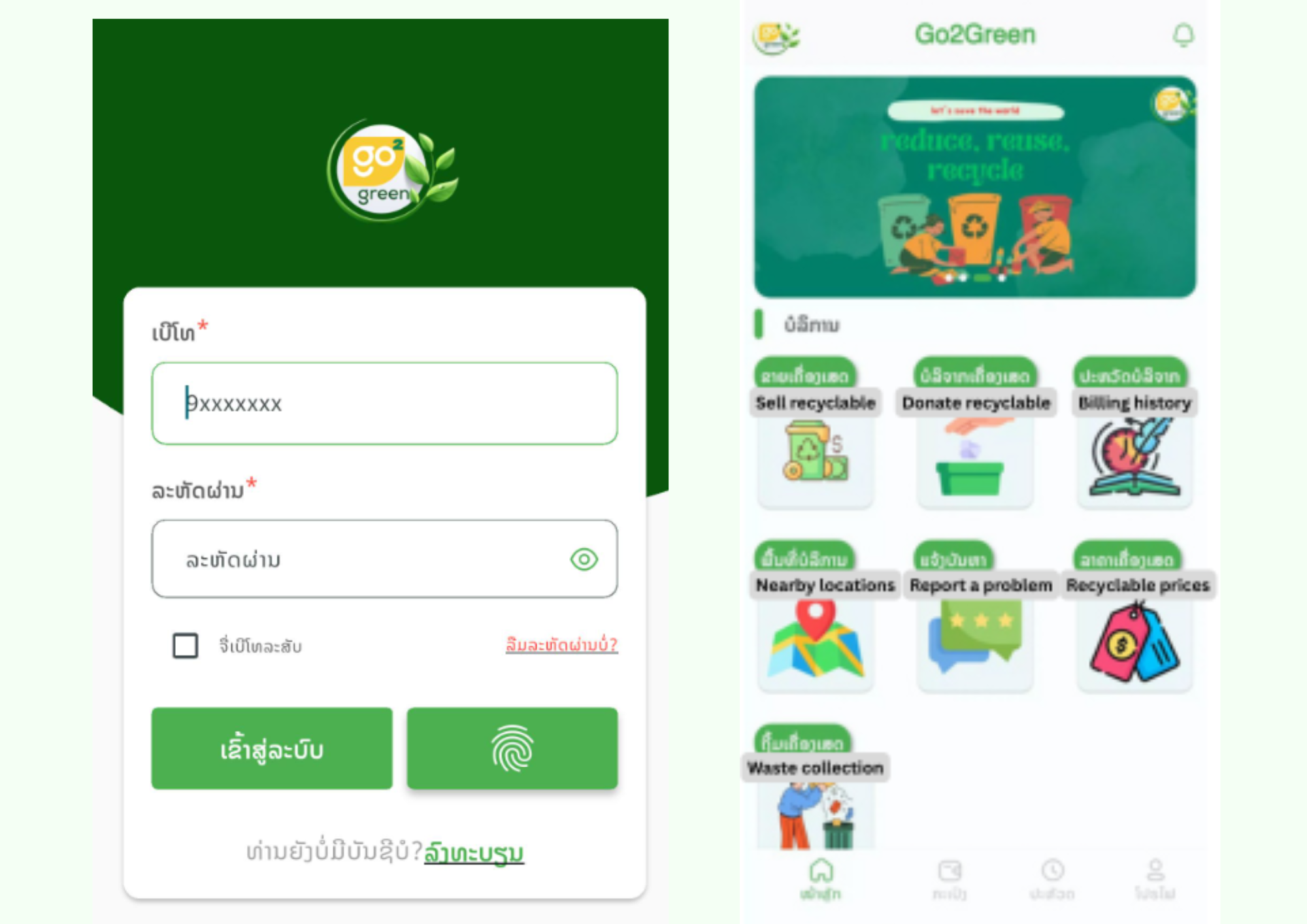
In 2023, my vision came to life. Go2Green officially launched as a digital platform and mobile application, enabling households and businesses to learn how to properly sort recyclables, schedule waste pickups, and track their environmental impacts. More than just a waste collection service, Go2Green serves as a digital ecosystem that promotes environmental education, green livelihoods, and sustainability culture.
What began with just a handful of pickups in Vientiane has now become a growing movement that connects residents, businesses, and recycling partners. Through technology and community partnerships, Go2Green empowers everyday citizens and informal waste workers to play a key role in Lao PDR’s green transition.
The core of Go2Green’s mission is a simple belief: ‘small actions can lead to big change’. This is more than a motto – it shapes every aspect of how we run the business. Whether it is a family separating plastic bottles or a business reducing waste through scheduled pickups, the platform is designed to make sustainability an everyday habit, not a nuisance.
The app leverages tech in practical ways. It streamlines collection logistics, reduces operational costs, and supports a data-driven system to monitor user engagement and waste diversion. By creating value from recyclable materials like plastic, paper, aluminium, and glass, Go2Green turns waste into revenue, allowing the company to grow while helping prevent more waste from ending up in landfills.
Partnerships are also central to our model. We work closely with local waste collectors, recyclers, businesses, and community groups to create a shared value chain. In doing so, we support local livelihoods and provide an income source for many informal workers. This model has not only improved recycling rates in Vientiane but also transformed public perceptions of waste – from burden to opportunity.
Despite its progress, Go2Green’s journey has been far from easy. One of the biggest obstacles lies in changing public behaviour and attitudes toward waste. In many communities, recycling has yet to become a natural part of everyday life. Educating people on proper sorting, collection schedules, and environmental impact requires continuous engagement and patience.
Infrastructure is another hurdle. Establishing a reliable and scalable waste logistics network in a country with limited recycling systems is not a simple task. Nevertheless, Go2Green has approached these challenges with innovation – by continuously enhancing its technology and collaborating with stakeholders to bridge system gaps.
There were moments when I felt like giving up, but then I would see a child learning to sort plastic waste at one of our events, or I would receive a message from a family saying that our service changed how they view waste. Those moments reminded me why I started and gave me the strength to continue.

Go2Green does not just help others reduce waste – it walks the talk. The company has made it its mission to show that environmental sustainability and profitability are not at odds. In fact, when driven by purpose, they can reinforce each other.
By reducing waste management costs for businesses, reselling recyclables, and leading awareness campaigns, Go2Green proves that being green is not just responsible; it is smart business. In a country where many companies still follow a linear ‘take-make-waste’ model, Go2Green offers a real, scalable alternative.
Some businesses have embraced the platform enthusiastically, while others remain hesitant. Yet, the market is evolving. As consumer awareness grows and the pressure to align with sustainability goals increases, more businesses in Vientiane are recognising the value of joining Go2Green’s network. The company continues to expand its client base through frequent public events that build goodwill, such as city clean-ups, as well as through the word-of-mouth recommendations of satisfied clients who appreciate its fast and easy-to-access service.
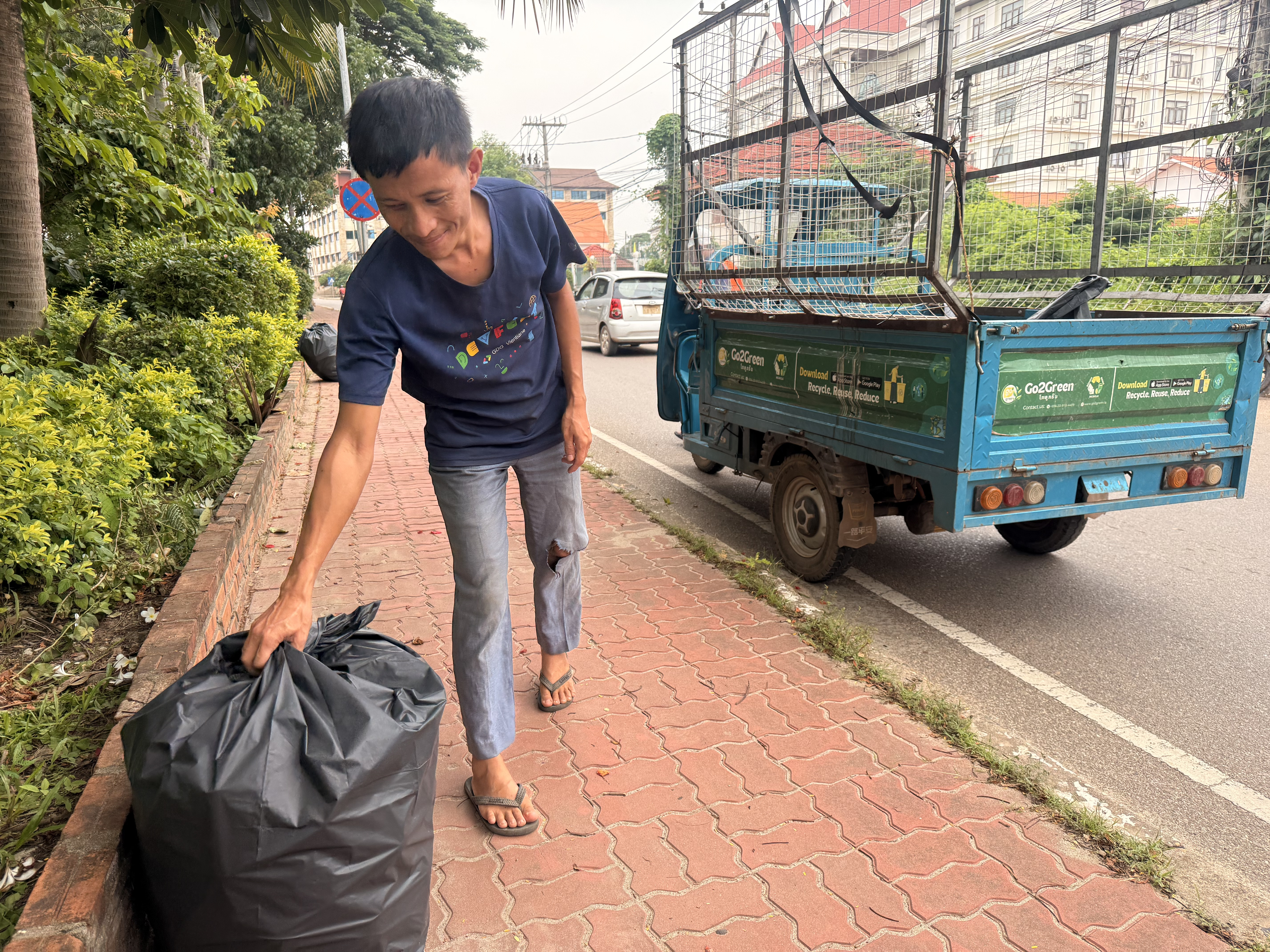
We are exploring a process to convert used plastic bags into machine oil. In parallel, we are preparing to scale up our operations. To support this expansion, we plan to acquire a larger vehicle dedicated to recyclable waste collection.
Looking to the future, I envision Go2Green expanding across Southeast Asia. I imagine smart recycling systems integrated into every home and office, a platform that provides real-time data to local governments for better waste planning, and a thriving workforce of youth and women trained in green jobs.
I want Go2Green to become a symbol of how technology and community action can reshape our relationship with the planet. It is an ambitious vision, but one that is firmly rooted in reality. Go2Green has already shown how a homegrown idea shaped by community needs, supported by technology, and driven by purpose can create real impact across the country.
For aspiring entrepreneurs with a green heart and a passion for making a difference, here are seven lessons:
Start with purpose, not just profit.
Focus on solving a real problem in your community.
Don’t wait for perfection. Start small, learn fast.
Use tech to your advantage.
Educate and engage your community at every step.
Partner with like-minded organisations.
Stay resilient. The path isn’t easy, but the impact is worth it.
Go2Green is more than just an app; it represents a shift in how people in Lao PDR think about waste, community, and their role in building a cleaner future. It is a growing network of everyday individuals, businesses, and waste workers who prove that change doesn’t have to start big. With the right tools, a shared sense of purpose, and a touch of innovation, even small actions like sorting recyclables or scheduling a pickup can lead to something greater.


In the heart of the Lao PDR capital, a quiet but powerful movement is taking shape. Driven by innovation, purpose, and a belief that ‘small actions make a big impact,’ a homegrown startup called Go2Green is transforming how the country approaches waste and sustainability.
In this edition of the Beyond the Business article series, the Regional Knowledge Centre for Marine Plastic Debris spoke with Mr Yengmoua Yongpor, Founder of Go2Green, to uncover the inspiring journey behind Lao PDR’s growing movement toward digitally driven waste management and sustainability.
Yengmoua: Go2Green’s story began with a moment of realisation. Every day, I watched valuable recyclable waste in Lao PDR being discarded, burned, or overlooked, polluting the environment, endangering public health, and wasting economic potential. As a software developer trained to think in terms of solutions, I could not ignore it. I began to wonder: what if technology could connect waste producers with waste collectors? What if recycling could be made as easy as ordering food online?
In 2023, my vision came to life. Go2Green officially launched as a digital platform and mobile application, enabling households and businesses to learn how to properly sort recyclables, schedule waste pickups, and track their environmental impacts. More than just a waste collection service, Go2Green serves as a digital ecosystem that promotes environmental education, green livelihoods, and sustainability culture.
What began with just a handful of pickups in Vientiane has now become a growing movement that connects residents, businesses, and recycling partners. Through technology and community partnerships, Go2Green empowers everyday citizens and informal waste workers to play a key role in Lao PDR’s green transition.
The core of Go2Green’s mission is a simple belief: ‘small actions can lead to big change’. This is more than a motto – it shapes every aspect of how we run the business. Whether it is a family separating plastic bottles or a business reducing waste through scheduled pickups, the platform is designed to make sustainability an everyday habit, not a nuisance.
The app leverages tech in practical ways. It streamlines collection logistics, reduces operational costs, and supports a data-driven system to monitor user engagement and waste diversion. By creating value from recyclable materials like plastic, paper, aluminium, and glass, Go2Green turns waste into revenue, allowing the company to grow while helping prevent more waste from ending up in landfills.
Partnerships are also central to our model. We work closely with local waste collectors, recyclers, businesses, and community groups to create a shared value chain. In doing so, we support local livelihoods and provide an income source for many informal workers. This model has not only improved recycling rates in Vientiane but also transformed public perceptions of waste – from burden to opportunity.
Despite its progress, Go2Green’s journey has been far from easy. One of the biggest obstacles lies in changing public behaviour and attitudes toward waste. In many communities, recycling has yet to become a natural part of everyday life. Educating people on proper sorting, collection schedules, and environmental impact requires continuous engagement and patience.
Infrastructure is another hurdle. Establishing a reliable and scalable waste logistics network in a country with limited recycling systems is not a simple task. Nevertheless, Go2Green has approached these challenges with innovation – by continuously enhancing its technology and collaborating with stakeholders to bridge system gaps.
There were moments when I felt like giving up, but then I would see a child learning to sort plastic waste at one of our events, or I would receive a message from a family saying that our service changed how they view waste. Those moments reminded me why I started and gave me the strength to continue.
Go2Green does not just help others reduce waste – it walks the talk. The company has made it its mission to show that environmental sustainability and profitability are not at odds. In fact, when driven by purpose, they can reinforce each other.
By reducing waste management costs for businesses, reselling recyclables, and leading awareness campaigns, Go2Green proves that being green is not just responsible; it is smart business. In a country where many companies still follow a linear ‘take-make-waste’ model, Go2Green offers a real, scalable alternative.
Some businesses have embraced the platform enthusiastically, while others remain hesitant. Yet, the market is evolving. As consumer awareness grows and the pressure to align with sustainability goals increases, more businesses in Vientiane are recognising the value of joining Go2Green’s network. The company continues to expand its client base through frequent public events that build goodwill, such as city clean-ups, as well as through the word-of-mouth recommendations of satisfied clients who appreciate its fast and easy-to-access service.
We are exploring a process to convert used plastic bags into machine oil. In parallel, we are preparing to scale up our operations. To support this expansion, we plan to acquire a larger vehicle dedicated to recyclable waste collection.
Looking to the future, I envision Go2Green expanding across Southeast Asia. I imagine smart recycling systems integrated into every home and office, a platform that provides real-time data to local governments for better waste planning, and a thriving workforce of youth and women trained in green jobs.
I want Go2Green to become a symbol of how technology and community action can reshape our relationship with the planet. It is an ambitious vision, but one that is firmly rooted in reality. Go2Green has already shown how a homegrown idea shaped by community needs, supported by technology, and driven by purpose can create real impact across the country.
For aspiring entrepreneurs with a green heart and a passion for making a difference, here are seven lessons:
Start with purpose, not just profit.
Focus on solving a real problem in your community.
Don’t wait for perfection. Start small, learn fast.
Use tech to your advantage.
Educate and engage your community at every step.
Partner with like-minded organisations.
Stay resilient. The path isn’t easy, but the impact is worth it.
Go2Green is more than just an app; it represents a shift in how people in Lao PDR think about waste, community, and their role in building a cleaner future. It is a growing network of everyday individuals, businesses, and waste workers who prove that change doesn’t have to start big. With the right tools, a shared sense of purpose, and a touch of innovation, even small actions like sorting recyclables or scheduling a pickup can lead to something greater.

Research Associate

CEO of Econox Lao