



In Indonesia, an archipelagic nation of more than 17,000 islands, waste management is not only an environmental challenge, but also a question of access, equity, and infrastructure. For many remote islands and communities, sending waste to large processing facilities – concentrated primarily on Java (one of the five main islands of Indonesia) – is neither practical nor sustainable.
WeDoo, a Bali-based circular-economy company, is addressing this challenge by designing and building decentralised recycling machines that enable communities, businesses, and institutions to process waste locally and transform it into value.
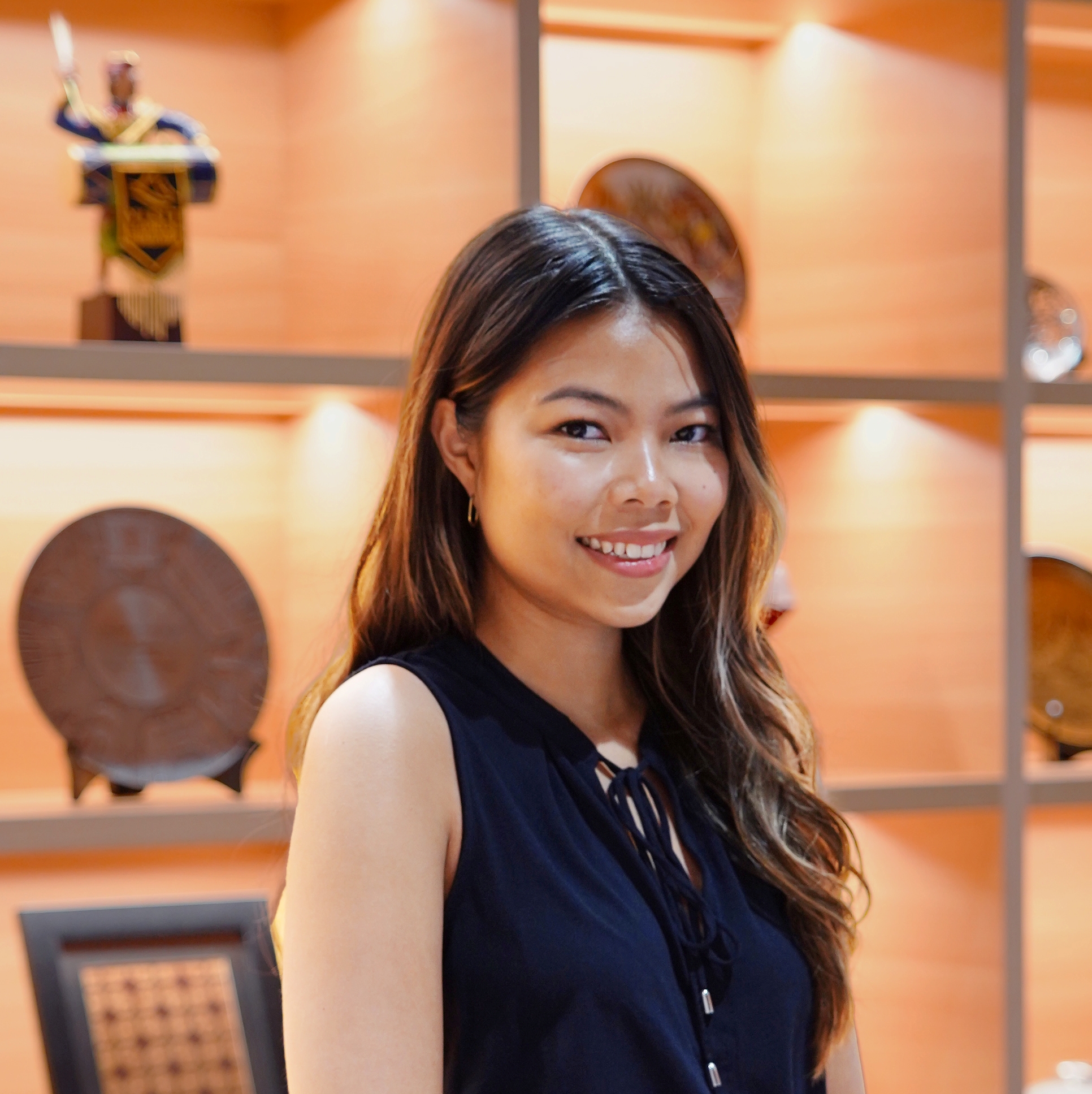
For this fifth edition of the Beyond the Business series, the Regional Knowledge Centre for Marine Plastic Debris sat down with Ms Valerine Chandrakesuma, co-founder and CEO of WeDoo, to discuss her journey, the philosophy behind the company, and what it takes to build circular solutions that work in real-world conditions.
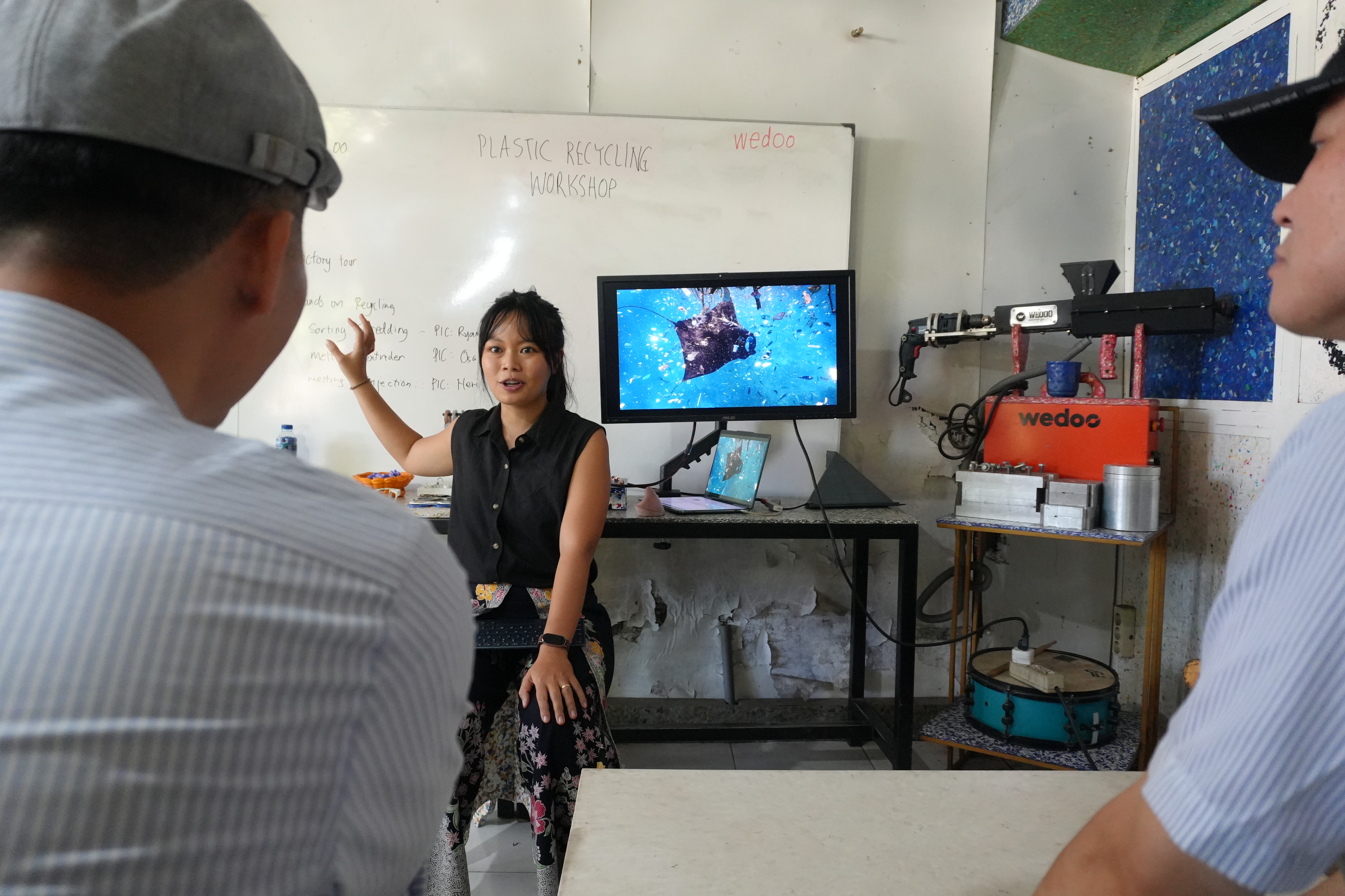
Valerine: When I was diving in Nusa Penida in December 2017, at a site called Manta Point, it was the rainy season – and there was a shocking amount of plastic in the water. At the time, Nusa Penida was still very quiet, with far fewer tourists than today, so seeing such a disproportionate amount of plastic was completely unexpected.
What struck me most was the mantas – known for inhabiting the site. They were swimming as usual, but I felt a deep sadness because they were completely helpless. They had lived there long before us and would continue to live there, whether or not the plastic was present. That was the moment I thought, ‘They are only fish, but I am human – what can I do?’
At that time, I was studying architecture in Canada. I started thinking about plastic not just as waste, but as a potential construction material. I collaborated with friends to run a circular economy club on campus, wrote funding proposals, and experimented with building machines and recycling waste on campus. Between 2018 and 2020, we did a couple of field studies, including tracing where plastic actually ends up. Through this experience, it became clear to me that, with the right tools, plastic could be turned into something valuable – a source of local economic activity.
Indonesia has so many islands, and they cannot all depend on sending waste to Java. Each island needs its own tools, which is why decentralisation is key and why the tools we design must be modular. I wrote this idea into my master’s thesis. Looking back now, I find it surreal that we are actually trying to turn this vision into reality.
Our main goal is very simple: to create tools so that every island in Indonesia can process its own waste and participate in the circular economy.
That is why our machines are designed to work best in decentralised systems. Instead of one large, complex facility, we believe in many smaller systems that operate independently. Our machines are modular, durable, and intentionally not complex. In places like Raja Ampat (a small, remote island group in West Papua Province, eastern Indonesia), you need machines that can work hard and be repaired locally.
Unlike conventional waste management, which often revolves around landfilling or exporting waste elsewhere, we believe waste should stay where it is and be turned into something useful. When communities process waste locally, they gain skills, ownership, and economic opportunities. Instead of importing new products, they can create furniture, building materials, or other goods from their own waste. That shift – from seeing waste as a burden to recognising it as a resource – is at the heart of what we do.
Because we manufacture most machine components in Indonesia, we can provide faster maintenance and long-term support. Training, video guides, a one-year warranty, and lifetime maintenance are all part of our model, ensuring that these tools remain useful well beyond installation.
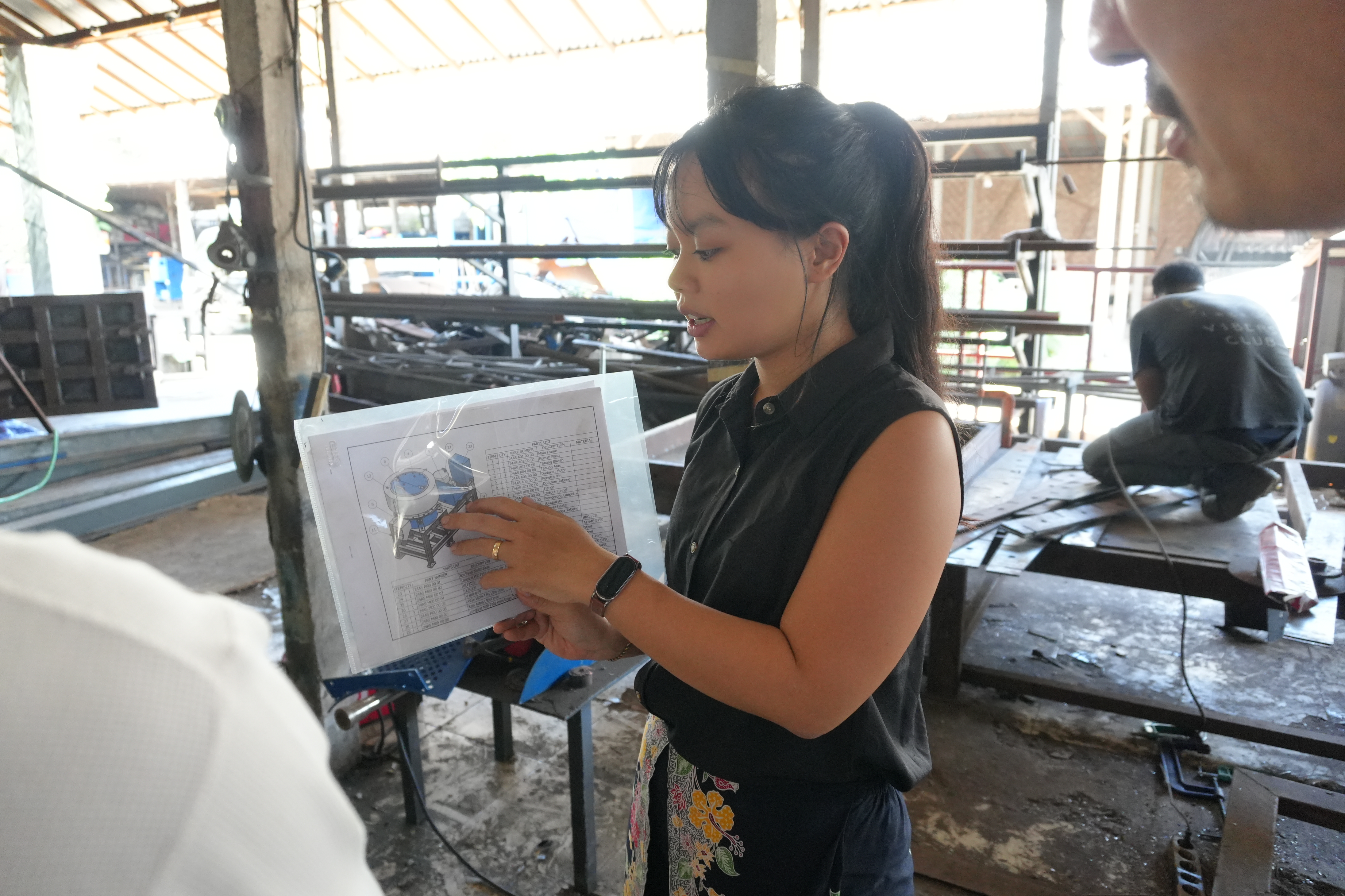
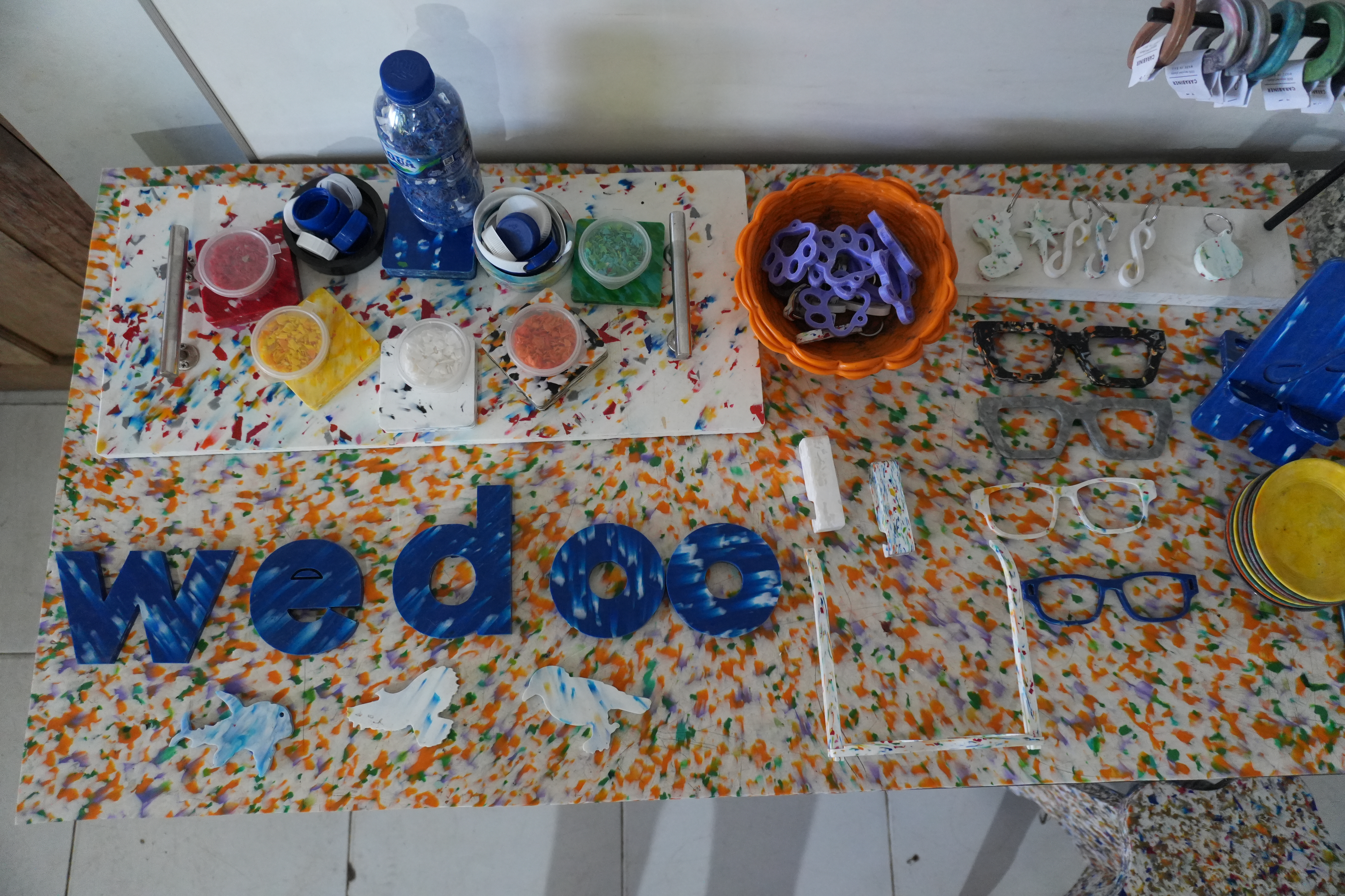
WeDoo designs and builds over 70 types of recycling machines, ranging from compact units to industrial systems, tailored to diverse waste streams, including plastics, organic waste, glass, and emerging biomaterials.
In the plastic stream, we mainly focus on non-PET plastics, such as high-density polyethylene (HDPE), low-density polyethylene (LDPE), polypropylene, and soft plastics like plastic bags. PET already has a strong recycling market in Indonesia, so we do not need to address them as a main problem.
One of our newer innovations is a soft plastic agglomerator, which densifies plastic bags so they don’t need to be melted multiple times. This saves energy and time and makes processing low-value plastics more feasible.
WeDoo began by developing its core machines, including:
Plastic shredders, which cut plastic waste into smaller pieces for easier handling and further processing
Plastic extruders, which melt and reshape plastics into new forms
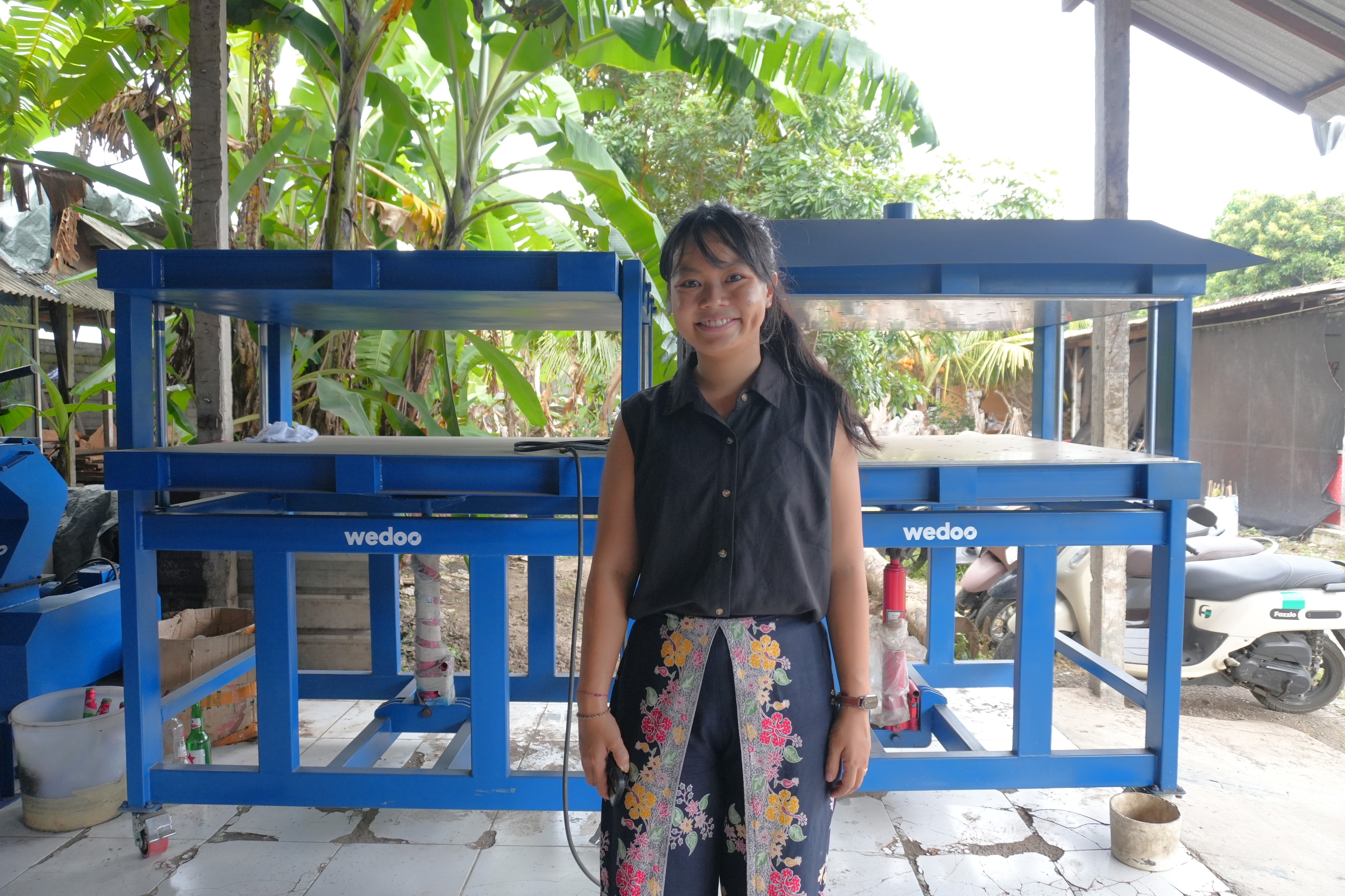
Sheet press machines, which compress melted plastics into durable flat panels for products such as furniture or building materials
All machines are designed specifically for local operating contexts, taking into account factors such as limited technical capacity, high humidity, variable waste quality, and the need for simple operation and maintenance. This ensures durability, reliability, and a long service life in decentralised facilities.
Seeing how clients use our machines, often in ways more creative than we imagined, is incredibly rewarding. A good example is Potato Head in Bali. With its on-site waste management system and recycling tools, Potato Head has recycled 97.5% of their waste and sent only 2.5% to landfill. That level of performance requires commitment, systems, and people – we simply provide the tools.
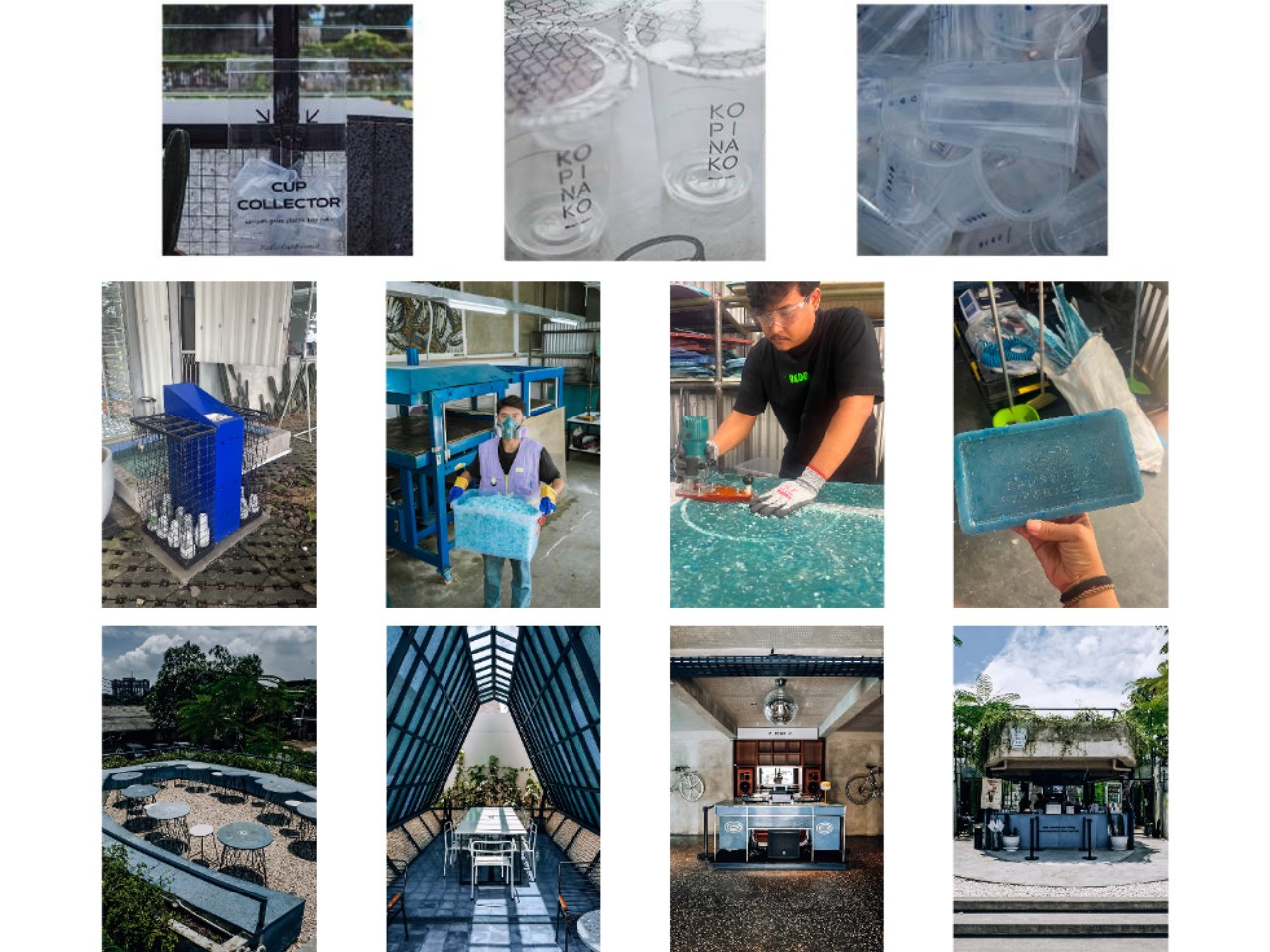
Another inspiring case is Kopi Nako, one of Indonesia’s fastest-growing café chains. Instead of treating plastic waste as an unavoidable byproduct, the company chose to turn it into a resource. With the support of our machines, Kopi Nako has built a circular system that transforms used plastic cups into durable furniture, signage, and architectural elements across its outlets – demonstrating how circular practices can be integrated at scale within the food and beverage industry.
Sungai Watch provides another strong example through Sungai Design, which turns plastic bags collected from rivers into high-quality furniture. Often seen as a low-value waste stream, these plastics are transformed into desirable, economically viable products, with sales helping fund further river clean-ups – showing that waste-to-value models can be both impactful and financially sustainable.
Beyond Indonesia, we have also sent machines to Nepal, working with partners Moware and Sagarmatha Next, where waste from the Everest region is brought down and processed. Even though the geography is completely different, the challenge is similar – remote locations with limited access. It shows that decentralised solutions can work anywhere.
And of course, watching the company grow little by little – and growing as a person along the way – keeps me going.
One of the biggest challenges lies in how waste is valued. Waste management inevitably carries environmental, social, and economic costs, yet these are often overlooked. What we try to show is that with the right tools and systems, waste can also generate value, rather than being a burden.
Another challenge is scale and diversity. Our clients range from small island communities to hotels, resorts, and SMEs. Each has very different waste streams, capacities, and expectations. That is why WeDoo operates between an artisanal and an industrial level. We currently have more than 70 machine designs and can tailor solutions to very different contexts, rather than offering a one-size-fits-all system.
On our side, space and skilled labour are current constraints. Space is currently our biggest limitation, although we will be moving to a larger facility soon. Skilled labour is another critical issue. Manufacturing recycling machines requires precision. Our welders work within one-millimetre tolerances, so we are starting to build stronger connections with technical schools in Java to develop a skilled talent pipeline.
In the medium term, we aim to establish regional service centres – ideally four across Indonesia – so maintenance teams can reach remote areas faster. We’re also exploring partial production in Java, where materials are more accessible and costs are lower.
In parallel, we are developing a sister brand called Sayang, which focuses on educating the public, conducting research, and pushing the limits of what waste materials can become. Through hands-on workshops, participants are directly involved in the recycling process – operating machines, experimenting with materials, and learning how waste is transformed step by step. By allowing people to touch, see, and feel products made from plastic, glass, or coconut waste, Sayang helps demonstrate that circular materials can be strong, beautiful, and valuable.
One piece of advice that applies to everyone is this: don’t think of only your customers as your clients – think of nature as your client too. When nature has an equal voice in your decisions, you design differently, legislate differently, and build differently. That shift in perspective can be incredibly powerful.
Research Associate for Capacity Building


In Indonesia, an archipelagic nation of more than 17,000 islands, waste management is not only an environmental challenge, but also a question of access, equity, and infrastructure. For many remote islands and communities, sending waste to large processing facilities – concentrated primarily on Java (one of the five main islands of Indonesia) – is neither practical nor sustainable.
WeDoo, a Bali-based circular-economy company, is addressing this challenge by designing and building decentralised recycling machines that enable communities, businesses, and institutions to process waste locally and transform it into value.
For this fifth edition of the Beyond the Business series, the Regional Knowledge Centre for Marine Plastic Debris sat down with Ms Valerine Chandrakesuma, co-founder and CEO of WeDoo, to discuss her journey, the philosophy behind the company, and what it takes to build circular solutions that work in real-world conditions.
Valerine: When I was diving in Nusa Penida in December 2017, at a site called Manta Point, it was the rainy season – and there was a shocking amount of plastic in the water. At the time, Nusa Penida was still very quiet, with far fewer tourists than today, so seeing such a disproportionate amount of plastic was completely unexpected.
What struck me most was the mantas – known for inhabiting the site. They were swimming as usual, but I felt a deep sadness because they were completely helpless. They had lived there long before us and would continue to live there, whether or not the plastic was present. That was the moment I thought, ‘They are only fish, but I am human – what can I do?’
At that time, I was studying architecture in Canada. I started thinking about plastic not just as waste, but as a potential construction material. I collaborated with friends to run a circular economy club on campus, wrote funding proposals, and experimented with building machines and recycling waste on campus. Between 2018 and 2020, we did a couple of field studies, including tracing where plastic actually ends up. Through this experience, it became clear to me that, with the right tools, plastic could be turned into something valuable – a source of local economic activity.
Indonesia has so many islands, and they cannot all depend on sending waste to Java. Each island needs its own tools, which is why decentralisation is key and why the tools we design must be modular. I wrote this idea into my master’s thesis. Looking back now, I find it surreal that we are actually trying to turn this vision into reality.
Our main goal is very simple: to create tools so that every island in Indonesia can process its own waste and participate in the circular economy.
That is why our machines are designed to work best in decentralised systems. Instead of one large, complex facility, we believe in many smaller systems that operate independently. Our machines are modular, durable, and intentionally not complex. In places like Raja Ampat (a small, remote island group in West Papua Province, eastern Indonesia), you need machines that can work hard and be repaired locally.
Unlike conventional waste management, which often revolves around landfilling or exporting waste elsewhere, we believe waste should stay where it is and be turned into something useful. When communities process waste locally, they gain skills, ownership, and economic opportunities. Instead of importing new products, they can create furniture, building materials, or other goods from their own waste. That shift – from seeing waste as a burden to recognising it as a resource – is at the heart of what we do.
Because we manufacture most machine components in Indonesia, we can provide faster maintenance and long-term support. Training, video guides, a one-year warranty, and lifetime maintenance are all part of our model, ensuring that these tools remain useful well beyond installation.
WeDoo designs and builds over 70 types of recycling machines, ranging from compact units to industrial systems, tailored to diverse waste streams, including plastics, organic waste, glass, and emerging biomaterials.
In the plastic stream, we mainly focus on non-PET plastics, such as high-density polyethylene (HDPE), low-density polyethylene (LDPE), polypropylene, and soft plastics like plastic bags. PET already has a strong recycling market in Indonesia, so we do not need to address them as a main problem.
One of our newer innovations is a soft plastic agglomerator, which densifies plastic bags so they don’t need to be melted multiple times. This saves energy and time and makes processing low-value plastics more feasible.
WeDoo began by developing its core machines, including:
Plastic shredders, which cut plastic waste into smaller pieces for easier handling and further processing
Plastic extruders, which melt and reshape plastics into new forms
Sheet press machines, which compress melted plastics into durable flat panels for products such as furniture or building materials
All machines are designed specifically for local operating contexts, taking into account factors such as limited technical capacity, high humidity, variable waste quality, and the need for simple operation and maintenance. This ensures durability, reliability, and a long service life in decentralised facilities.
Seeing how clients use our machines, often in ways more creative than we imagined, is incredibly rewarding. A good example is Potato Head in Bali. With its on-site waste management system and recycling tools, Potato Head has recycled 97.5% of their waste and sent only 2.5% to landfill. That level of performance requires commitment, systems, and people – we simply provide the tools.
Another inspiring case is Kopi Nako, one of Indonesia’s fastest-growing café chains. Instead of treating plastic waste as an unavoidable byproduct, the company chose to turn it into a resource. With the support of our machines, Kopi Nako has built a circular system that transforms used plastic cups into durable furniture, signage, and architectural elements across its outlets – demonstrating how circular practices can be integrated at scale within the food and beverage industry.
Sungai Watch provides another strong example through Sungai Design, which turns plastic bags collected from rivers into high-quality furniture. Often seen as a low-value waste stream, these plastics are transformed into desirable, economically viable products, with sales helping fund further river clean-ups – showing that waste-to-value models can be both impactful and financially sustainable.
Beyond Indonesia, we have also sent machines to Nepal, working with partners Moware and Sagarmatha Next, where waste from the Everest region is brought down and processed. Even though the geography is completely different, the challenge is similar – remote locations with limited access. It shows that decentralised solutions can work anywhere.
And of course, watching the company grow little by little – and growing as a person along the way – keeps me going.
One of the biggest challenges lies in how waste is valued. Waste management inevitably carries environmental, social, and economic costs, yet these are often overlooked. What we try to show is that with the right tools and systems, waste can also generate value, rather than being a burden.
Another challenge is scale and diversity. Our clients range from small island communities to hotels, resorts, and SMEs. Each has very different waste streams, capacities, and expectations. That is why WeDoo operates between an artisanal and an industrial level. We currently have more than 70 machine designs and can tailor solutions to very different contexts, rather than offering a one-size-fits-all system.
On our side, space and skilled labour are current constraints. Space is currently our biggest limitation, although we will be moving to a larger facility soon. Skilled labour is another critical issue. Manufacturing recycling machines requires precision. Our welders work within one-millimetre tolerances, so we are starting to build stronger connections with technical schools in Java to develop a skilled talent pipeline.
In the medium term, we aim to establish regional service centres – ideally four across Indonesia – so maintenance teams can reach remote areas faster. We’re also exploring partial production in Java, where materials are more accessible and costs are lower.
In parallel, we are developing a sister brand called Sayang, which focuses on educating the public, conducting research, and pushing the limits of what waste materials can become. Through hands-on workshops, participants are directly involved in the recycling process – operating machines, experimenting with materials, and learning how waste is transformed step by step. By allowing people to touch, see, and feel products made from plastic, glass, or coconut waste, Sayang helps demonstrate that circular materials can be strong, beautiful, and valuable.
One piece of advice that applies to everyone is this: don’t think of only your customers as your clients – think of nature as your client too. When nature has an equal voice in your decisions, you design differently, legislate differently, and build differently. That shift in perspective can be incredibly powerful.
Research Associate for Capacity Building



 Workshop Empowers Youth to Advance Environmental Action-6a1803513609b.png)