



Rapid economic growth, urbanisation, and changing consumption patterns across ASEAN have contributed to the increasing generation of plastic waste and heightened risks of plastic leakage into the environment. In many countries, challenges in waste management systems, reliance on single-use plastics, and gaps in recycling infrastructure continue to exacerbate plastic pollution, particularly from land-based sources. The informal recycling sector also plays a significant role in waste collection and recycling activities across the region, yet often faces technological, logistical, and institutional challenges that may contribute to plastic leakage.
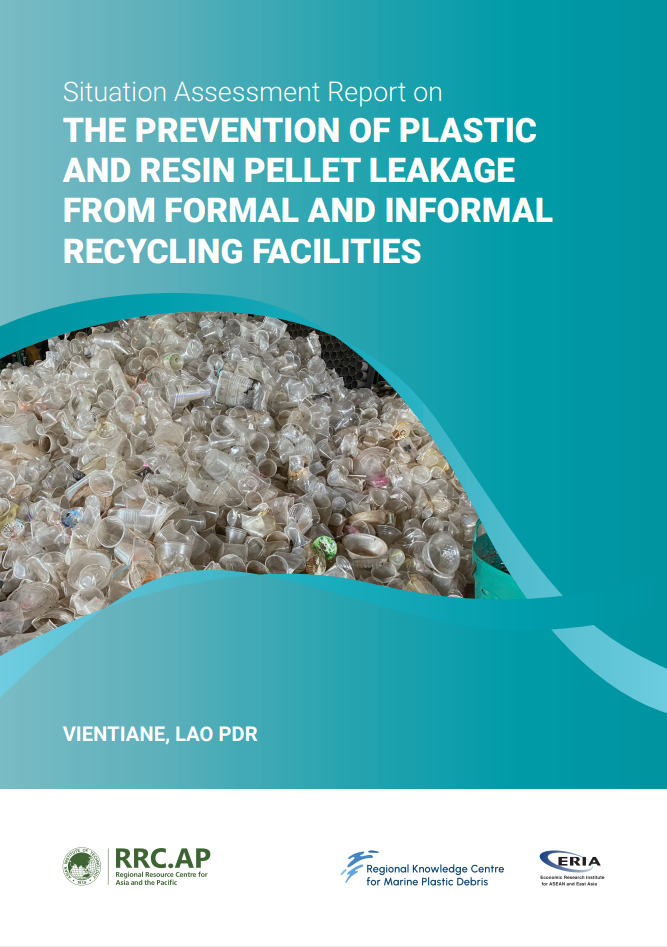
These reports examine the current state of plastic waste management and recycling practices in selected ASEAN countries, with a focus on plastic leakage and the informal recycling sector. Through case studies from the Lao PDR, Thailand, the Philippines, and Viet Nam, the studies explore key sources of plastic pollution, existing waste management and recycling mechanisms, and the socio-economic and regulatory factors influencing leakage.
This report is published by the Regional Resource Centre for Asia and the Pacific (RRC.AP) of the Asian Institute of Technology (AIT) with support from ERIA's Regional Knowledge Centre for Marine Plastic Debris under the project "Development and Dissemination of Technical Guidelines for Plastics and Resin Pellets Leakage Prevention from Factories and Informal Recycling Sector in the ASEAN".


Rapid economic growth, urbanisation, and changing consumption patterns across ASEAN have contributed to the increasing generation of plastic waste and heightened risks of plastic leakage into the environment. In many countries, challenges in waste management systems, reliance on single-use plastics, and gaps in recycling infrastructure continue to exacerbate plastic pollution, particularly from land-based sources. The informal recycling sector also plays a significant role in waste collection and recycling activities across the region, yet often faces technological, logistical, and institutional challenges that may contribute to plastic leakage.
These reports examine the current state of plastic waste management and recycling practices in selected ASEAN countries, with a focus on plastic leakage and the informal recycling sector. Through case studies from the Lao PDR, Thailand, the Philippines, and Viet Nam, the studies explore key sources of plastic pollution, existing waste management and recycling mechanisms, and the socio-economic and regulatory factors influencing leakage.
This report is published by the Regional Resource Centre for Asia and the Pacific (RRC.AP) of the Asian Institute of Technology (AIT) with support from ERIA's Regional Knowledge Centre for Marine Plastic Debris under the project "Development and Dissemination of Technical Guidelines for Plastics and Resin Pellets Leakage Prevention from Factories and Informal Recycling Sector in the ASEAN".
Guilberto B. Borongan, Huno Solomon Kofi Mensah, Le Xuan Thinh, Do Thi Diu, Do Thi Thuy Nhung, Tran Thi Ngoc Mai
Asian Institute of Technology, Economic Research Institute for ASEAN and East Asia