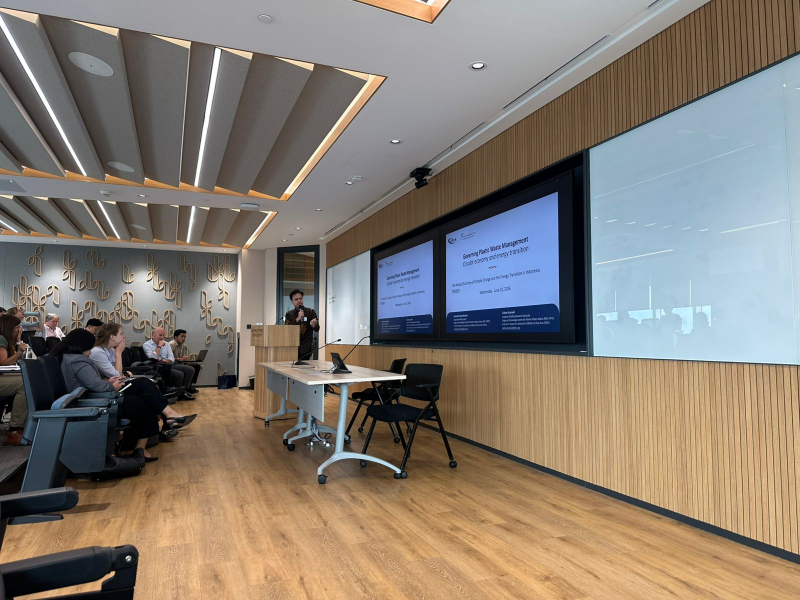




Jakarta, 13 June 2026: ERIA's Regional Knowledge Centre for Marine Plastic Debris (the Centre) participated for the first time in the Indonesia International Environment Technology and Innovation Expo (Invirotech), the country's flagship environment event. Held at the Jakarta International Convention Center (JICC), the event formed part of the national commemoration of World Environment Day and World Ocean Day 2026.
The expo drew more than 25,000 attendees over its 3-day run. ERIA's participation came through a side event hosted on 13 June by the Directorate of Pollution Control and Coastal and Marine Area Degradation under Indonesia's Ministry of Environment/Environmental Management Agency (KLH/BPLH), in collaboration with UNEP's Coordinating Body on the Seas of East Asia (UNEP-COBSEA), the Regional Capacity Centre for Clean Seas (RC3S), and the Secretariat of the Basel, Rotterdam and Stockholm (BRS) Convention.
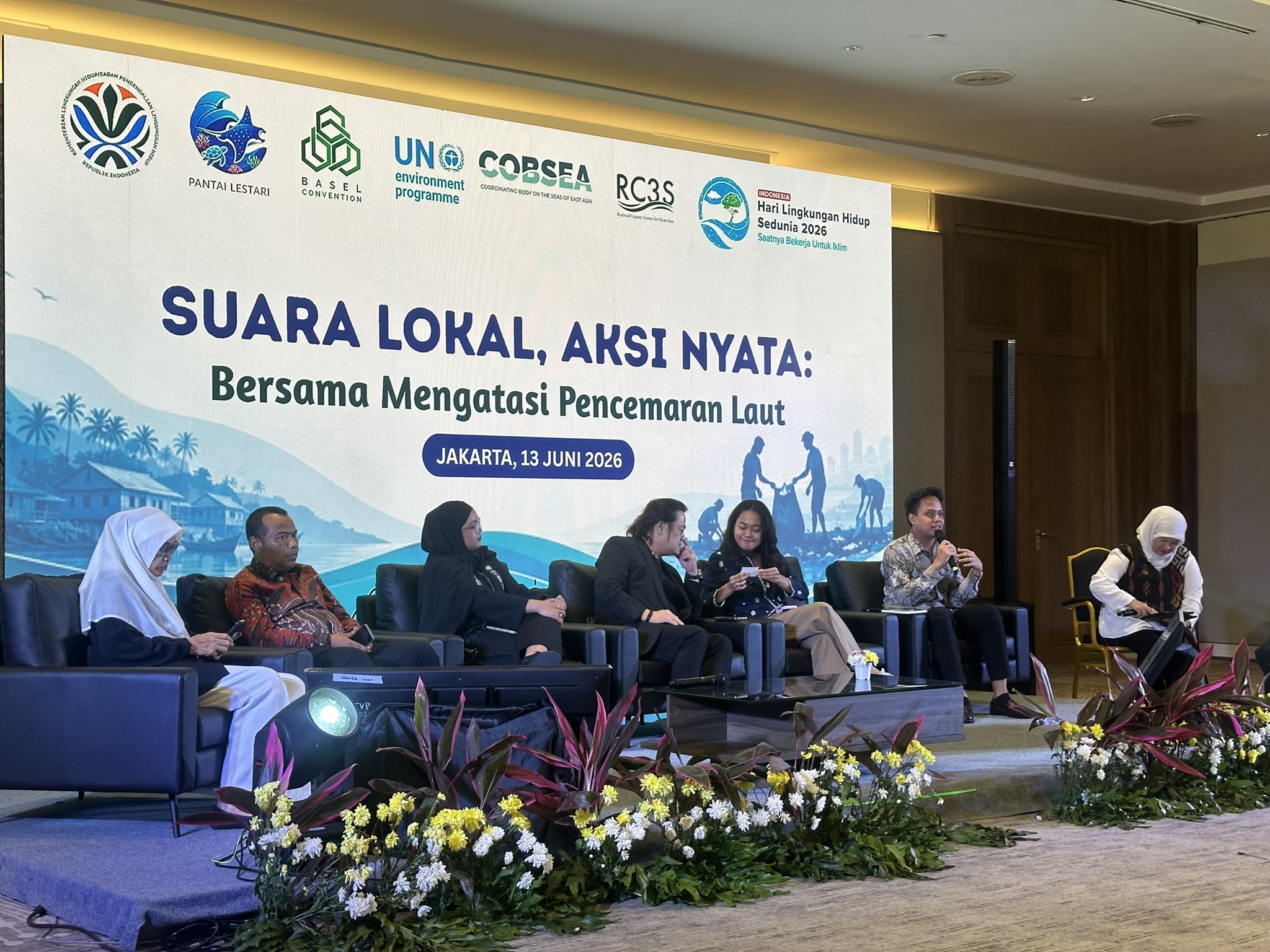
Titled ‘Suara Lokal, Aksi Nyata: Bersama Mengatasi Pencemaran Laut (Local Voices, Real Action: Together Addressing Marine Pollution)’, the seminar brought together over 200 participants from government, international organisations, academia, civil society, the private sector, and youth groups.
The event opened with remarks from Mr Rasio Ridho Sani, Deputy for Pollution and Environmental Degradation Control at KLH/BPLH, and Ms Gita Sabharwal, UN Resident Coordinator in Indonesia. Messages of support were also delivered by Mr Anton Purnomo on behalf of Mr Rolph Payet, Executive Secretary of the BRS Conventions Secretariat, and Mr Mahesh Pradhan, Coordinator of UNEP-COBSEA.
The first session traced the journey from community action to policy. The Head of Derawan Village (East Kalimantan, Indonesia) shared experiences in community-led waste management on a small island. KLH/BPLH's Director for Waste Reduction and Circular Economy Development also outlined Indonesia's transition toward a circular economy. A representative of the Basel & Stockholm Conventions Regional Centre for Southeast Asia in Indonesia (BCRC-SCRC Indonesia) presented regional approaches to plastic waste management under the Basel Convention.
The seminar's second session, ‘Memperluas Solusi Lokal (Expanding Local Solutions) – Funding, Innovation, and Partnership to Reduce Marine Plastic Leakage’, was structured as an interactive panel discussion involving six organisations working on different facets of Indonesia's circular economy.
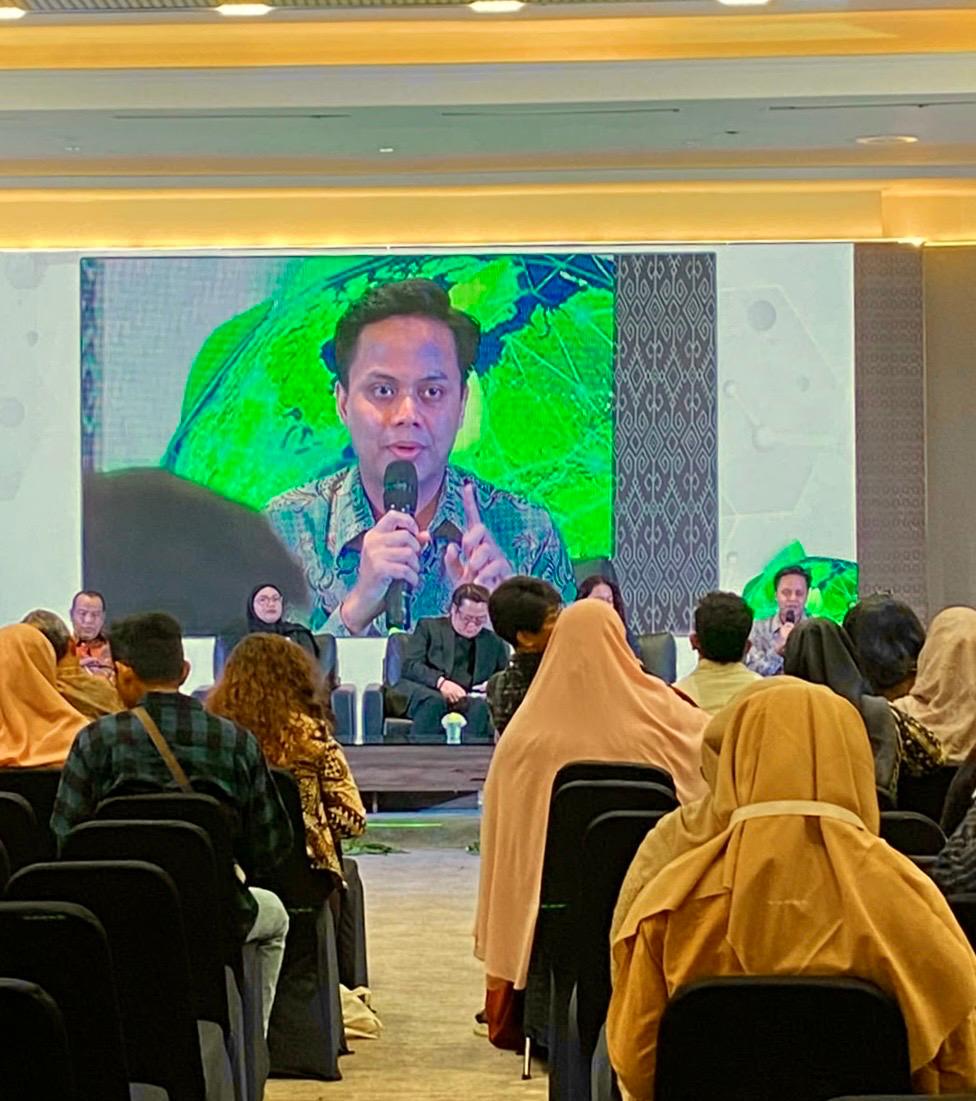
Representing ERIA was Mr Indradhi Faisal Ibrahim, Capacity Building Expert at the Regional Knowledge Centre for Marine Plastic Debris, who spoke on knowledge support and capacity strengthening to scale up local circular economy solutions. Drawing on ERIA’s experience, he highlighted the need to strengthen capacities in planning and cross-sectoral coordination amongst local governments.
For communities and the informal sector, efforts should focus on enhancing knowledge and awareness, while promoting inclusion within formal waste management systems. He further emphasised the importance of practical capacity-building support for the private sector, particularly small and medium-sized enterprises, to adopt circular economy practices.
His intervention sat alongside contributions from:
local foundation Yayasan Rumah Literasi Hijau on small-island waste bank systems;
Head of Kelurahan Rorotan (North Jakarta, Indonesia) on a local initiative cutting 6.5 tonnes of waste per day;
GIZ Indonesia on the SEA-MaP Innovation and Investments Platform;
research Institute Parongpong RAW Lab on tackling ghost-net waste; and
manufacturing company PT Wijaya Mandiri Tintex on private-sector engagement in the circular economy.
The seminar ended with reflections on next steps from Mr Sayid Muhadhar, Director of Pollution Control and Coastal and Marine Area Degradation at KLH/BPLH.
The Centre’s participation marked its first involvement in Invirotech. The invitation reflects the Centre’s growing recognition of as a knowledge partner in Indonesia's efforts to curb marine plastic pollution. It also opens the door to deepen engagement with Indonesian government agencies and grassroots organisations going forward, signalling further opportunities to support Indonesia's transition toward an inclusive, circular, and ocean-friendly economy.
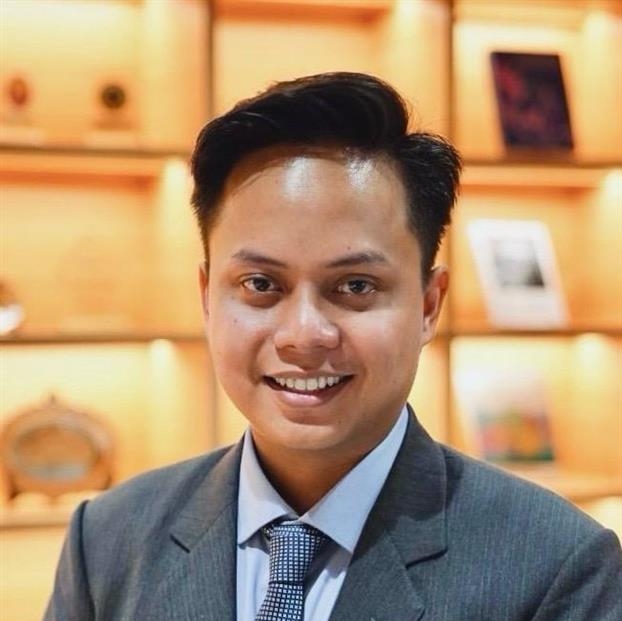
Capacity Building Expert


Jakarta, 13 June 2026: ERIA's Regional Knowledge Centre for Marine Plastic Debris (the Centre) participated for the first time in the Indonesia International Environment Technology and Innovation Expo (Invirotech), the country's flagship environment event. Held at the Jakarta International Convention Center (JICC), the event formed part of the national commemoration of World Environment Day and World Ocean Day 2026.
The expo drew more than 25,000 attendees over its 3-day run. ERIA's participation came through a side event hosted on 13 June by the Directorate of Pollution Control and Coastal and Marine Area Degradation under Indonesia's Ministry of Environment/Environmental Management Agency (KLH/BPLH), in collaboration with UNEP's Coordinating Body on the Seas of East Asia (UNEP-COBSEA), the Regional Capacity Centre for Clean Seas (RC3S), and the Secretariat of the Basel, Rotterdam and Stockholm (BRS) Convention.
Titled ‘Suara Lokal, Aksi Nyata: Bersama Mengatasi Pencemaran Laut (Local Voices, Real Action: Together Addressing Marine Pollution)’, the seminar brought together over 200 participants from government, international organisations, academia, civil society, the private sector, and youth groups.
The event opened with remarks from Mr Rasio Ridho Sani, Deputy for Pollution and Environmental Degradation Control at KLH/BPLH, and Ms Gita Sabharwal, UN Resident Coordinator in Indonesia. Messages of support were also delivered by Mr Anton Purnomo on behalf of Mr Rolph Payet, Executive Secretary of the BRS Conventions Secretariat, and Mr Mahesh Pradhan, Coordinator of UNEP-COBSEA.
The first session traced the journey from community action to policy. The Head of Derawan Village (East Kalimantan, Indonesia) shared experiences in community-led waste management on a small island. KLH/BPLH's Director for Waste Reduction and Circular Economy Development also outlined Indonesia's transition toward a circular economy. A representative of the Basel & Stockholm Conventions Regional Centre for Southeast Asia in Indonesia (BCRC-SCRC Indonesia) presented regional approaches to plastic waste management under the Basel Convention.
The seminar's second session, ‘Memperluas Solusi Lokal (Expanding Local Solutions) – Funding, Innovation, and Partnership to Reduce Marine Plastic Leakage’, was structured as an interactive panel discussion involving six organisations working on different facets of Indonesia's circular economy.
Representing ERIA was Mr Indradhi Faisal Ibrahim, Capacity Building Expert at the Regional Knowledge Centre for Marine Plastic Debris, who spoke on knowledge support and capacity strengthening to scale up local circular economy solutions. Drawing on ERIA’s experience, he highlighted the need to strengthen capacities in planning and cross-sectoral coordination amongst local governments.
For communities and the informal sector, efforts should focus on enhancing knowledge and awareness, while promoting inclusion within formal waste management systems. He further emphasised the importance of practical capacity-building support for the private sector, particularly small and medium-sized enterprises, to adopt circular economy practices.
His intervention sat alongside contributions from:
local foundation Yayasan Rumah Literasi Hijau on small-island waste bank systems;
Head of Kelurahan Rorotan (North Jakarta, Indonesia) on a local initiative cutting 6.5 tonnes of waste per day;
GIZ Indonesia on the SEA-MaP Innovation and Investments Platform;
research Institute Parongpong RAW Lab on tackling ghost-net waste; and
manufacturing company PT Wijaya Mandiri Tintex on private-sector engagement in the circular economy.
The seminar ended with reflections on next steps from Mr Sayid Muhadhar, Director of Pollution Control and Coastal and Marine Area Degradation at KLH/BPLH.
The Centre’s participation marked its first involvement in Invirotech. The invitation reflects the Centre’s growing recognition of as a knowledge partner in Indonesia's efforts to curb marine plastic pollution. It also opens the door to deepen engagement with Indonesian government agencies and grassroots organisations going forward, signalling further opportunities to support Indonesia's transition toward an inclusive, circular, and ocean-friendly economy.
Capacity Building Expert