



Bangkok, 9–11 March 2026: ERIA’s Regional Knowledge Centre for Marine Plastic Debris participated in the 12th 3R International Scientific Conference on Material Cycles and Waste Management (3RINCs), held on 9–11 March 2026 in Bangkok, Thailand. The event was co-organised by the Joint Graduate School of Energy and Environment (JGSEE-CEE) and the Japan Society of Material Cycles and Waste Management.
As a leading regional platform, the conference brought together international experts in material cycles and waste management to exchange knowledge and foster collaboration, advancing science, innovation, and policy towards a sustainable circular society. The programme featured keynote lectures, general and special sessions, technology demonstrations, and opportunities to build cross-sector partnerships.
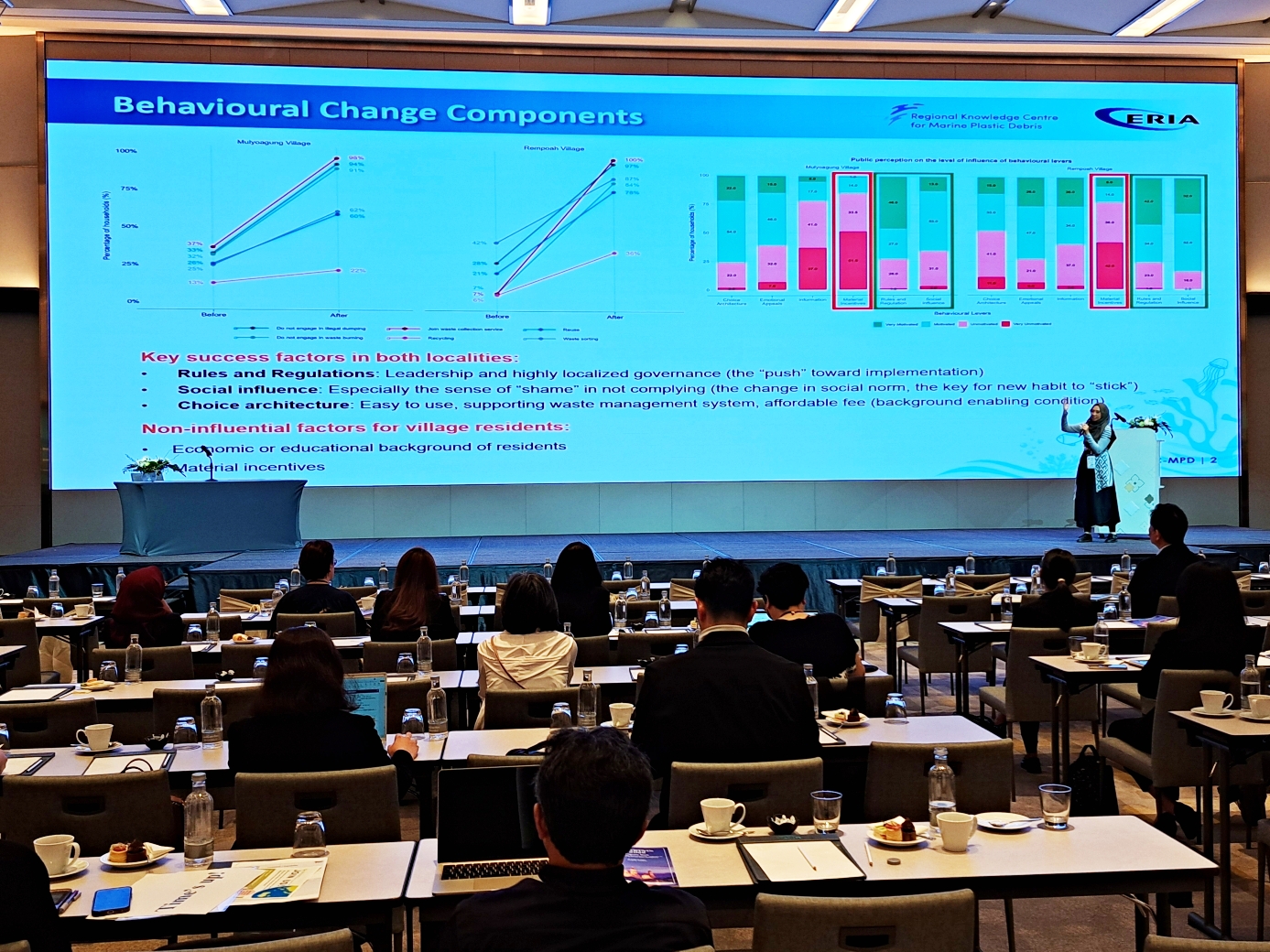
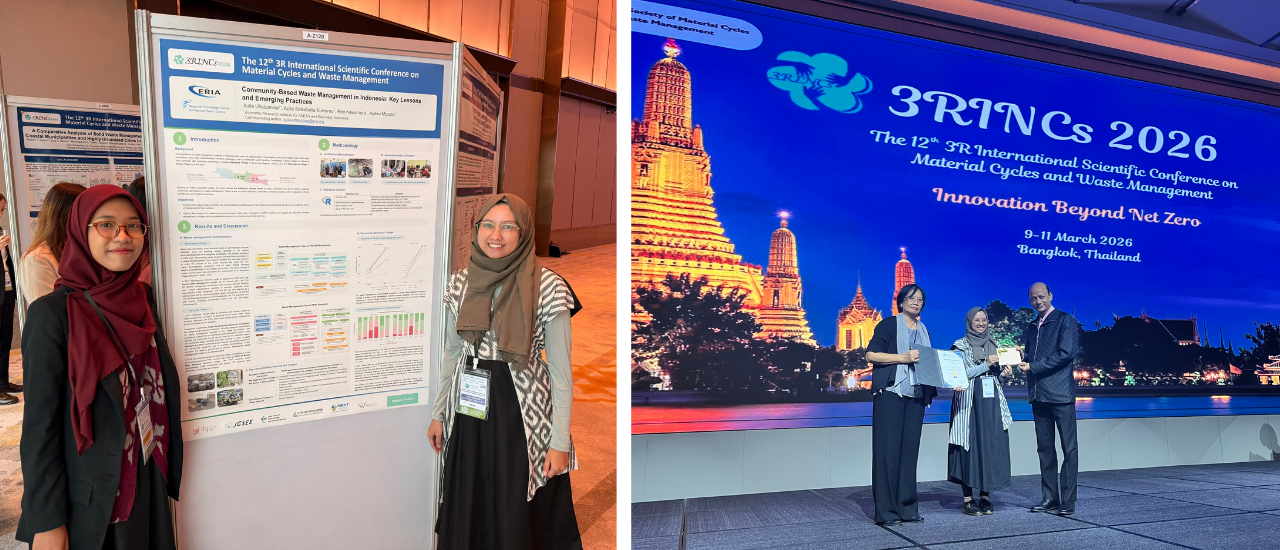
Members of ERIA’s Regional Knowledge Centre also contributed to several sessions. Research Associates Ms Aulia Ulfatunnisa and Ms Aulia Salsabella Suwarno participated in the poster session, showcasing their research titled Community-Based Waste Management in Indonesia: Key Lessons and Emerging Practices. During the flash presentation session, Ms Ulfatunnisa highlighted two local best practices in Indonesia and how they have transformed waste management systems to become more sustainable. She emphasised that regulations and social influence are the most influential behavioural factors in communities, while choice architecture also plays a role in ensuring service certainty. The engaging presentation was awarded second runner-up in the poster category at 3RINCs 2026, celebrating Indonesia’s role in community-centred waste management strategies.
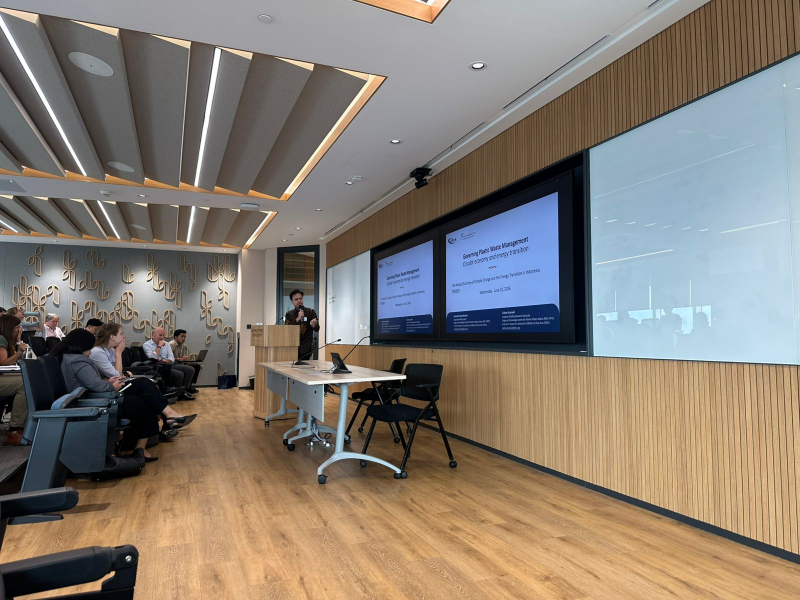
In the session on policy and behavioural change, Mr Michikazu Kojima, Senior Research Fellow at the Centre, presented on countermeasures for plastic pollution, highlighting its impact on marine ecosystems, including whales, turtles, and dolphins. He also outlined key actions to address the issue, such as reducing plastic use, enhancing recycling, and ensuring proper disposal through measures such as refill systems, bans, extended producer responsibility (EPR), eco-industrial standards, and the use of biodegradable plastics.
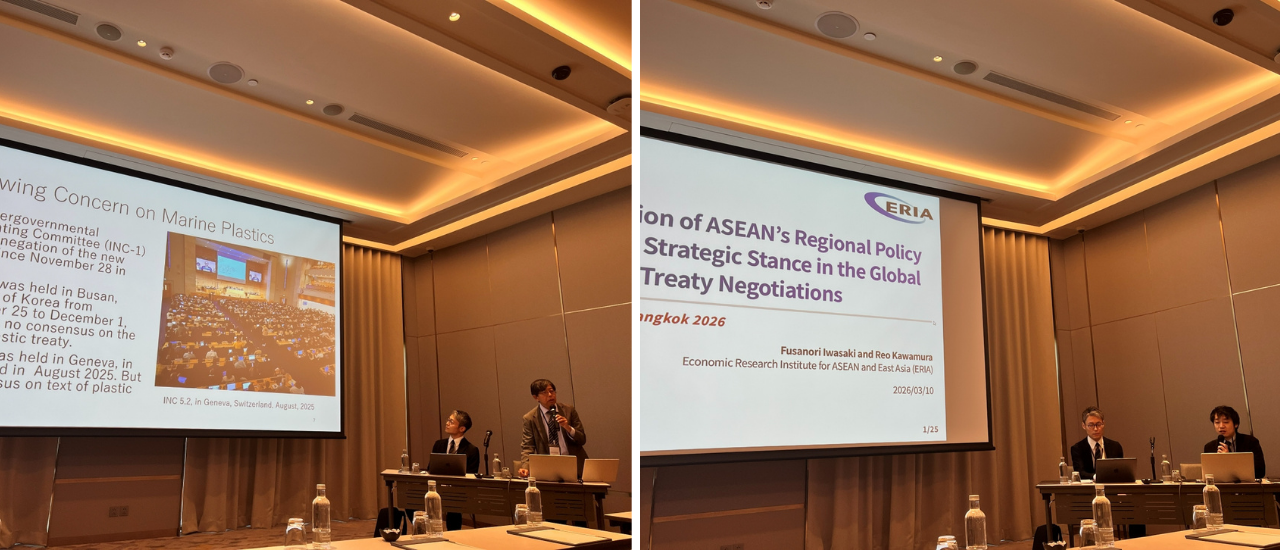
Mr Fusanori Iwasaki, Research Fellow at the Centre, shared insights on the evolution of ASEAN’s regional policy and its strategic stance in the Global Plastic Treaty negotiations. He highlighted a key research gap, noting that existing literature largely focuses on the dynamics of the High Ambition Coalition (HAC) and Like-minded Countries (LMC), as well as Global North–South divides, while ASEAN’s diverse internal positioning in the treaty negotiations remains underexplored.
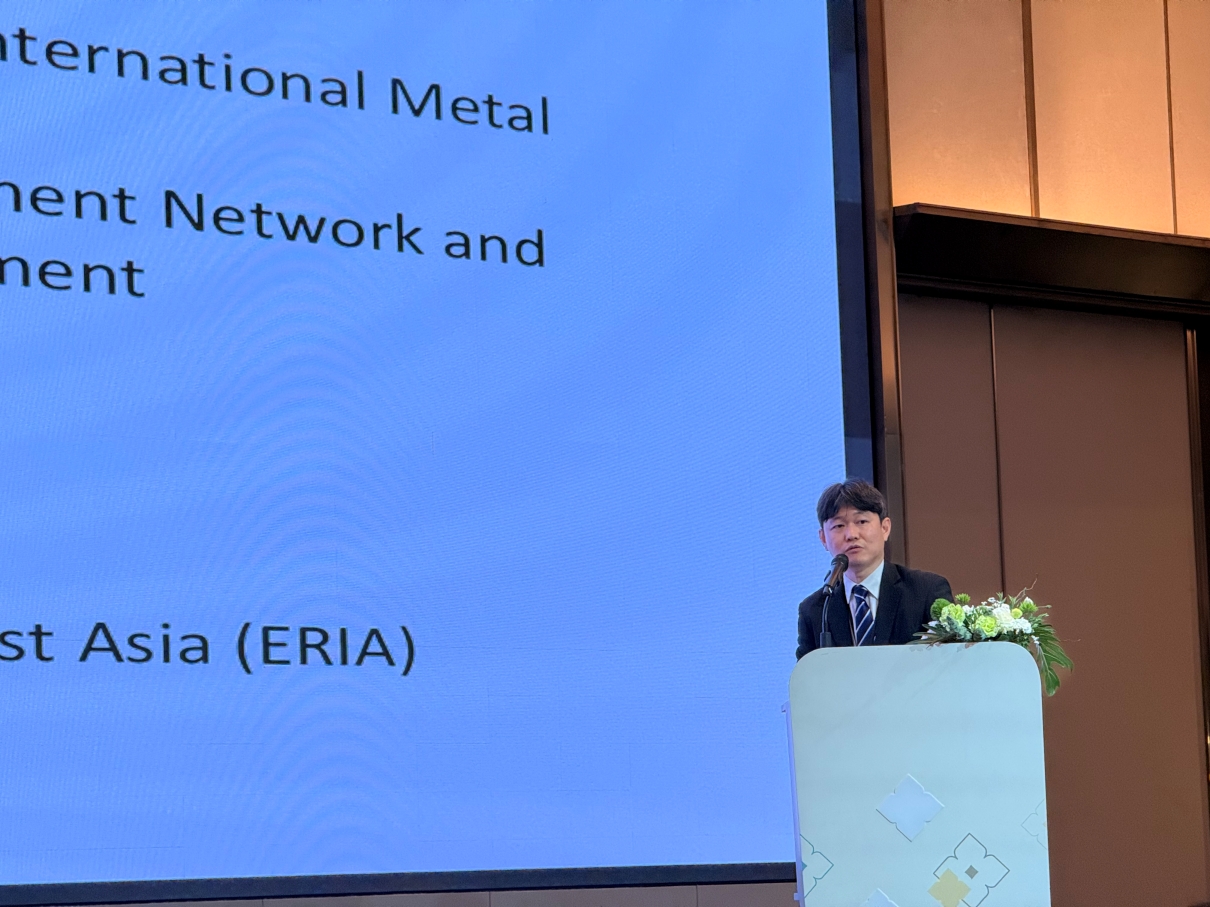
Mr Reo Kawamura, Director for the Regional Knowledge Centre for Marine Plastic Debris, spoke in a special session on the current status of waste electrical and electronic equipment (WEEE) initiatives across ASEAN. WEEE refers to discarded electronic devices such as mobile phones, computers, and household appliances. He highlighted challenges in e-waste recycling and introduced concepts such as urban mining and resource recovery as potential solutions.
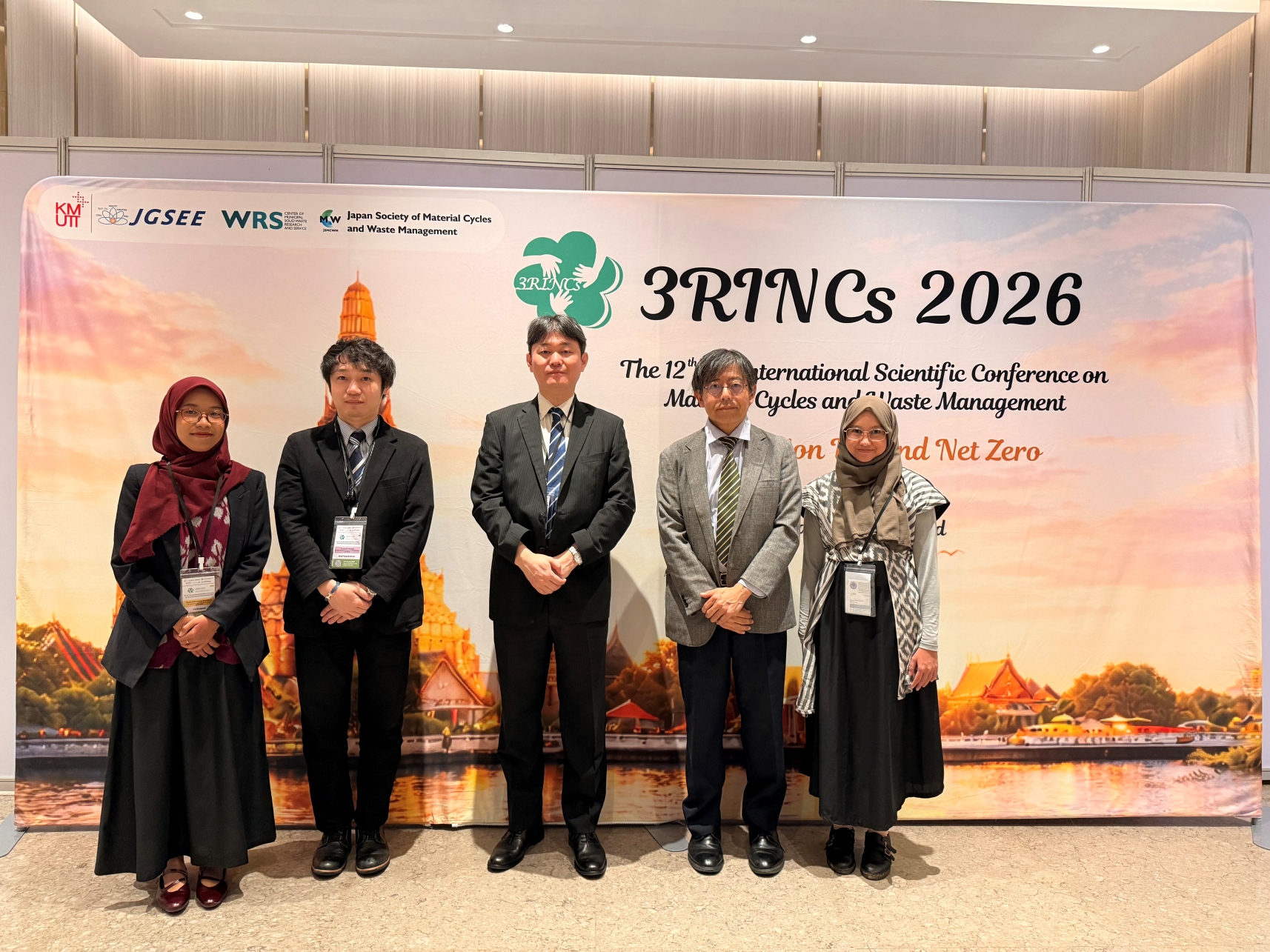
The 12th 3RINCs 2026 reinforced the importance of regional collaboration, knowledge exchange, and innovation in advancing sustainable waste management practices across ASEAN and beyond. With a range of insightful presentations and active participation from experts across sectors, the conference demonstrated the growing momentum towards effective and sustainable waste management in Asia.
Research Associate


Bangkok, 9–11 March 2026: ERIA’s Regional Knowledge Centre for Marine Plastic Debris participated in the 12th 3R International Scientific Conference on Material Cycles and Waste Management (3RINCs), held on 9–11 March 2026 in Bangkok, Thailand. The event was co-organised by the Joint Graduate School of Energy and Environment (JGSEE-CEE) and the Japan Society of Material Cycles and Waste Management.
As a leading regional platform, the conference brought together international experts in material cycles and waste management to exchange knowledge and foster collaboration, advancing science, innovation, and policy towards a sustainable circular society. The programme featured keynote lectures, general and special sessions, technology demonstrations, and opportunities to build cross-sector partnerships.
Members of ERIA’s Regional Knowledge Centre also contributed to several sessions. Research Associates Ms Aulia Ulfatunnisa and Ms Aulia Salsabella Suwarno participated in the poster session, showcasing their research titled Community-Based Waste Management in Indonesia: Key Lessons and Emerging Practices. During the flash presentation session, Ms Ulfatunnisa highlighted two local best practices in Indonesia and how they have transformed waste management systems to become more sustainable. She emphasised that regulations and social influence are the most influential behavioural factors in communities, while choice architecture also plays a role in ensuring service certainty. The engaging presentation was awarded second runner-up in the poster category at 3RINCs 2026, celebrating Indonesia’s role in community-centred waste management strategies.
In the session on policy and behavioural change, Mr Michikazu Kojima, Senior Research Fellow at the Centre, presented on countermeasures for plastic pollution, highlighting its impact on marine ecosystems, including whales, turtles, and dolphins. He also outlined key actions to address the issue, such as reducing plastic use, enhancing recycling, and ensuring proper disposal through measures such as refill systems, bans, extended producer responsibility (EPR), eco-industrial standards, and the use of biodegradable plastics.
Mr Fusanori Iwasaki, Research Fellow at the Centre, shared insights on the evolution of ASEAN’s regional policy and its strategic stance in the Global Plastic Treaty negotiations. He highlighted a key research gap, noting that existing literature largely focuses on the dynamics of the High Ambition Coalition (HAC) and Like-minded Countries (LMC), as well as Global North–South divides, while ASEAN’s diverse internal positioning in the treaty negotiations remains underexplored.
Mr Reo Kawamura, Director for the Regional Knowledge Centre for Marine Plastic Debris, spoke in a special session on the current status of waste electrical and electronic equipment (WEEE) initiatives across ASEAN. WEEE refers to discarded electronic devices such as mobile phones, computers, and household appliances. He highlighted challenges in e-waste recycling and introduced concepts such as urban mining and resource recovery as potential solutions.
The 12th 3RINCs 2026 reinforced the importance of regional collaboration, knowledge exchange, and innovation in advancing sustainable waste management practices across ASEAN and beyond. With a range of insightful presentations and active participation from experts across sectors, the conference demonstrated the growing momentum towards effective and sustainable waste management in Asia.
Research Associate