




'One man’s trash is another man’s treasure’ is the guiding behind Wat Thong temple’s waste donation programme.
The 200-year-old Wat Thong temple in Bangkok, Thailand, has undergone numerous renovations since its construction during the Ayutthaya period. For each renovation, the temple received financial donations from its congregation. However, in 2023, Wat Thong introduced a new, creative campaign: the temple now accepts valuable waste as donations for renovations. The result? Wat Thong has since raised 500,000 THB from the sales of recyclable waste.
So, what is the story behind Wat Thong’s exemplary practice? During a recent visit, the ERIA Regional Knowledge Centre for Marine Plastic Debris observed how the temple fostered behaviour change amongst the local community and monks, with Buddhist teachings serving as a powerful driver of this success.
Like many other Buddhist temples throughout Thailand, Wat Thong is exempted from paying waste management fees to the Bangkok Metropolitan Agency (BMA). However, the monks of Wat Thong realised that this cost is instead externalised and borne by taxpayers. This motivated them to initiate the ‘Donate Gold to Celebrate the New Temple’ programme, which not only helps collect funds for temple renovation but also alleviates the BMA’s waste management burden.
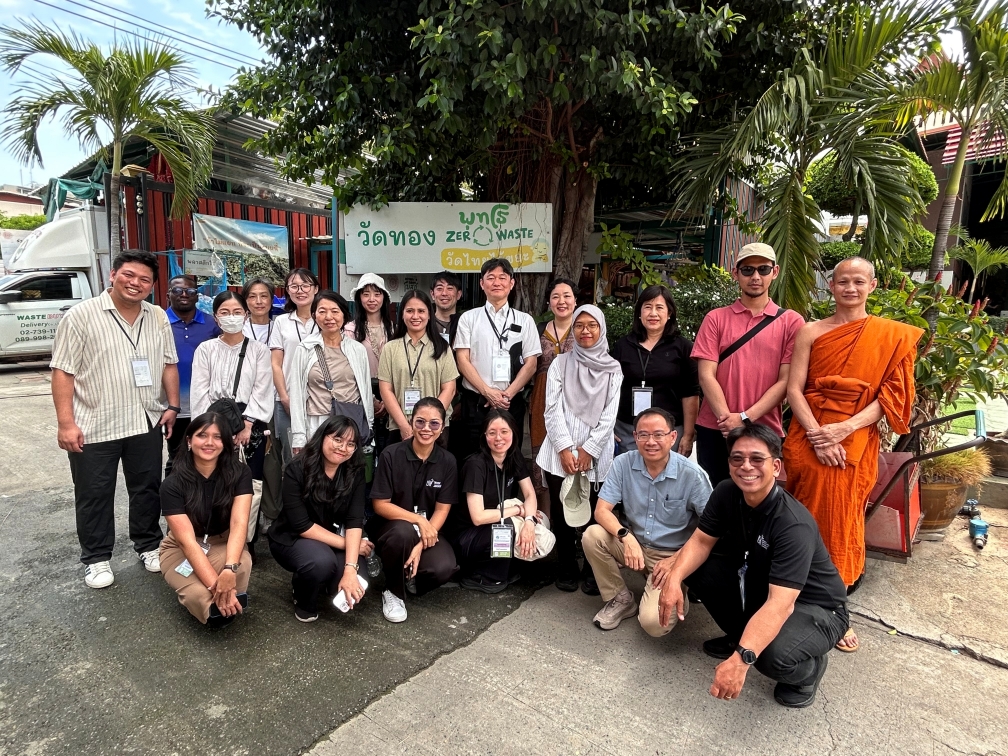
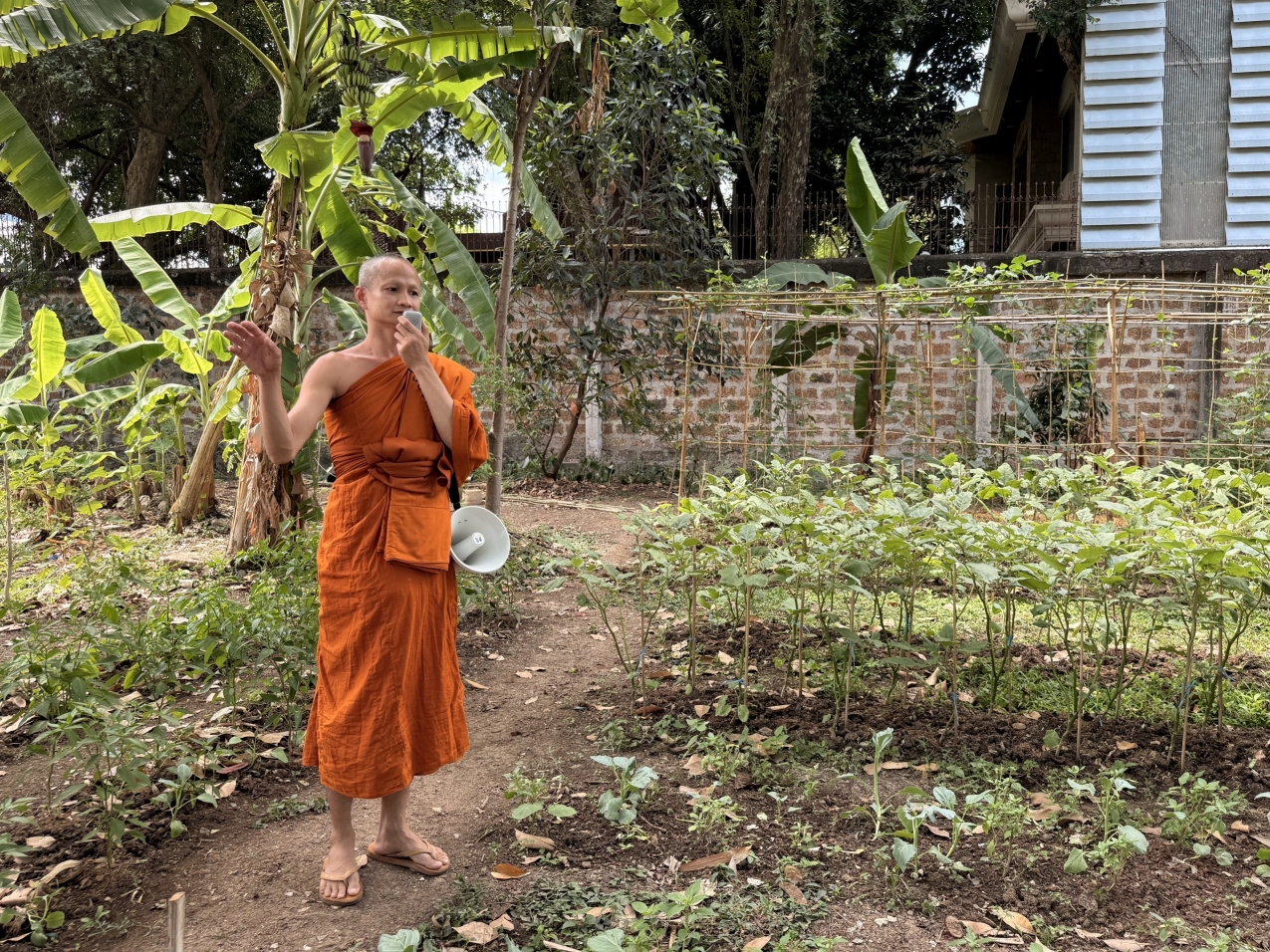
Phra Ajahn Anon, the monk overseeing the programme, explained that aligning waste segregation practices with Buddhist teachings plays a key role in the programme’s sustained activities.
‘Buddhist teachings emphasise the importance of respecting the intrinsic value of resources, encouraging the use of all resources to their fullest potential, including for waste,’ he elaborated.
Phra Anon also combines this teaching with the concept of ‘Dhamma’ – that every action has consequences, affecting others and ultimately returning to oneself as karma. Therefore, segregating waste to be reused or recycled instead of disposing it into landfill is also an act of merit for two reasons:
Maximising the intrinsic value of waste, and
Practising environmental Dhamma.
Phra Anon also highlighted that waste segregation itself is a form of meditation, as it trains one’s mind to be more delicate and detail-oriented.
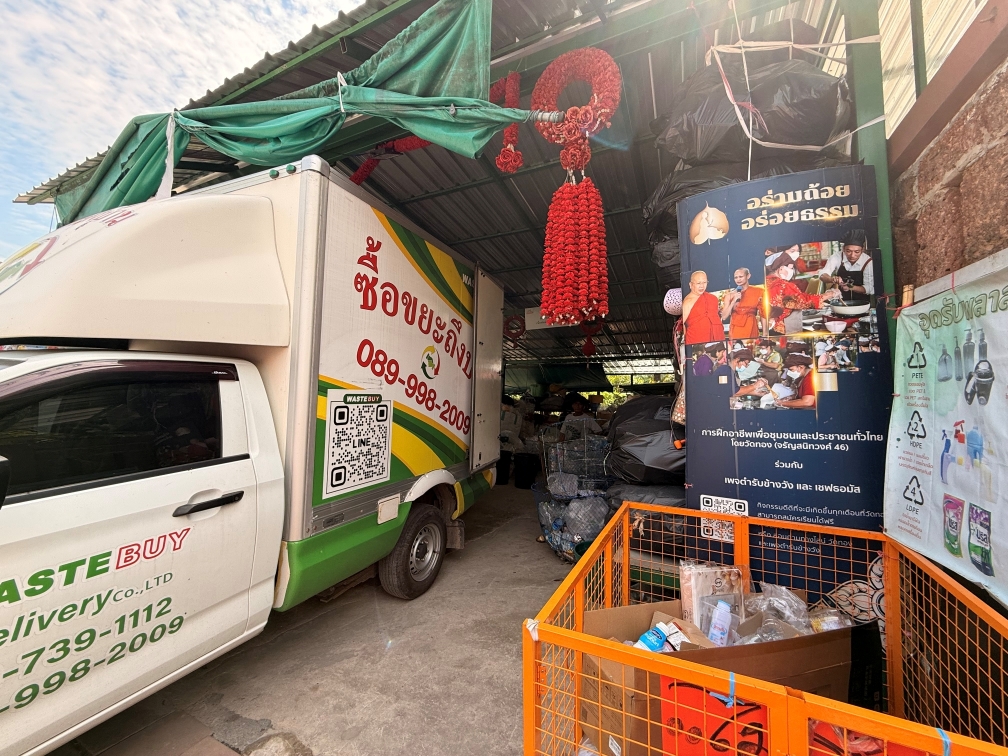
Wat Thong receives waste through three streams. First, the temple sets up drop-off points in the surrounding area where residents can drop their waste at any time of the week as a donation. Second, the temple occasionally organises events during which its congregation from outside the area can donate valuable waste. Lastly, monks on their morning alms rounds – traditionally for food donations – also sometimes receive recyclables from the local community.
‘Sometimes, we also use the money from the sale of recyclables as aid for areas impacted by disasters across the country,’ Phra Anon added.
The collected waste is then brought into the sorting station, known as ‘Boonluen’ (meaning ‘overflow of merit’), where 22 out of the temple’s 40 monks carry out the waste segregation process.
Inorganic waste is washed, dried, and separated by type and in some cases by colour, before being sold to mobile junk shops that come to pick up the segregated waste. While high-value waste is sold for recycling, low-value materials are sold to be processed into refuse-derived fuel (RDF). Some of the high-value waste has been repurposed into amulets that the temple sells, and in 2024, a Thai fashion brand, PIPATCHARA, transformed such waste into a dress worn by Lisa of BLACKPINK.
Meanwhile, organic waste is processed into compost using composting machines or through black soldier fly (BSF) farming. However, since killing animals is forbidden in Buddhism, mature BSF larvae are left to die naturally, after which their remains will be processed into compost for use in the temple’s garden.
Viewed through a behavioural change lens, two interventions stand out as primary success drivers.
First, the establishment of a waste donation programme offers an alternative choice architecture, allowing the local community to donate waste instead of disposing of it through kerbside waste collection. Second, the integration of religious values into the waste segregation campaign provides a strong emotional appeal. Donating waste for temple renovation gives individuals a sense of satisfaction, as their contributions benefit the community, on top of the religious merit they may collect as a reward for their good Dhamma.
The case of Wat Thong demonstrates how a combination of different behavioural levers can be implemented to instil a sustainable, long-term behavioural change in proper waste management practices.

Research Associate


'One man’s trash is another man’s treasure’ is the guiding behind Wat Thong temple’s waste donation programme.
The 200-year-old Wat Thong temple in Bangkok, Thailand, has undergone numerous renovations since its construction during the Ayutthaya period. For each renovation, the temple received financial donations from its congregation. However, in 2023, Wat Thong introduced a new, creative campaign: the temple now accepts valuable waste as donations for renovations. The result? Wat Thong has since raised 500,000 THB from the sales of recyclable waste.
So, what is the story behind Wat Thong’s exemplary practice? During a recent visit, the ERIA Regional Knowledge Centre for Marine Plastic Debris observed how the temple fostered behaviour change amongst the local community and monks, with Buddhist teachings serving as a powerful driver of this success.
Like many other Buddhist temples throughout Thailand, Wat Thong is exempted from paying waste management fees to the Bangkok Metropolitan Agency (BMA). However, the monks of Wat Thong realised that this cost is instead externalised and borne by taxpayers. This motivated them to initiate the ‘Donate Gold to Celebrate the New Temple’ programme, which not only helps collect funds for temple renovation but also alleviates the BMA’s waste management burden.
Phra Ajahn Anon, the monk overseeing the programme, explained that aligning waste segregation practices with Buddhist teachings plays a key role in the programme’s sustained activities.
‘Buddhist teachings emphasise the importance of respecting the intrinsic value of resources, encouraging the use of all resources to their fullest potential, including for waste,’ he elaborated.
Phra Anon also combines this teaching with the concept of ‘Dhamma’ – that every action has consequences, affecting others and ultimately returning to oneself as karma. Therefore, segregating waste to be reused or recycled instead of disposing it into landfill is also an act of merit for two reasons:
Maximising the intrinsic value of waste, and
Practising environmental Dhamma.
Phra Anon also highlighted that waste segregation itself is a form of meditation, as it trains one’s mind to be more delicate and detail-oriented.
Wat Thong receives waste through three streams. First, the temple sets up drop-off points in the surrounding area where residents can drop their waste at any time of the week as a donation. Second, the temple occasionally organises events during which its congregation from outside the area can donate valuable waste. Lastly, monks on their morning alms rounds – traditionally for food donations – also sometimes receive recyclables from the local community.
‘Sometimes, we also use the money from the sale of recyclables as aid for areas impacted by disasters across the country,’ Phra Anon added.
The collected waste is then brought into the sorting station, known as ‘Boonluen’ (meaning ‘overflow of merit’), where 22 out of the temple’s 40 monks carry out the waste segregation process.
Inorganic waste is washed, dried, and separated by type and in some cases by colour, before being sold to mobile junk shops that come to pick up the segregated waste. While high-value waste is sold for recycling, low-value materials are sold to be processed into refuse-derived fuel (RDF). Some of the high-value waste has been repurposed into amulets that the temple sells, and in 2024, a Thai fashion brand, PIPATCHARA, transformed such waste into a dress worn by Lisa of BLACKPINK.
Meanwhile, organic waste is processed into compost using composting machines or through black soldier fly (BSF) farming. However, since killing animals is forbidden in Buddhism, mature BSF larvae are left to die naturally, after which their remains will be processed into compost for use in the temple’s garden.
Viewed through a behavioural change lens, two interventions stand out as primary success drivers.
First, the establishment of a waste donation programme offers an alternative choice architecture, allowing the local community to donate waste instead of disposing of it through kerbside waste collection. Second, the integration of religious values into the waste segregation campaign provides a strong emotional appeal. Donating waste for temple renovation gives individuals a sense of satisfaction, as their contributions benefit the community, on top of the religious merit they may collect as a reward for their good Dhamma.
The case of Wat Thong demonstrates how a combination of different behavioural levers can be implemented to instil a sustainable, long-term behavioural change in proper waste management practices.
Research Associate