



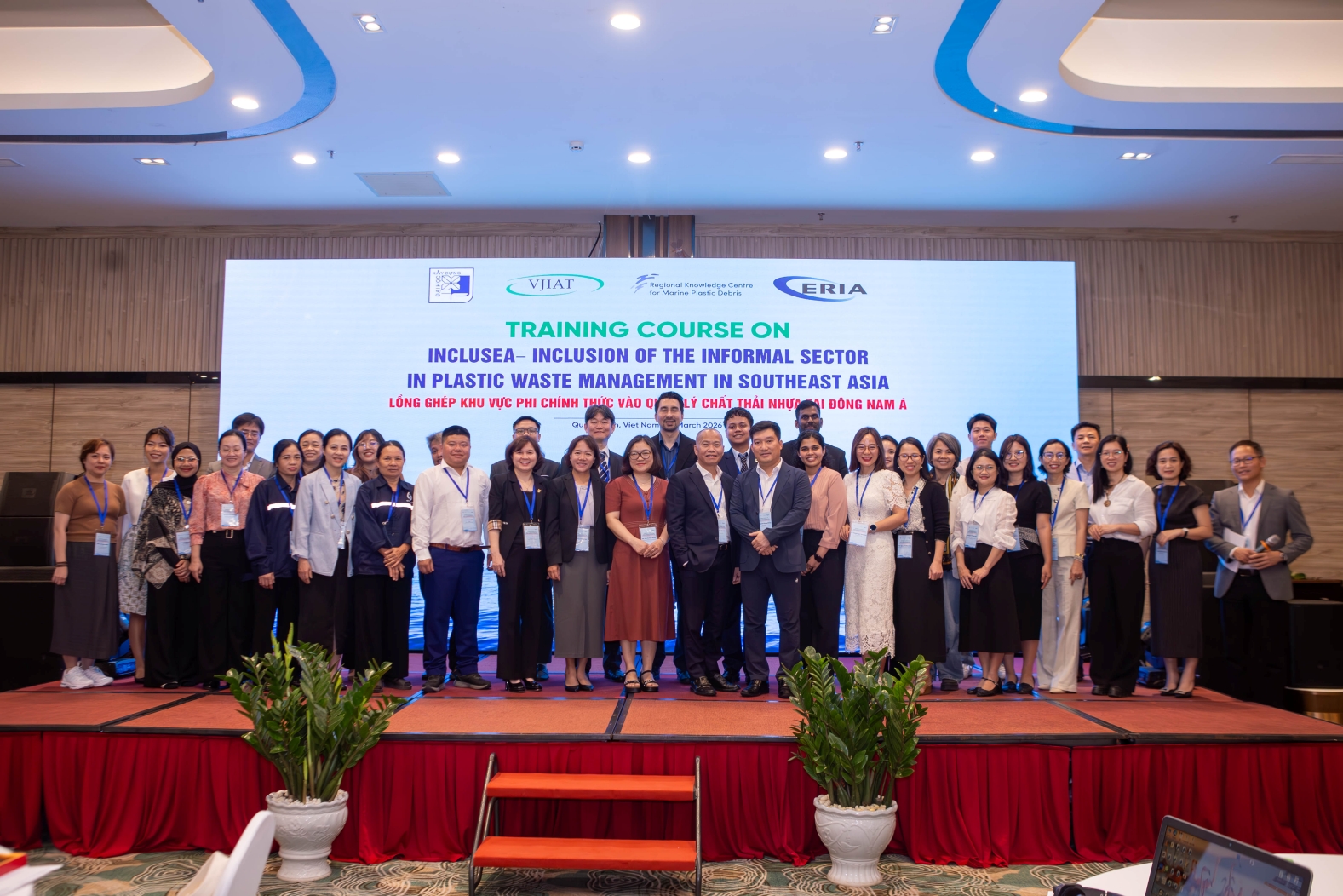
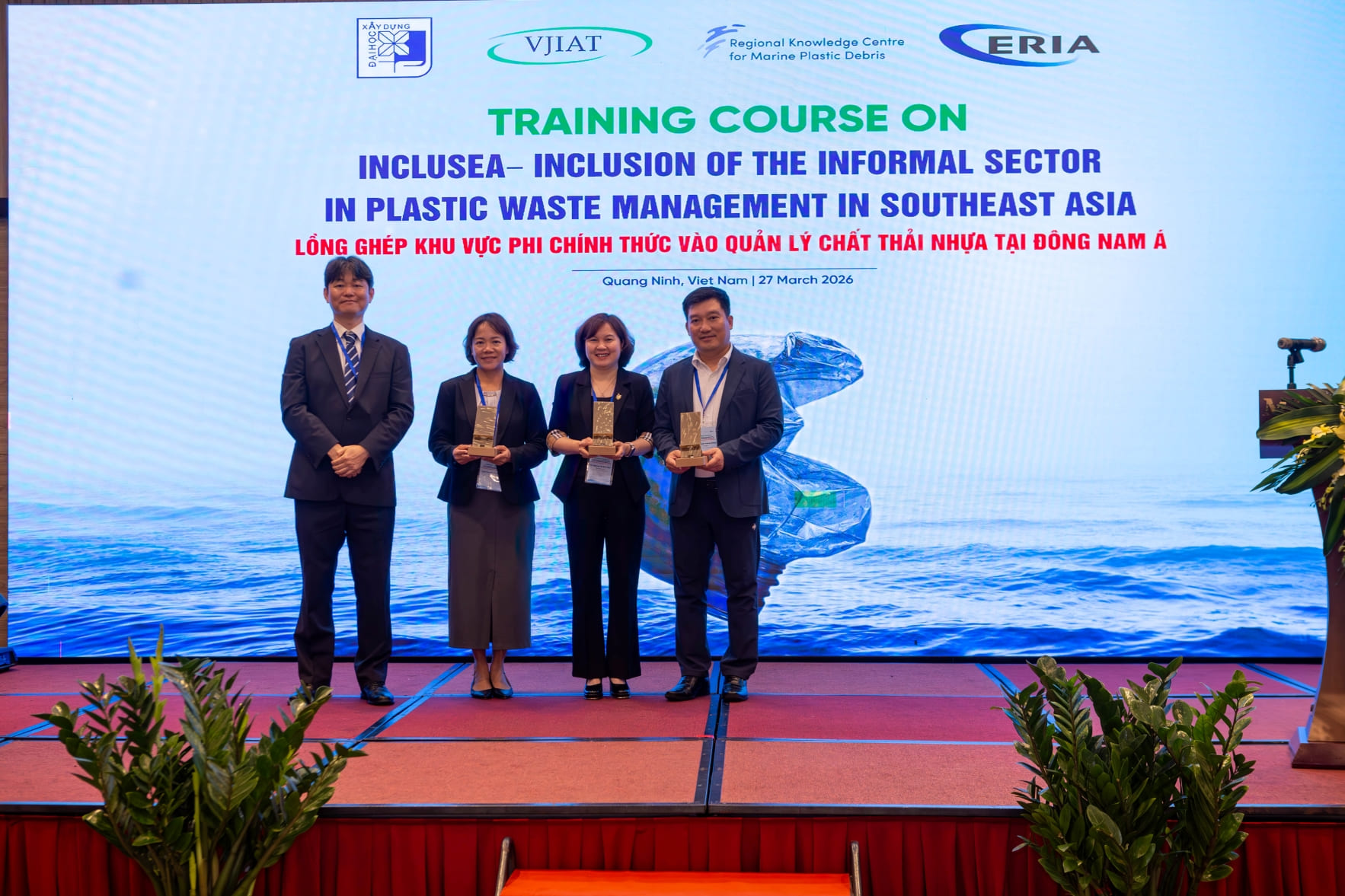
Ha Long City, 27 March 2026: Against the backdrop of Quang Ninh Province's iconic coastline – where the consequences of mismanaged plastic waste are especially visible – the Regional Knowledge Centre for Marine Plastic Debris (the Centre) convened a Training-of-Trainers workshop as part of the Inclusion of the Informal Sector in Plastic Waste Management in Southeast Asia (INCLUSEA) initiative. The workshop was organised with the support of the Viet Nam-Japan Institute for Advanced Technology (VJIAT), the Institute for Global Environmental Strategies (IGES), and the Asian Institute of Technology's Regional Resource Centre for Asia and the Pacific (AIT RRC.AP).
Bringing together participants from across Viet Nam – including representatives of women’s unions, grassroots NGOs, academia, the private sector, independent waste collectors, and government – the workshop centred on a critical question: how can informal waste workers, who recover the majority of recyclable plastics yet remain largely invisible, be recognised, protected, and meaningfully included?
INCLUSEA adopted a deliberate cascade model. By equipping community leaders, facilitators, and local experts with knowledge, tools, and practical training methodologies, the programme aims to extend its reach far beyond the workshop day. Participants left not only with new understanding, but with the capacity to replicate and adapt sessions within their own communities and networks.
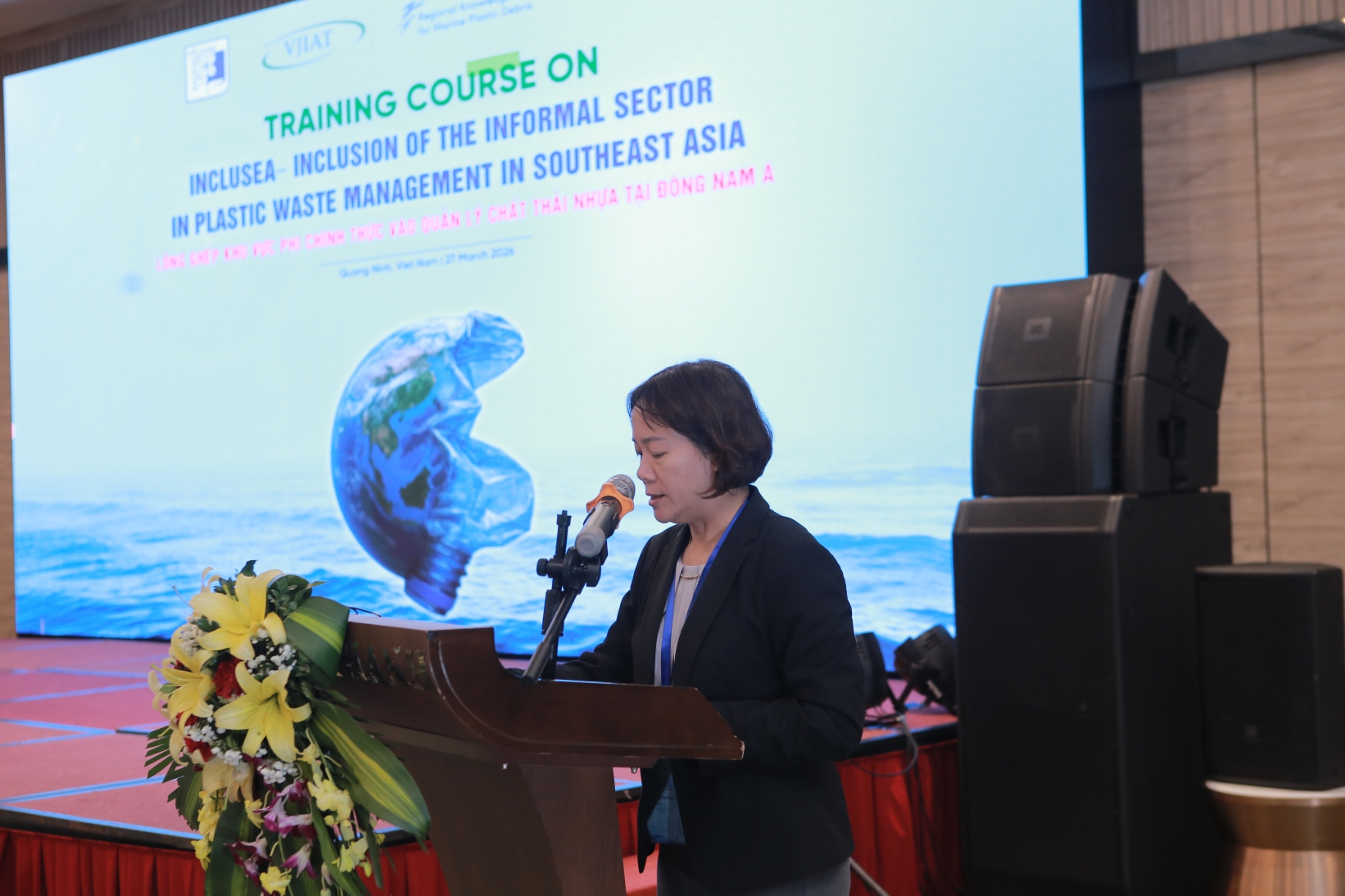
Opening remarks were delivered by Mr Reo Kawamura, Director of the Centre; Prof. Nguyen Hoang Giang, Vice-Rector of Hanoi University of Civil Engineering (HUCE); and Ms Nguyen Thi Binh Thin, Vice Chairwoman of Quang Ninh Provincial Women's Union, whose presence underscored the importance of local institutional anchoring for any training initiative designed to reach workers at the grassroots level.
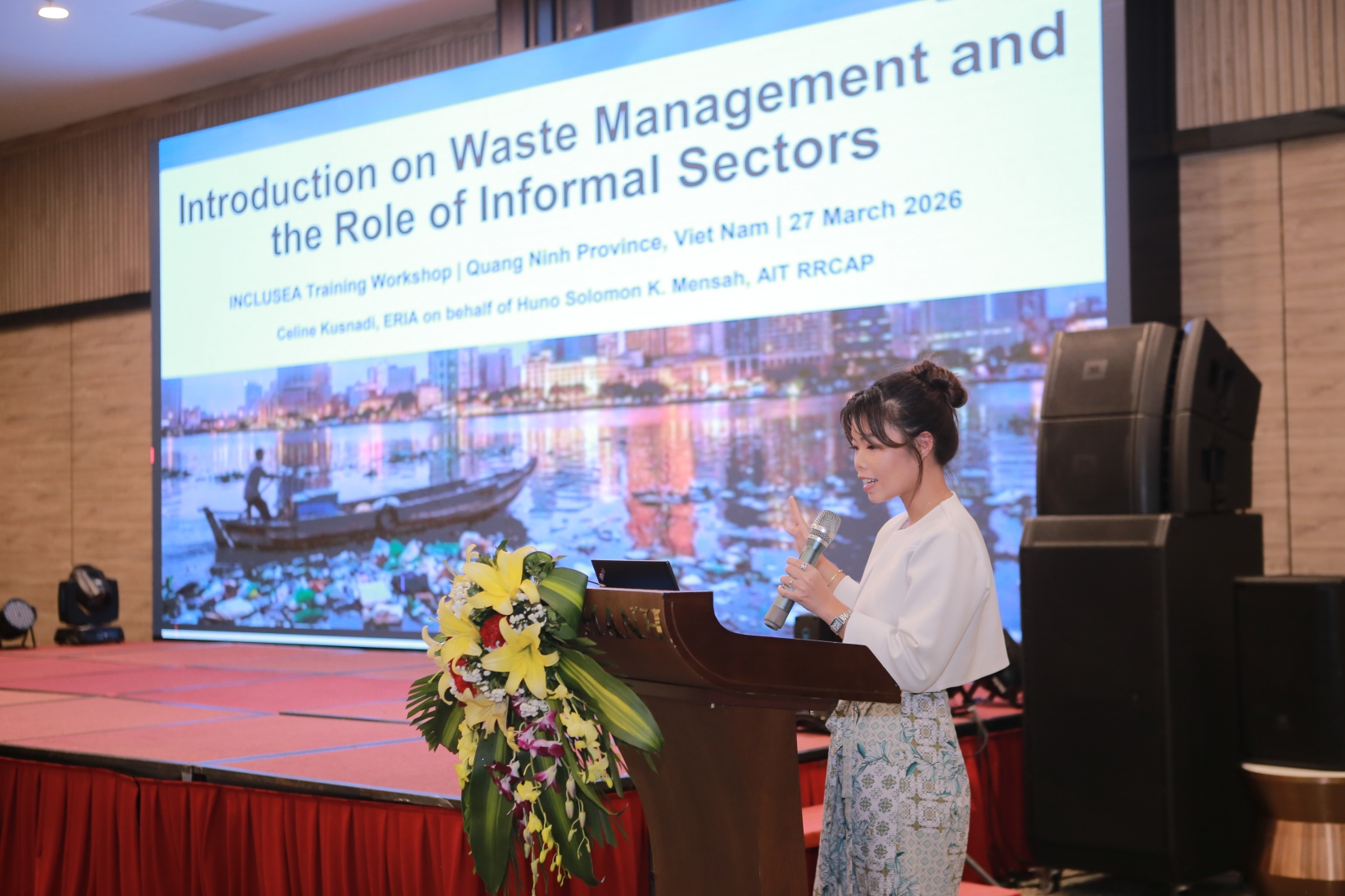
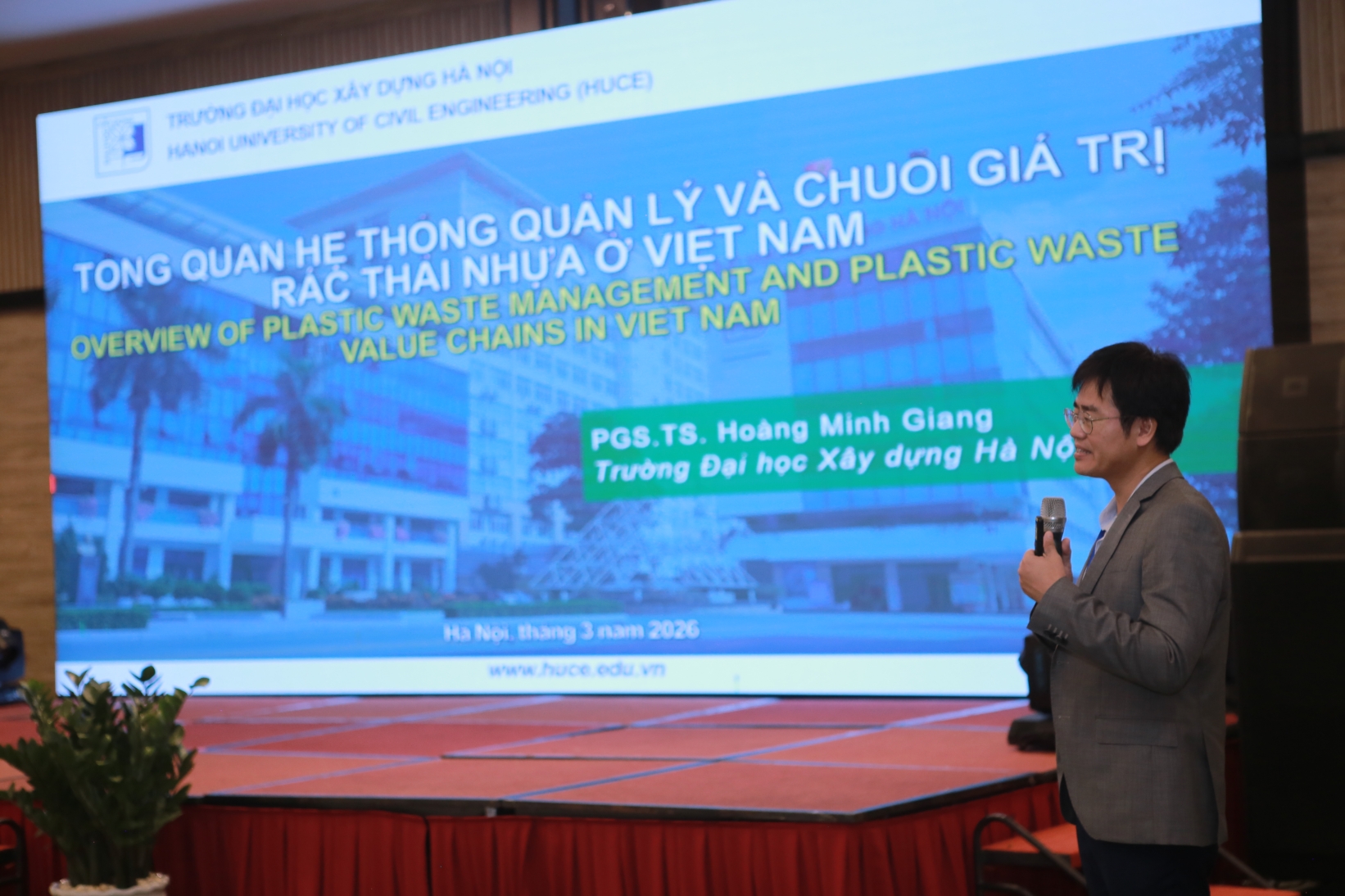
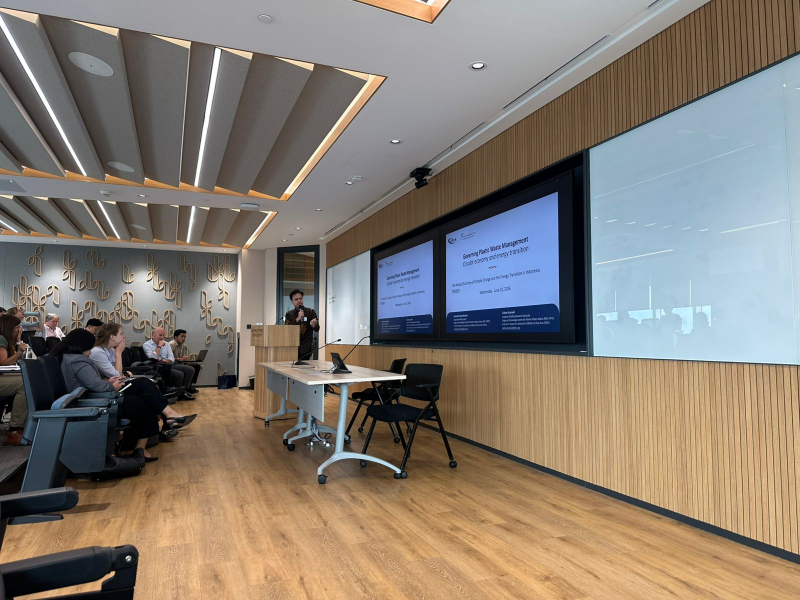
The workshop opened with a foundational session on plastic waste management and the circular economy, delivered by Associate Professor Hoang Minh Giang of HUCE and Ms Celine Kusnadi, Research Associate at the Centre. The session mapped Viet Nam's plastic value chain, and, critically, showed where informal collectors, sorters, and aggregators intervene at each node. The message was clear: informal workers are central to plastic material recovery, yet their contributions remain largely unrecognised in formal policies.
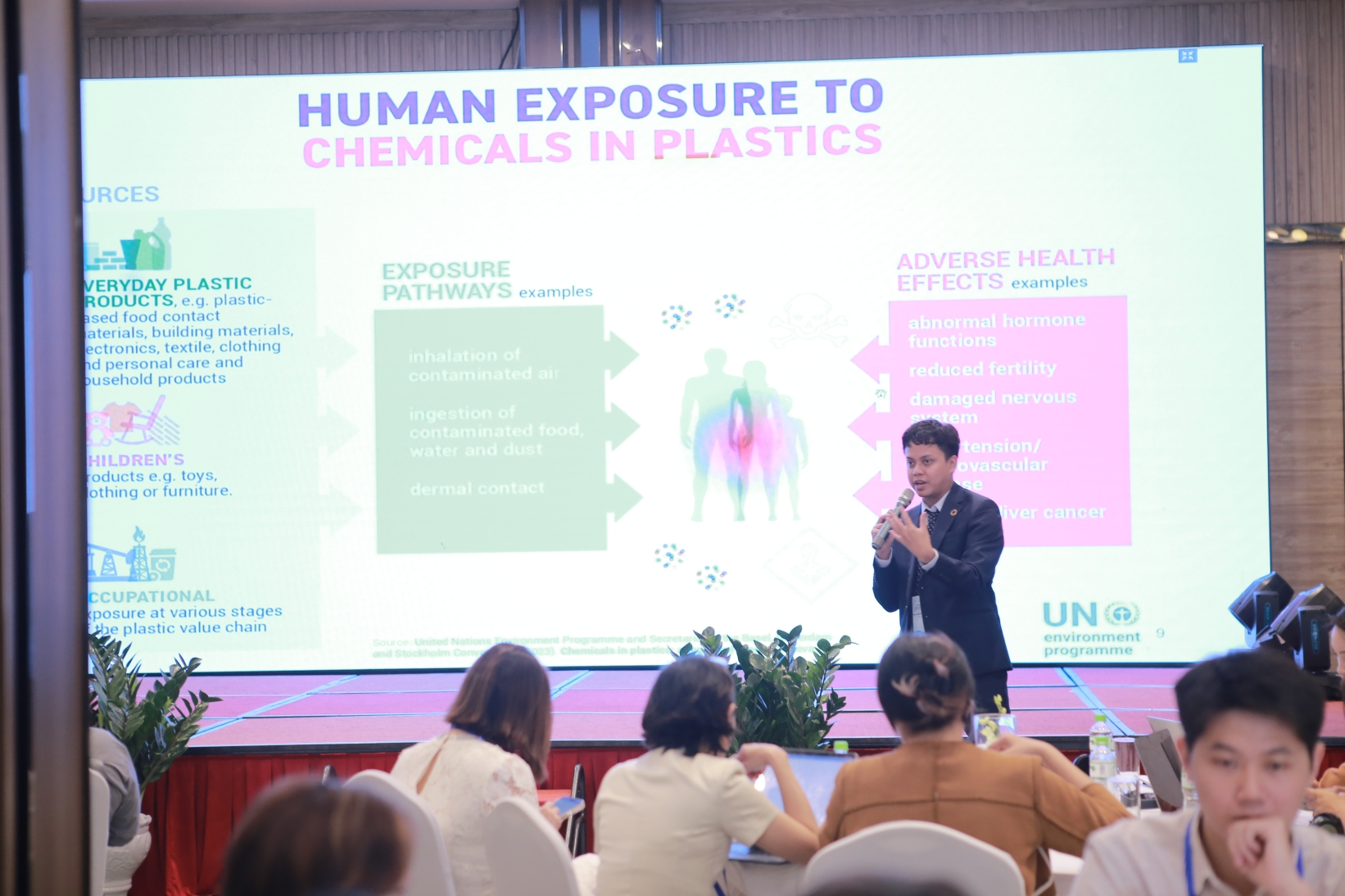
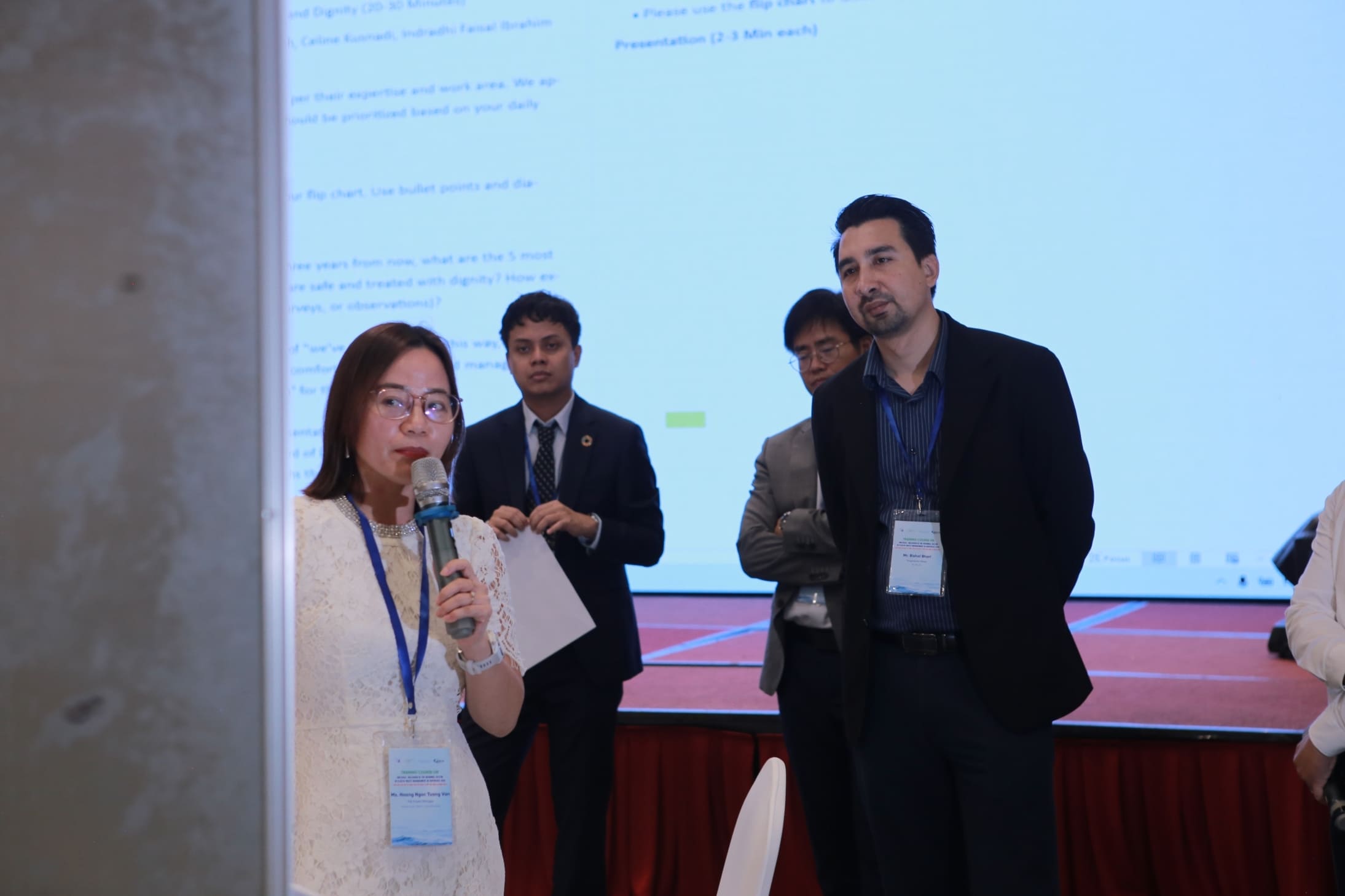
A session led by Mr Indradhi Faisal Ibrahim, Capacity Building Expert of the Centre, addressed occupational risks, positioning safety not as compliance, but as a practical strategy to improve productivity, reduce costs, and enable access to extended producer responsibility (EPR); environmental, social, and governance frameworks; and corporate social responsibility mechanisms.
This was followed by a hands-on session featuring Mr Bishal Bhari of AIT RRC.AP, which gave participants direct experience of using participatory training tools and demonstrated how accessible and practical formats can be used to convey occupational safety and hygiene, hazard prevention, and violence and harassment prevention at work.
This was complemented by Ms Nguyen Thi Nhat Hoai of the Viet Nam National Plastic Action Partnership (NPAP), who provided guidance on integrating gender equality and social inclusion principles into Viet Nam’s plastic sector, emphasising the need for policies that reflect the realities of informal workers, particularly women.
Mr Hoang Duc Vuong, Vice-President of the Vietnam Plastics Association (VPA), further grounded the discussion through case studies on Viet Nam’s plastic circularity challenges and the role of research and industry.
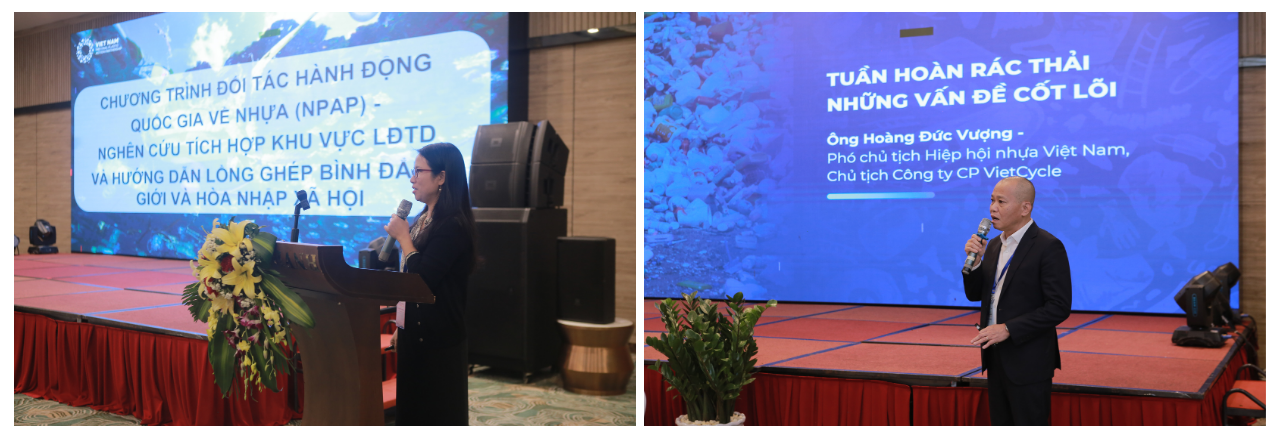
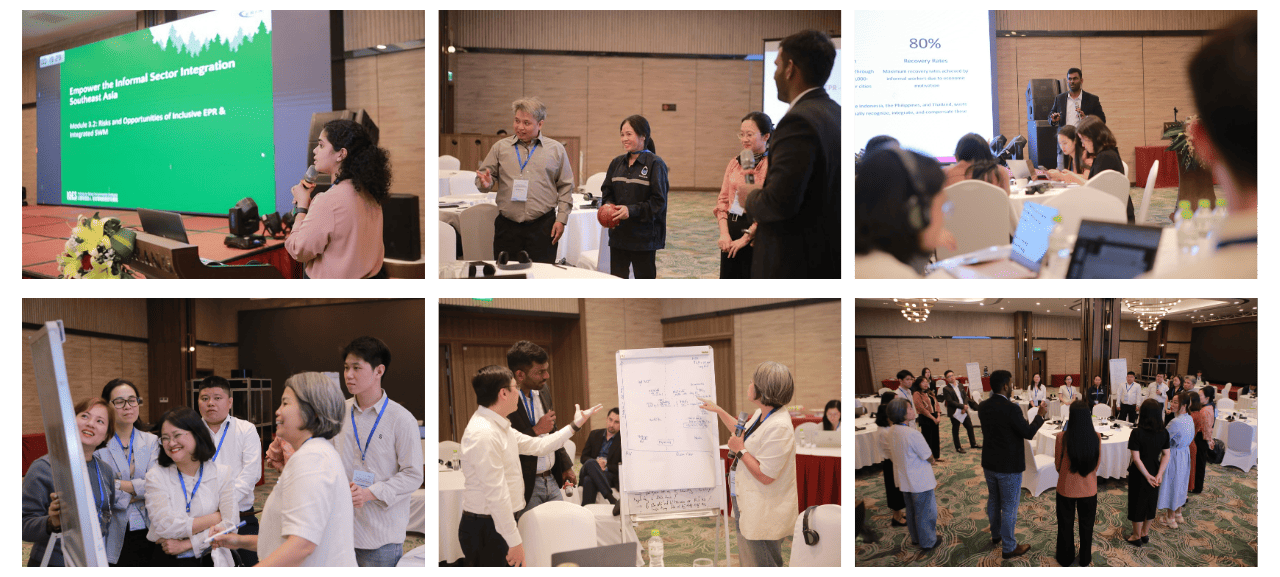
The afternoon session, delivered by Mr Lakshitha Paranagamage and Ms Thejani Abeynayaka of IGES, introduced participants to evolving regulatory frameworks shaping plastic waste management in Viet Nam, including EPR systems and national reduction roadmaps. Discussions highlighted both risks such as exclusion and compliance burdens, and opportunities associated with formalisation, including improved livelihoods and stronger governance.
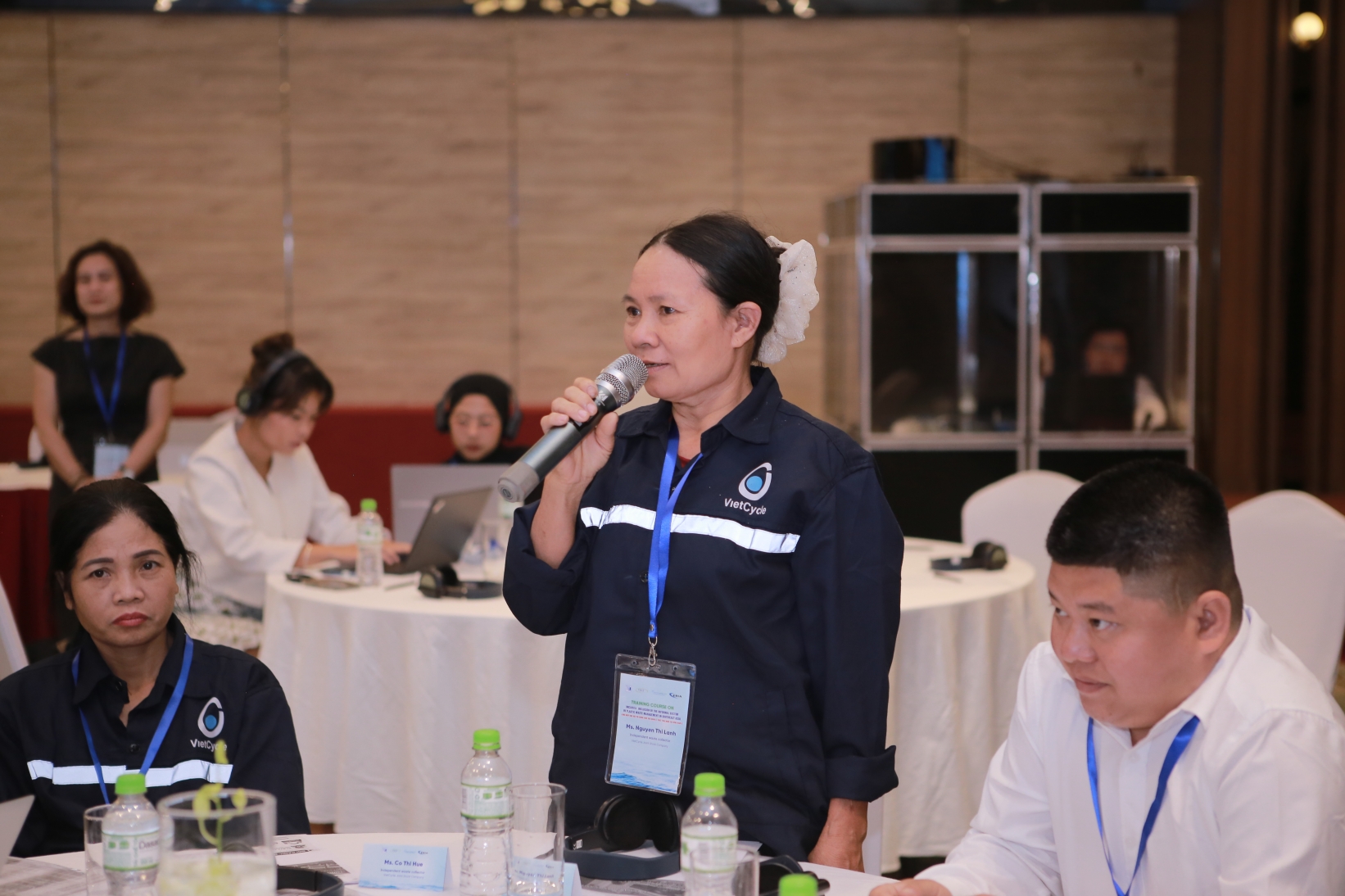
The final session drew on the day's learning through a structured breakout group discussion in which participants explored key barriers to informal workers’ participation, priority knowledge and skills needs, accessible training approaches, and enabling policy inclusion.
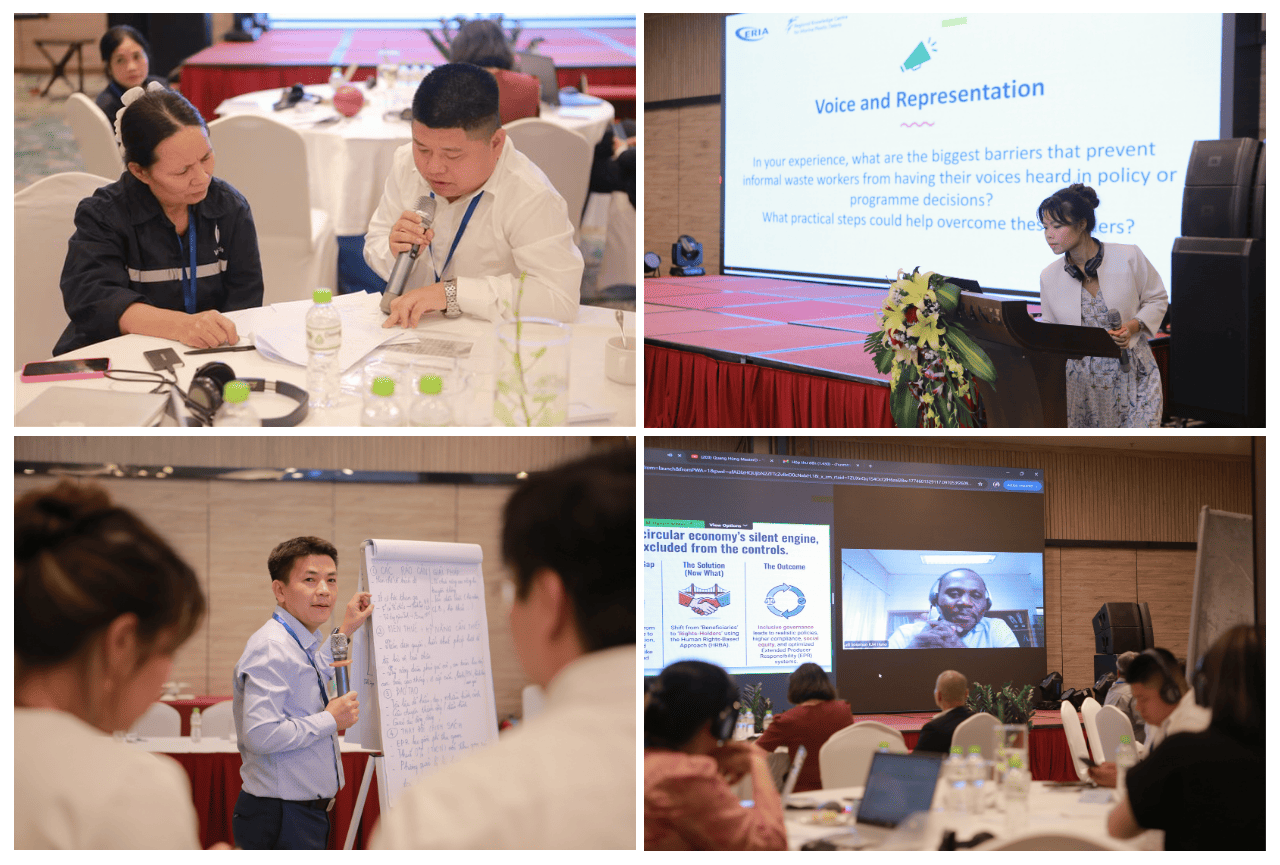
The responses were candid and practical. Participants identified fragmented worker groups, limited access to policy information, and overly technical language as the main structural barriers to inclusion. They called for simplified, visual training materials, peer learning models, and stronger worker associations as the most effective near-term interventions. On policy, they recommended formal recognition of collectors within EPR systems, social protection mechanisms, and a stronger role for local governments in supporting worker organisations.
This session concluded by Mr Solomon Huno of AIT RRC.AP, who spoke on how informal sector voices can be systematically embedded in waste governance, highlighting the importance of participatory platforms, context-specific approaches, and the collaboration of all relevant stakeholders.
INCLUSEA marks the beginning, not the conclusion, of this work. The Centre will continue to build on the momentum generated through INCLUSEA, working with partners across Viet Nam and the broader ASEAN region to ensure that informal workers are not left behind in the transition to a more inclusive, circular, and resilient plastic waste management system.

Research Associate for Capacity Building


Ha Long City, 27 March 2026: Against the backdrop of Quang Ninh Province's iconic coastline – where the consequences of mismanaged plastic waste are especially visible – the Regional Knowledge Centre for Marine Plastic Debris (the Centre) convened a Training-of-Trainers workshop as part of the Inclusion of the Informal Sector in Plastic Waste Management in Southeast Asia (INCLUSEA) initiative. The workshop was organised with the support of the Viet Nam-Japan Institute for Advanced Technology (VJIAT), the Institute for Global Environmental Strategies (IGES), and the Asian Institute of Technology's Regional Resource Centre for Asia and the Pacific (AIT RRC.AP).
Bringing together participants from across Viet Nam – including representatives of women’s unions, grassroots NGOs, academia, the private sector, independent waste collectors, and government – the workshop centred on a critical question: how can informal waste workers, who recover the majority of recyclable plastics yet remain largely invisible, be recognised, protected, and meaningfully included?
INCLUSEA adopted a deliberate cascade model. By equipping community leaders, facilitators, and local experts with knowledge, tools, and practical training methodologies, the programme aims to extend its reach far beyond the workshop day. Participants left not only with new understanding, but with the capacity to replicate and adapt sessions within their own communities and networks.
Opening remarks were delivered by Mr Reo Kawamura, Director of the Centre; Prof. Nguyen Hoang Giang, Vice-Rector of Hanoi University of Civil Engineering (HUCE); and Ms Nguyen Thi Binh Thin, Vice Chairwoman of Quang Ninh Provincial Women's Union, whose presence underscored the importance of local institutional anchoring for any training initiative designed to reach workers at the grassroots level.
The workshop opened with a foundational session on plastic waste management and the circular economy, delivered by Associate Professor Hoang Minh Giang of HUCE and Ms Celine Kusnadi, Research Associate at the Centre. The session mapped Viet Nam's plastic value chain, and, critically, showed where informal collectors, sorters, and aggregators intervene at each node. The message was clear: informal workers are central to plastic material recovery, yet their contributions remain largely unrecognised in formal policies.
A session led by Mr Indradhi Faisal Ibrahim, Capacity Building Expert of the Centre, addressed occupational risks, positioning safety not as compliance, but as a practical strategy to improve productivity, reduce costs, and enable access to extended producer responsibility (EPR); environmental, social, and governance frameworks; and corporate social responsibility mechanisms.
This was followed by a hands-on session featuring Mr Bishal Bhari of AIT RRC.AP, which gave participants direct experience of using participatory training tools and demonstrated how accessible and practical formats can be used to convey occupational safety and hygiene, hazard prevention, and violence and harassment prevention at work.
This was complemented by Ms Nguyen Thi Nhat Hoai of the Viet Nam National Plastic Action Partnership (NPAP), who provided guidance on integrating gender equality and social inclusion principles into Viet Nam’s plastic sector, emphasising the need for policies that reflect the realities of informal workers, particularly women.
Mr Hoang Duc Vuong, Vice-President of the Vietnam Plastics Association (VPA), further grounded the discussion through case studies on Viet Nam’s plastic circularity challenges and the role of research and industry.
The afternoon session, delivered by Mr Lakshitha Paranagamage and Ms Thejani Abeynayaka of IGES, introduced participants to evolving regulatory frameworks shaping plastic waste management in Viet Nam, including EPR systems and national reduction roadmaps. Discussions highlighted both risks such as exclusion and compliance burdens, and opportunities associated with formalisation, including improved livelihoods and stronger governance.
The final session drew on the day's learning through a structured breakout group discussion in which participants explored key barriers to informal workers’ participation, priority knowledge and skills needs, accessible training approaches, and enabling policy inclusion.
The responses were candid and practical. Participants identified fragmented worker groups, limited access to policy information, and overly technical language as the main structural barriers to inclusion. They called for simplified, visual training materials, peer learning models, and stronger worker associations as the most effective near-term interventions. On policy, they recommended formal recognition of collectors within EPR systems, social protection mechanisms, and a stronger role for local governments in supporting worker organisations.
This session concluded by Mr Solomon Huno of AIT RRC.AP, who spoke on how informal sector voices can be systematically embedded in waste governance, highlighting the importance of participatory platforms, context-specific approaches, and the collaboration of all relevant stakeholders.
INCLUSEA marks the beginning, not the conclusion, of this work. The Centre will continue to build on the momentum generated through INCLUSEA, working with partners across Viet Nam and the broader ASEAN region to ensure that informal workers are not left behind in the transition to a more inclusive, circular, and resilient plastic waste management system.
Research Associate for Capacity Building